Who this sheet helps
This sheet may help adults with disabilities, family members, preferred support people, caregivers, roommates, personal care attendants, trusted contacts, and others who want emergency information written down in the person's own practical context.
Why this may matter in an emergency
A stressful emergency can make communication, mobility, sensory regulation, equipment access, transportation, or record-finding harder.
A concise sheet can help a support person, family member, EMS team, urgent care team, ER team, shelter team, or trusted contact locate information faster. It does not guarantee how information will be used.
Adult disability handoff notes
Handoff notes can share person-provided support context. Avoid clinical support instructions, medical treatment directions, disability-rights legal advice, or assumptions about what the person can or cannot do.
- How the person prefers to communicate and which support person can help if communication is difficult
- What mobility, accessibility, sensory, language, equipment, power, charger, or supply details may matter quickly
- Where medication labels, allergy lists, care plans, medical records, patient portals, and equipment paperwork are kept
- Which preferences are helpful context while recognizing that emergency responders and facilities may have their own procedures
Where to keep it
Keep copies where the person and trusted helpers choose: wallet, purse, backpack, go-bag, refrigerator folder, equipment bag, bedside folder, appointment folder, caregiver binder, or with a preferred support person.
Avoid putting passwords, financial details, door codes, or unnecessary sensitive information on a visible copy.
When to update it
Review the sheet when emergency contacts, support people, communication needs, mobility needs, accessibility needs, equipment, devices, supplies, medications, allergies, clinicians, pharmacy, assistance preferences, or document locations change.
Privacy and safety notes
Disability, health, and support information can be sensitive. Share only what the person wants available for emergency organization, and keep fuller records in a safer place.
This page is for organization and emergency preparedness only. It is not medical advice, legal advice, disability-rights advice, clinical support instruction, or a guarantee of specific emergency outcomes and does not replace 911, EMS, clinicians, medical records, medication labels, care plans, equipment instructions, patient portals, legal documents, or professional guidance.
Printable sheet versus digital YourEMR profile
A digital YourEMR profile may help when contacts, support people, communication needs, equipment notes, medications, allergies, preferences, and document locations change. The profile can be updated and reprinted.
Helpful terms families may hear
- Preferred support person: A person the adult chooses to list as helpful for communication, access, or information support.
- Communication needs: How the person best receives and shares information, including speech, hearing, vision, AAC, language, or support tools.
- Accessibility needs: Practical access details related to movement, environment, transportation, equipment, or support.
- Assistance preferences: Person-provided context about what kind of help is useful; it is not a legal directive or medical order.
- Equipment or device notes: Factual notes about devices, chargers, supplies, manuals, or supplier contacts.
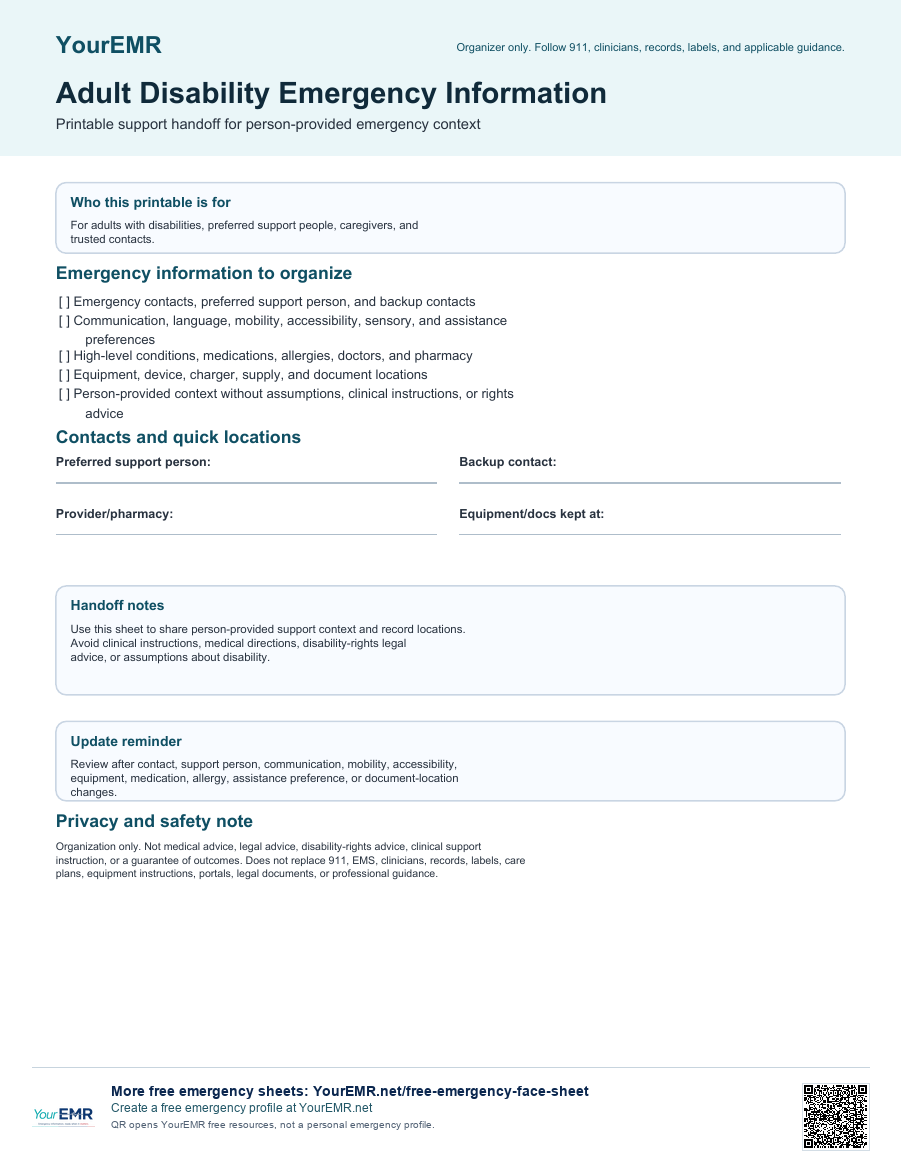
Adult Disability Info details to record
Use person-provided language when possible. Keep entries factual, respectful, and specific to the person rather than making broad assumptions about disability.
- Emergency contacts, preferred support person, backup contacts, doctors, pharmacy, and who can help confirm current information
- Communication needs, preferred language, AAC tools, hearing or vision supports, sensory preferences, and how the person prefers information to be shared
- Mobility, accessibility, transfer context, equipment, device, charger, supply, service animal, transportation, or power needs as practical notes
- High-level conditions, current medications, allergies, and where official medical records, medication labels, care plans, and patient portal information are kept
- Assistance preferences as person-provided context, without turning the sheet into clinical instructions or legal demands
Related YourEMR resources
Use these related YourEMR pages when they fit the person's situation.
Helpful adult disability and emergency preparedness resources
These outside resources are for general education and preparedness only. Always follow 911, clinicians, medication labels, care plans, equipment instructions, patient portals, legal documents, and professional guidance.
CDC preparedness guidance about planning ahead, disability-related barriers during emergencies, support needs, and not relying only on registries.
CDC resources about individual emergency plans, individualized emergency kits, evacuation, communication, and accessible preparedness materials.
NIH MedlinePlus overview of keeping emergency contacts, medicines, allergies, chronic conditions, and major health history in a personal health record.
Emergency disclaimer
These free sheets are informational organization tools only. They are not medical records, diagnosis tools, treatment plans, medical advice, or legal advice, and they do not replace 911, EMS, clinicians, medical records, medication labels, device manuals, care plans, patient portals, or professional guidance.