Who this emergency information sheet helps
This general printable can help adults organizing their own emergency information, family caregivers, older adults, people who live alone, parents and caregivers, travelers, students, and anyone who wants a clear emergency contact sheet before details are needed quickly.
If the situation is more specific, compare the dementia and memory care sheet, older adult living alone sheet, medically complex child sheet, or diabetes, CGM, and insulin sheet.
Why a simple sheet can matter
Emergencies and urgent handoffs are stressful. A family member may not be nearby, a caregiver may be new, or the person may not remember every medication name, dose, allergy, doctor, or contact number. A readable sheet can help someone find key information faster without asking people to rely only on memory.
Keep the sheet factual and current. It should organize emergency information; it should not tell anyone what treatment to provide.
Helpful emergency details to gather
Gather short, readable details that are useful to share in an emergency folder, caregiver handoff, travel packet, or printed backup.
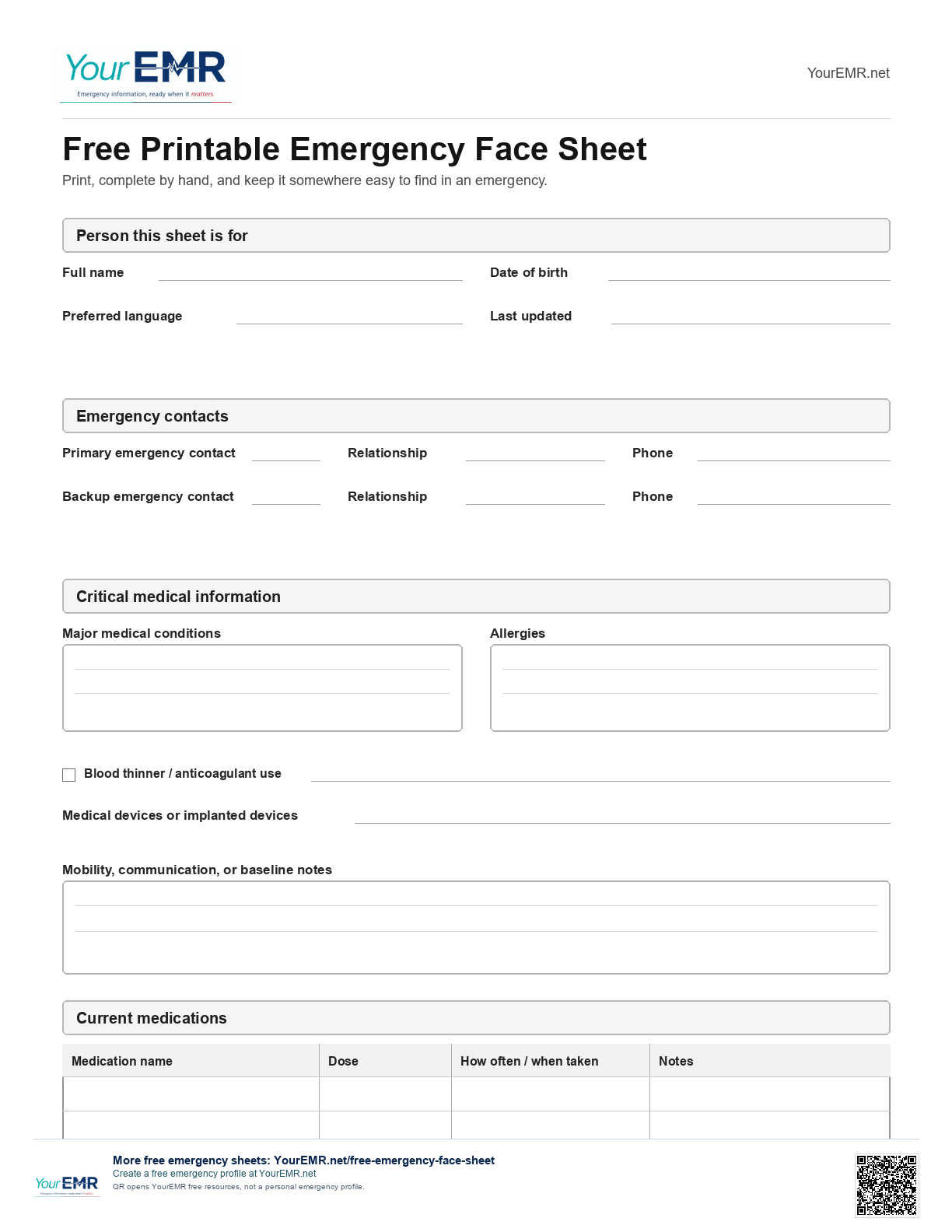
- Name, date of birth, preferred name, and language or communication notes
- Emergency contacts, backup contacts, caregiver contacts, and decision-maker contact if applicable
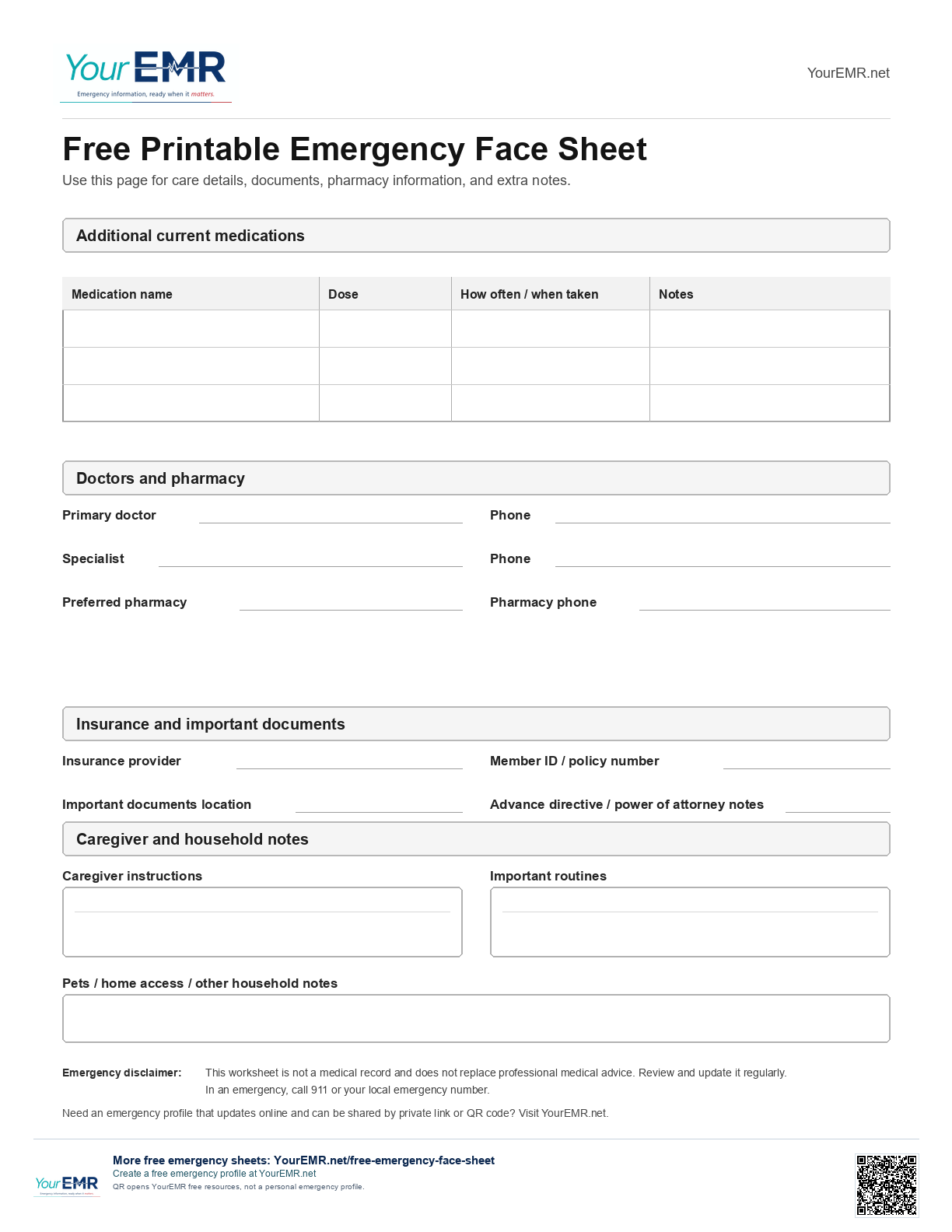
- Doctors, specialists, pharmacy, and insurance information if it is useful to share
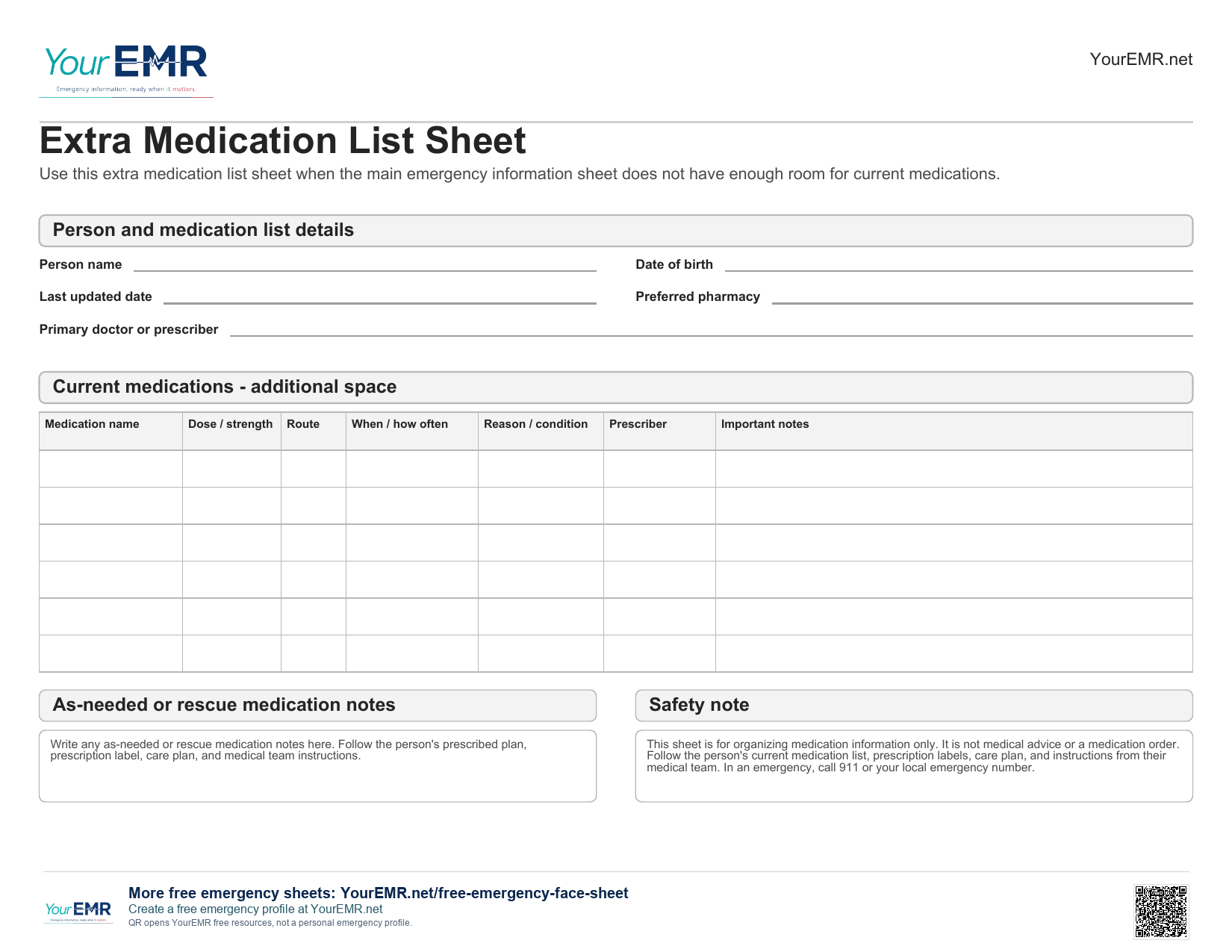
- Medications, dose or strength, how often they are taken, and where the medication list is updated
- Allergies and the type of reaction if the person knows it
- Medical conditions, recent surgeries, important devices, supplies, mobility needs, and accessibility needs
- Preferred hospital or care team notes if there is a clear preference and it is appropriate to share
- Advance directive, healthcare proxy, or care plan location if applicable, without turning the sheet into legal advice
Where to keep it
Keep copies where the right people are likely to find them, such as on the refrigerator, near medications, in an emergency binder, in a wallet or purse, in a glove box or travel bag, with a caregiver, or with a trusted family member. A YourEMR profile can also serve as a digital backup when paper is not nearby.
Do not assume every responder or helper will know where to look. Tell trusted people where the sheet is kept and review whether the location still makes sense.
When to update it
Review the sheet whenever medications, allergies, diagnoses, doctors, pharmacy, insurance, emergency contacts, caregiver contacts, living situation, mobility needs, communication needs, devices, supplies, or care notes change.
It may also be worth reviewing after a hospital discharge, before travel, after a new caregiver starts, or on a regular schedule that is easy to remember.
Privacy and safety notes
A printed sheet may be seen by other people. Avoid adding details that are not useful for emergency organization, such as full Social Security numbers, full financial account numbers, passwords, or direct door codes. If home access is important, it may be safer to list a trusted key holder or emergency contact instead of writing an access code directly on the sheet.
This page is for organization and emergency preparedness only. It is not medical advice and does not replace 911, clinicians, medical records, medication labels, care plans, patient portals, or the person's care team instructions. Review the information and keep it current.
Helpful terms families may hear
- Emergency face sheet: A quick summary of important emergency information.
- Emergency contact sheet: A page focused on who to call and how to reach them.
- Medication list: A current list of medicines, doses or strengths, timing, and pharmacy details.
- Allergy list: A list of allergies and known reactions when that information is available.
- Caregiver handoff: Notes that help a caregiver understand routines, contacts, and important needs.
- Medical ID: A wearable, phone-based, or printed summary that can point to key health details.
- Emergency binder: A paper folder or binder that keeps emergency information and documents together.
- QR emergency profile: A digital emergency profile that can be opened from a QR code or emergency link.
Printable sheet versus digital emergency profile
A printable emergency information sheet works best as a current backup that trusted helpers know how to find.
A digital YourEMR profile can help when information changes often. It can be easier to update medications, contacts, allergies, doctors, notes, and shared emergency details, then print a fresh copy or choose what can be opened through an emergency QR link. The printable and digital versions can work together; one does not replace the other.
Related YourEMR resources
Start with the free face sheet hub.
Want an updateable version of the same emergency information? Create Account.
Helpful emergency preparedness resources
These outside resources are for general education and preparedness only. Always follow instructions from the person's clinicians, care plan, medication labels, and trusted emergency officials.
Guidance on organizing prescription medicines, dosage, frequency, medical supply needs, and allergy information before an emergency.
Preparedness guidance about insurance cards, identification, emergency action plans, advance directives, and other important documents.
Emergency kit guidance that includes medications, medical items, medication lists, pertinent medical information, and family contact information.
Plain-language information about keeping a personal health record with emergency contacts, medicines, allergies, chronic conditions, and related details.
Emergency disclaimer
These free sheets are informational organization tools only. They are not medical records, diagnosis tools, treatment plans, medical advice, or legal advice, and they do not replace 911, EMS, clinicians, medical records, medication labels, device manuals, care plans, patient portals, or professional guidance.