Who this living-alone sheet helps
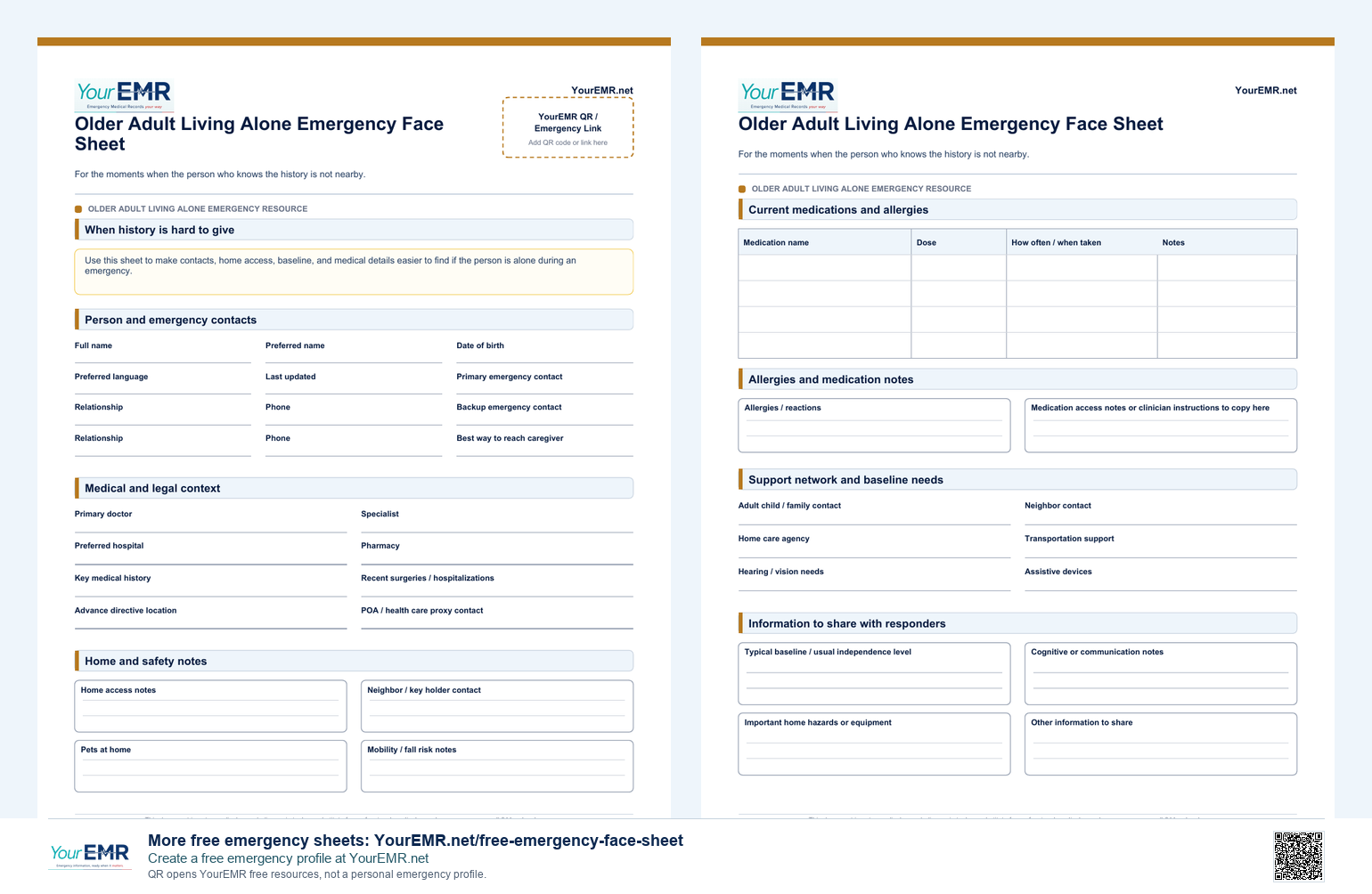
This sheet can help older adults who live alone, adult children helping an aging parent, neighbors who check in, care partners, home health aides, POA contacts, people with mobility or fall-risk concerns, people with changing medications, and families who want emergency information easy to find before it is needed.
If memory changes or dementia are part of the situation, see the dementia and memory care emergency information sheet. If diabetes, CGM, or insulin details are part of the person's care, see the diabetes, CGM, and insulin emergency information sheet. If seizures are part of the person's history, see the seizure and epilepsy emergency information sheet.
Why this may matter in an emergency
When someone lives alone, there may not be another person nearby who can explain medications, allergies, medical history, doctor contacts, home access, pets, mobility needs, hearing or vision needs, or where important documents are kept. This sheet gives families and care partners a simple way to keep those details easy to find.
It can also point helpers toward nearby contacts, preferred family members, key holders, document locations, and baseline needs without putting every private detail on a visible page.
Living-alone details to record
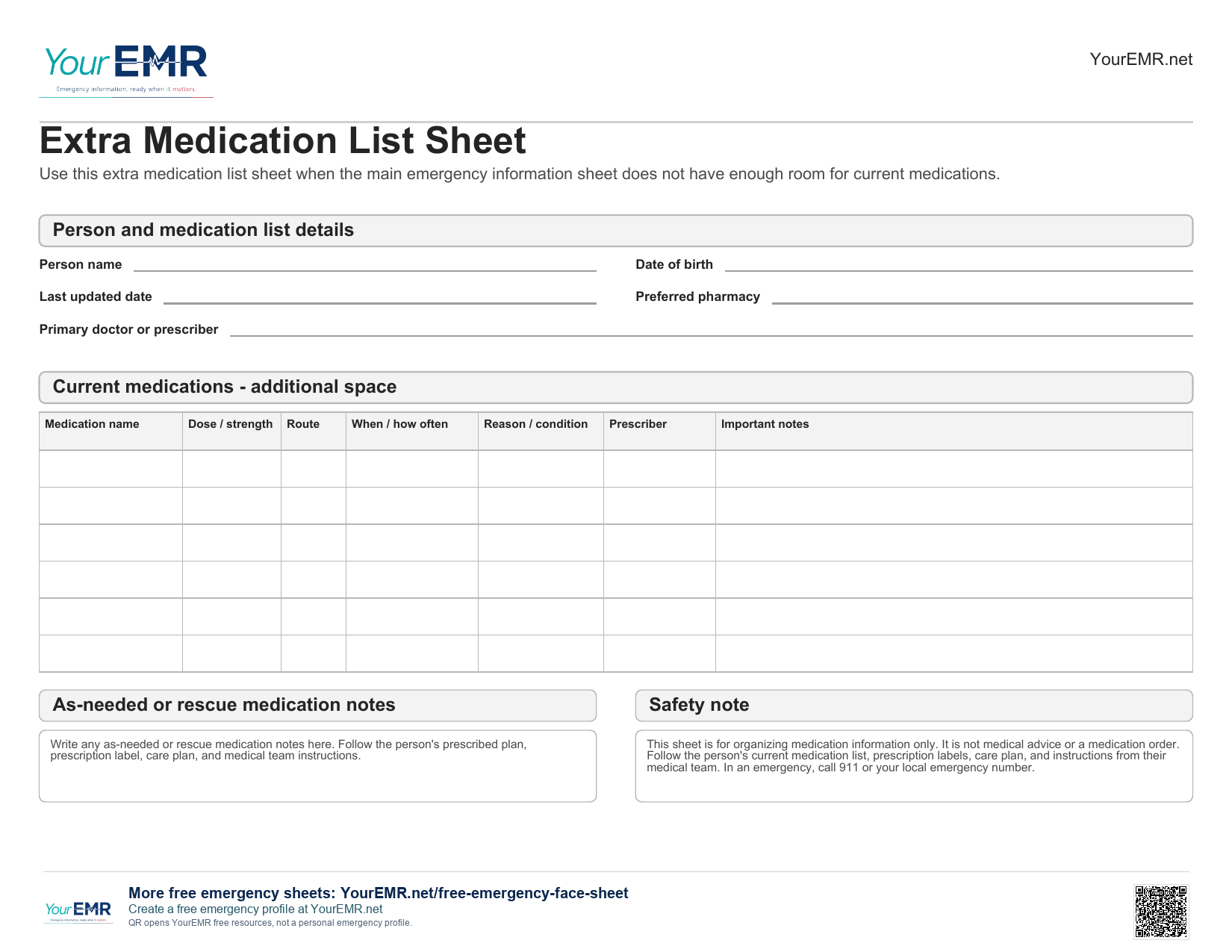
Helpful details may include emergency contacts, adult children, POA or healthcare proxy contacts if applicable, doctors, specialists, pharmacy, medication-list location, allergies, key medical history, recent surgeries, preferred hospital, mobility needs, fall-risk notes, hearing or vision needs, pets, home access notes, key holder or lockbox contact if safe to include, advance directive location, and care-plan location.
Where to keep it / when to update it
Keep a copy somewhere easy to find, such as on the refrigerator, in a caregiver binder, near medications, in an emergency folder, in a go bag, near a medical alert device, with a trusted family member, or with a neighbor or care partner who helps in emergencies. A copy may also be useful for adult children, home health aides, respite caregivers, or anyone who may need to help quickly.
Review it when medications, allergies, doctors, pharmacy, emergency contacts, POA or healthcare proxy contacts, nearby helpers, home access details, pet care notes, mobility, hearing, vision, fall-risk concerns, preferred hospital, advance directive location, or document locations change.
Safety and privacy notes
Home access information can be sensitive. Only include details that the older adult is comfortable sharing, and only place printed copies where they are meant to be found. In some cases, it may be safer to list a trusted key holder or emergency contact instead of putting a code on a visible copy. YourEMR can also help families think through what information should be printed, shared, or kept private.
This sheet should point to contacts and document locations. It should not replace 911, clinicians, medical records, legal documents, advance directives, caregiver judgment, or professional advice.
Older adult emergency planning words families may hear
Families and caregivers may hear words like aging in place, living alone, emergency contact, caregiver, care partner, power of attorney, POA, healthcare proxy, advance directive, living will, DNR, POLST, MOLST, medication list, allergies, baseline, mobility needs, fall risk, walker, cane, wheelchair, hearing aids, glasses, dentures, home oxygen, CPAP, BiPAP, medical alert system, home health, DME, pharmacy, preferred hospital, key holder, lockbox, home access, pets, emergency kit, go bag, Area Agency on Aging, and Eldercare Locator. The printable can point trusted helpers toward the terms, contacts, document locations, and home notes that apply to the person's actual situation.
How YourEMR helps beyond paper
A printable sheet is a useful backup, especially for an older adult who lives alone and may not be able to explain everything during an emergency. An updateable YourEMR profile can help family members keep contacts, document locations, and review dates current before printing a fresh copy.
Emergency disclaimer
These free sheets are informational organization tools only. They are not medical records, diagnosis tools, treatment plans, medical advice, or legal advice, and they do not replace 911, EMS, clinicians, medical records, medication labels, device manuals, care plans, patient portals, or professional guidance.