Who this diabetes handoff sheet helps
This sheet can help people with type 1 diabetes, type 2 diabetes, insulin-dependent diabetes, people who use a CGM, insulin pump, blood glucose meter, glucagon, or other diabetes supplies, parents caring for a child with diabetes, caregivers helping an older adult, school staff, babysitters, travel companions, coaches, and families who want emergency information easy to find before it is needed.
For a less diabetes-specific option, see the general emergency information sheet. Caregivers helping an older adult who lives alone may also want the older adult living alone emergency information sheet.
Why this may matter in an emergency
Diabetes information can change across school plans, medication labels, device apps, pharmacy records, travel bags, and caregiver notes. During an urgent handoff, another helper may need to know where the current medication list, CGM or pump basics, emergency plan, and prescriber or pharmacy contacts are kept.
A short sheet can make those sources easier to find without giving insulin dosing advice, device troubleshooting steps, or treatment instructions.
Diabetes device and supply details to record
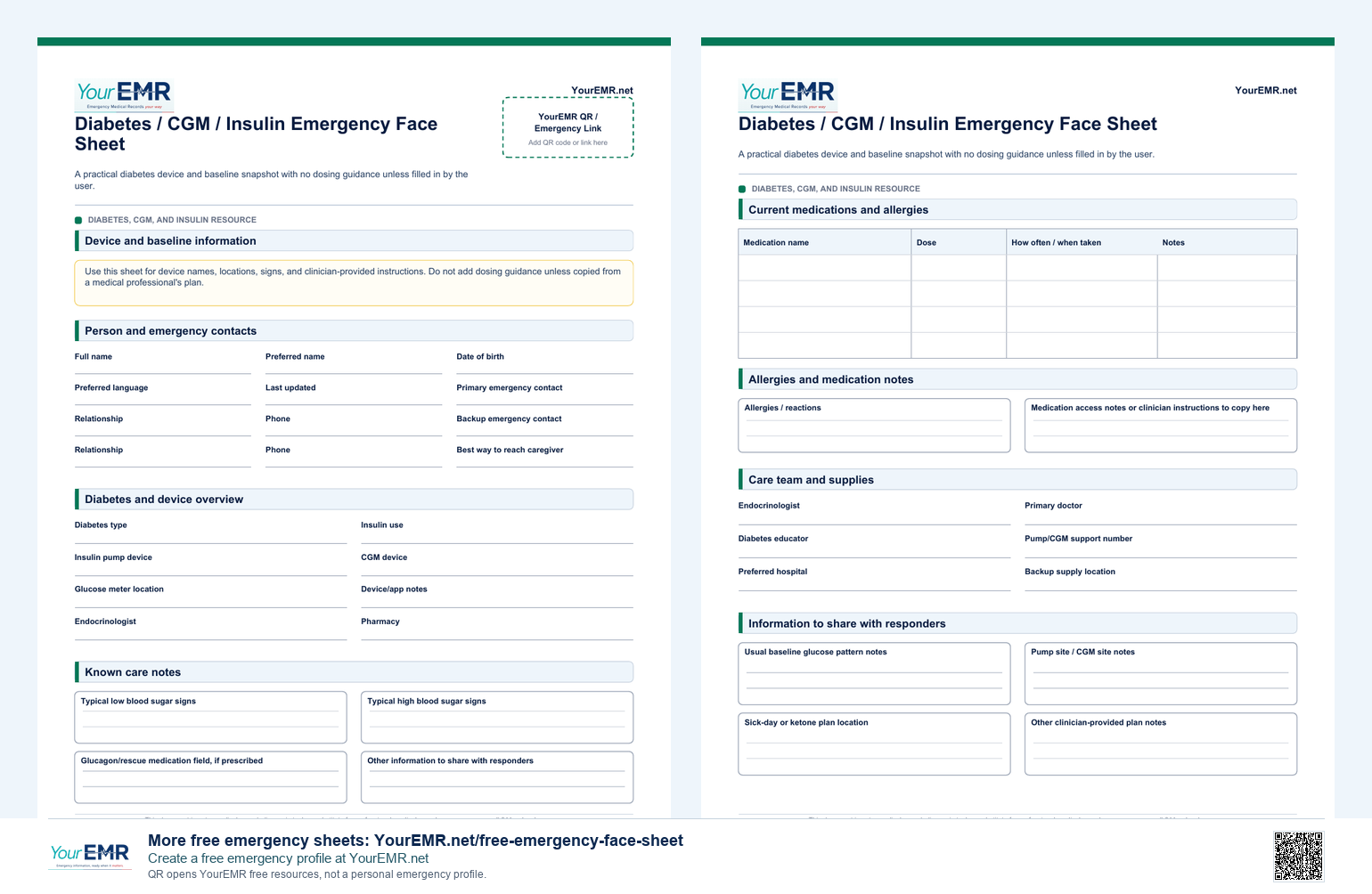
Helpful details may include diabetes type, medication-list location, insulin use as listed in current records, pump or CGM basics copied from current records, meter and supply locations, glucagon or rescue medication location if prescribed, ketone or DKA plan location if applicable, endocrinologist contact, primary doctor, pharmacy, allergies, emergency contacts, and caregiver note locations.
If seizures are also part of the person's history, see the seizure and epilepsy emergency information sheet. For children with multiple diagnoses, devices, or care instructions, see the medically complex child emergency information sheet.
Where to keep it / when to update it
Keep a copy somewhere easy to find, such as in a caregiver binder, school packet, diabetes supply bag, travel bag, sports bag, emergency kit, medication folder, glove box, or with a trusted family member. A copy may also be useful for babysitters, school nurses, coaches, respite workers, adult day programs, travel companions, or care handoffs.
Review it when insulin type, medication list location, pump or CGM basics, meter location, rescue medication plan location, emergency plan location, endocrinologist contact, pharmacy, allergies, emergency contacts, school plan, travel plan, or caregiver contacts change.
Safety notes
Keep the sheet to factual locations and contacts. Do not add dosing decisions, correction formulas, pump troubleshooting, CGM interpretation, ketone treatment steps, or instructions that replace the person's diabetes care plan, school plan, medication labels, device instructions, clinicians, or emergency services.
Diabetes, CGM, and insulin words families may hear
Families and caregivers may hear words like diabetes, type 1 diabetes, type 2 diabetes, insulin, rapid-acting insulin, long-acting insulin, basal insulin, bolus insulin, correction factor, carb ratio, blood glucose, blood sugar, hypoglycemia, hyperglycemia, glucagon, rescue medication, ketones, DKA, CGM, continuous glucose monitor, sensor, transmitter, receiver, insulin pump, infusion set, pump site, pod, meter, test strips, lancets, endocrinologist, diabetes educator, school diabetes plan, and emergency kit. The printable can point trusted helpers toward the terms, contacts, medication-list location, device basics, and plan locations that apply to the person's actual care.
How YourEMR helps beyond paper
A printable sheet is a useful backup, especially for diabetes information that needs to be found quickly. An updateable YourEMR profile can help families refresh contacts, document locations, and caregiver notes when the paper copy needs to be reprinted.
Learn more about diabetes, CGMs, insulin, and emergency planning
These outside resources are for general education only. Always follow the person's diabetes care plan, school diabetes plan, medication instructions, device instructions, and emergency instructions from their medical team.
Plain-language information about diabetes, including type 1, type 2, and gestational diabetes.
General education about hypoglycemia, symptoms, causes, and why low blood sugar can become dangerous.
General education about DKA, ketones, and why diabetic ketoacidosis can be serious.
Patient education about continuous glucose monitors, also called CGMs.
Patient education about insulin pumps and how they deliver insulin.
Overview of diabetes devices such as blood glucose meters, CGMs, insulin pumps, and connected insulin pens.
General education about low blood glucose, symptoms, treatment concepts, and when help may be needed.
Tips for people with diabetes and caregivers preparing for emergencies, disasters, travel, and supply disruptions.
Information about school diabetes care plans, blood sugar support, insulin, meals, activity, and emergency planning.
Emergency disclaimer
These free sheets are informational organization tools only. They are not medical records, diagnosis tools, treatment plans, medical advice, or legal advice, and they do not replace 911, EMS, clinicians, medical records, medication labels, device manuals, care plans, patient portals, or professional guidance.