Who this medically complex child sheet helps
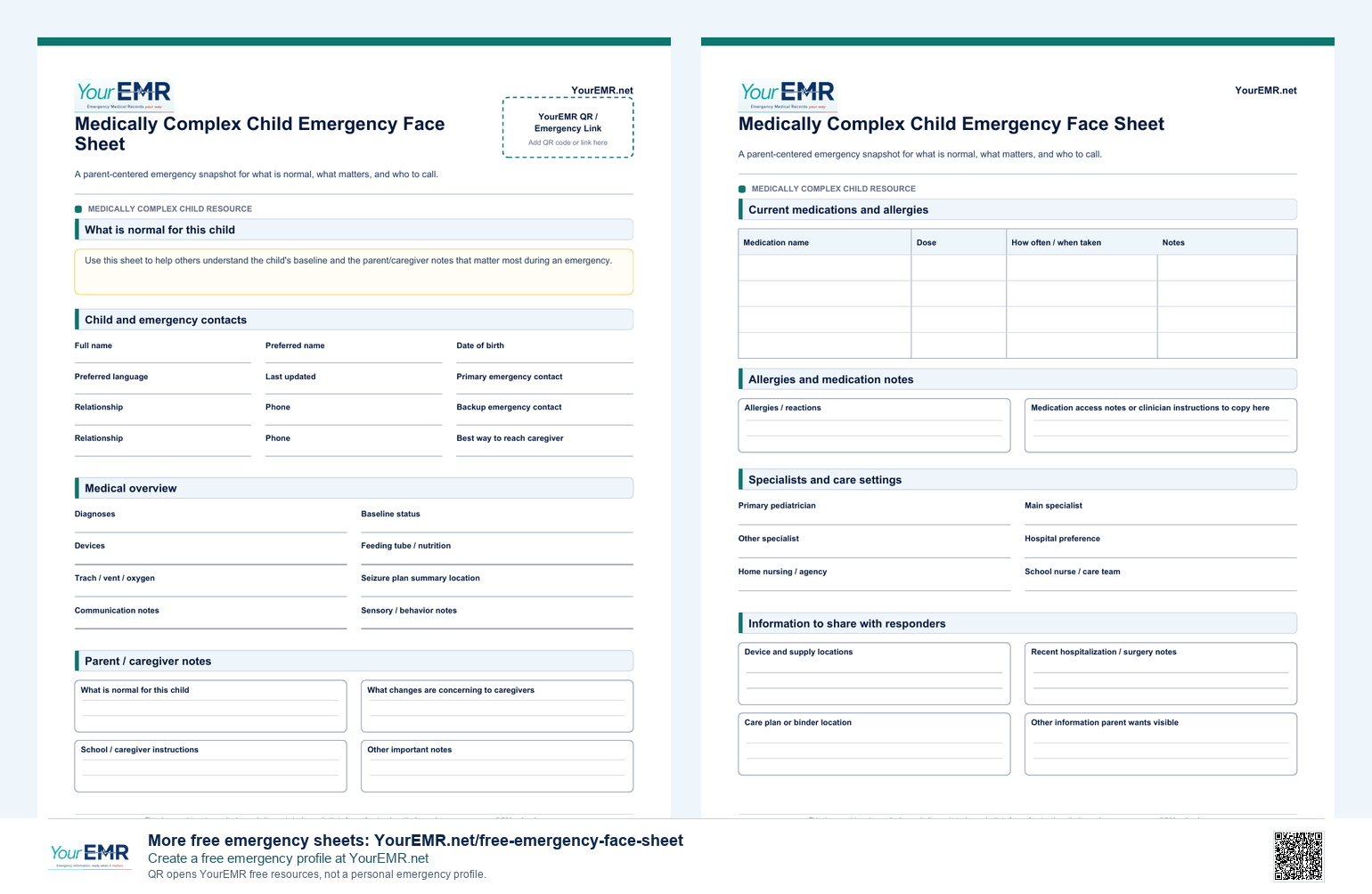
This sheet can help parents, guardians, home nurses, school nurses, respite caregivers, grandparents, and trusted helpers find a child's parent contacts, baseline notes, care-plan locations, device or supply context, specialists, and emergency contacts without relying on memory.
Baseline and care-plan locations matter
For a medically complex child, 'normal' may look different from child to child. The printable can help parents record what is typical for their child, where the current care plan is kept, and which parent, guardian, clinician, school, or supply contact can confirm details.
Child-specific details to record
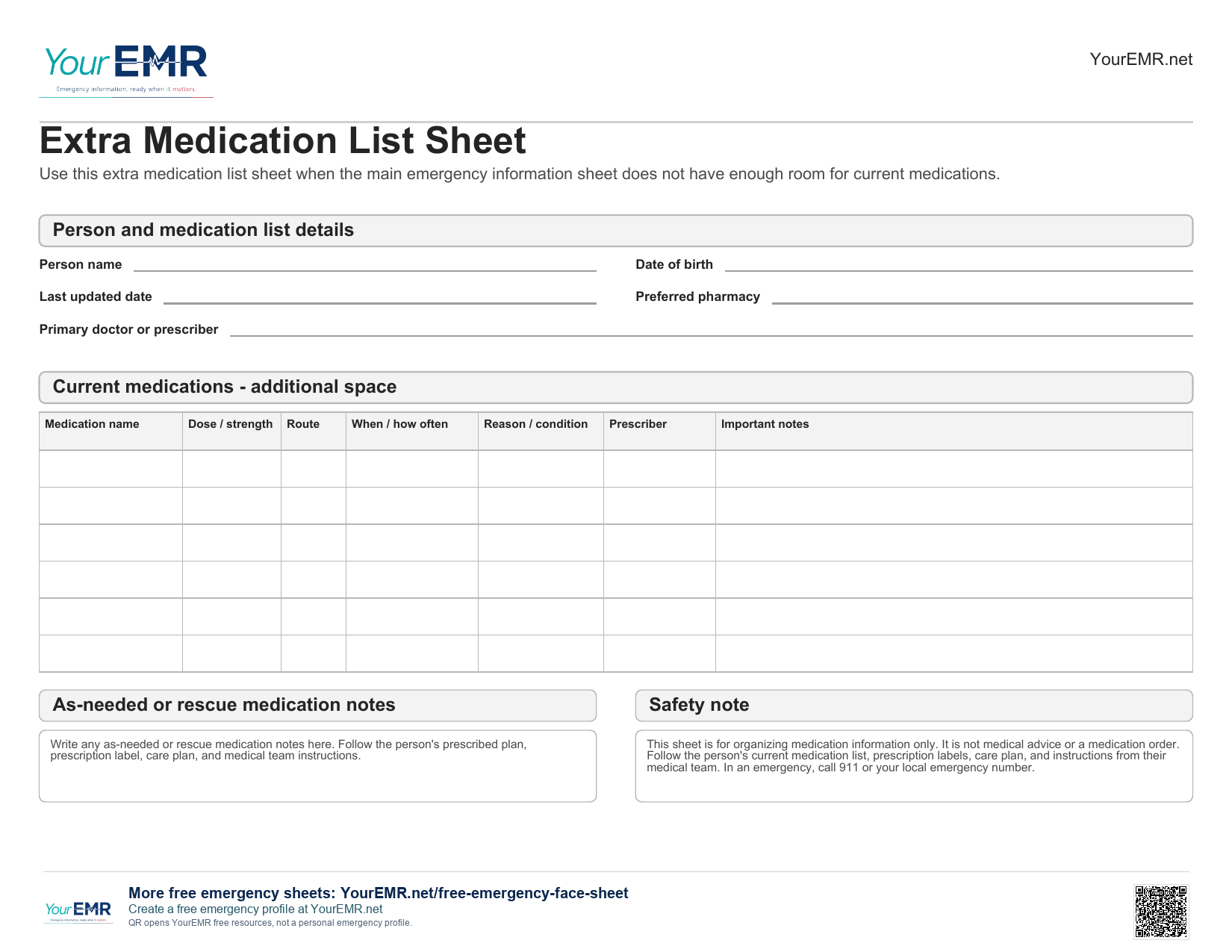
Helpful details may include parent or guardian contacts, diagnoses or condition summary as family-recorded information, baseline status, allergies, medication-list location, device and supply locations, feeding plan location, airway notes, seizure action plan location if applicable, specialists, primary doctor, pharmacy, DME or supply company, home nursing agency if applicable, school contacts, hospital preference, and emergency contacts.
If airway equipment is part of the child's care, see the trach and airway emergency information sheet . If seizures are part of the child's history, see the seizure and epilepsy emergency information sheet. If diabetes, CGM, or insulin details are part of the child's care, see the diabetes, CGM, and insulin emergency information sheet. If communication or sensory support is part of the child's plan, see the autism, nonspeaking, and sensory emergency information sheet.
Where to keep it
Keep a copy somewhere trusted helpers know to check, such as a caregiver binder, emergency bag, medical supply bag, school packet, daycare packet, travel bag, go-bag, medication folder, or with a trusted family member. A copy may also be useful for school nurses, home nurses, respite workers, grandparents, therapists, camp staff, coaches, or caregiver handoffs.
When to update it
Review the sheet whenever parent or guardian contacts, diagnoses or condition summary, baseline status, devices, supplies, feeding plan location, airway notes, seizure plan location, diabetes care-plan location, medications, allergies, specialists, DME contacts, home nursing contacts, hospital preference, school plan, emergency contacts, or caregiver contacts change.
Medical complexity words families may hear
Families may hear many care-team terms. The printable should not explain procedures; it should point trusted helpers to the current plan, parent or guardian, clinician, supply company, school contact, or device paperwork.
- Baseline, care plan, diagnosis summary, hospital preference, and emergency information form
- Device, supply, DME, home nursing, school nurse, therapy team, and specialist contacts
- Feeding, airway, seizure, diabetes, mobility, communication, sensory, or equipment plan locations
How YourEMR helps beyond paper
A printable sheet is a useful backup, especially for a child whose care details may be too important to rely on memory during an emergency. YourEMR can also help keep this information organized digitally, update it when details change, print a fresh copy, and choose what can be shared through an emergency QR link.
Want an updateable version? Create Account or try the demo.
Learn more about children with medical complexity and emergency planning
These outside resources are for general education only. Always follow the child's care plan, school plan, device instructions, medication instructions, and emergency instructions from the child's medical team.
Emergency preparedness information for families of children with special healthcare needs.
Checklist covering medical information, care plans, medications, supplies, backup power, and equipment planning.
Emergency Information Form resources from the American College of Emergency Physicians and American Academy of Pediatrics.
Professional and family-facing emergency preparedness guidance for children with special healthcare needs.
Professional overview of children with medical complexity, care coordination, medical home needs, technology use, and family burden.
Research article about emergency information forms for children with medical complexity.
Family-focused emergency and disaster planning handout for families of children with special health care needs.
Emergency preparedness information for people with disabilities, access needs, functional needs, caregivers, and support networks.
American Academy of Pediatrics family readiness resource for emergency and disaster planning.
National pediatric emergency care resource center with information for improving emergency care for children.
Emergency disclaimer
These free sheets are informational organization tools only. They are not medical records, diagnosis tools, treatment plans, medical advice, or legal advice, and they do not replace 911, EMS, clinicians, medical records, medication labels, device manuals, care plans, patient portals, or professional guidance.