Who this seizure and epilepsy sheet helps
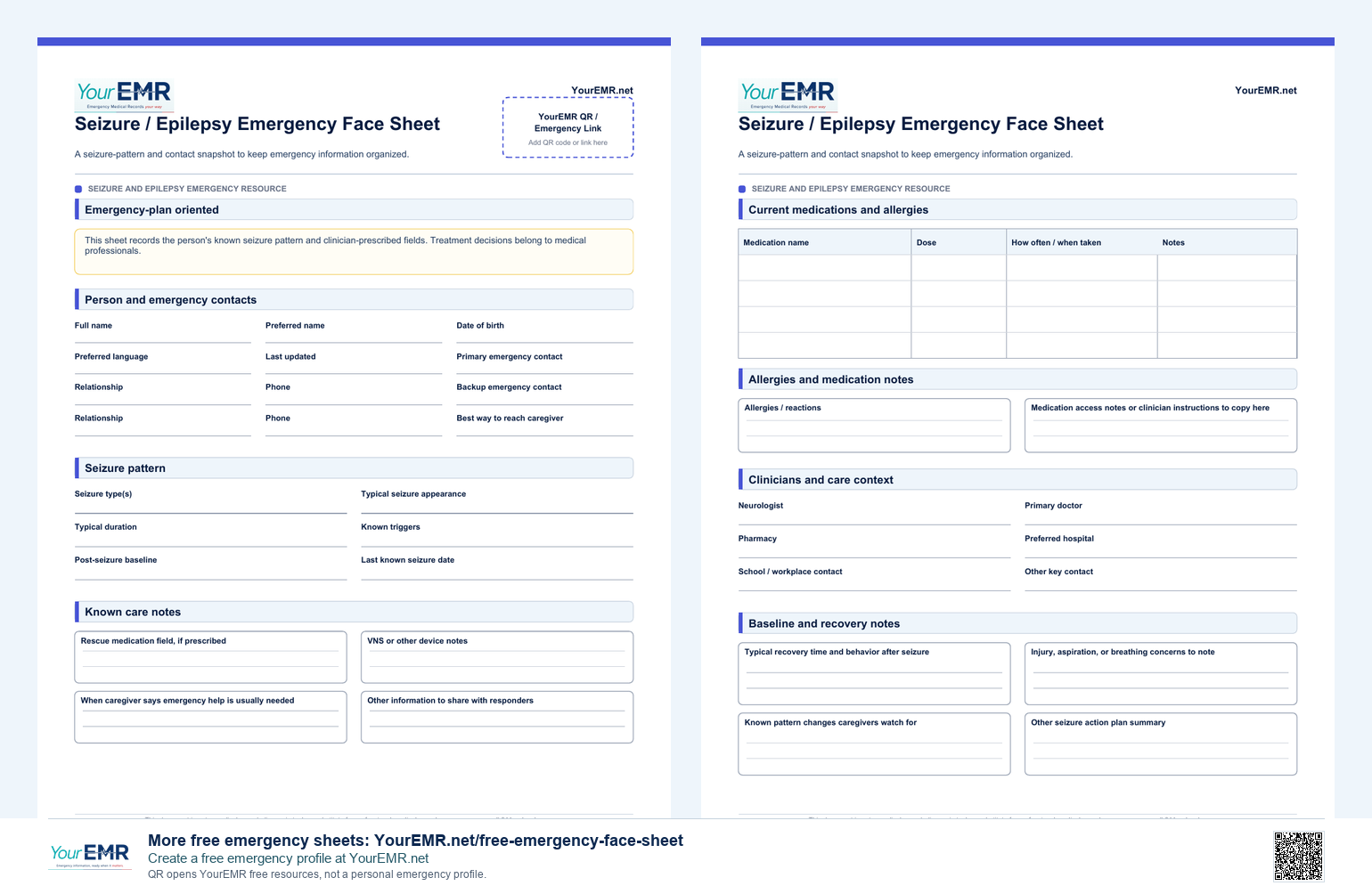
This sheet can help people with epilepsy, people with a history of seizures, parents caring for a child with seizures, caregivers supporting someone who may not be able to explain their seizure history, school or daycare staff, coaches, babysitters, respite workers, and families who want emergency information easy to find before a seizure happens.
For a less seizure-specific option, see the general emergency information sheet. If communication or sensory support is part of the person's plan, see the autism, nonspeaking, and sensory emergency information sheet.
Helpful seizure details to gather
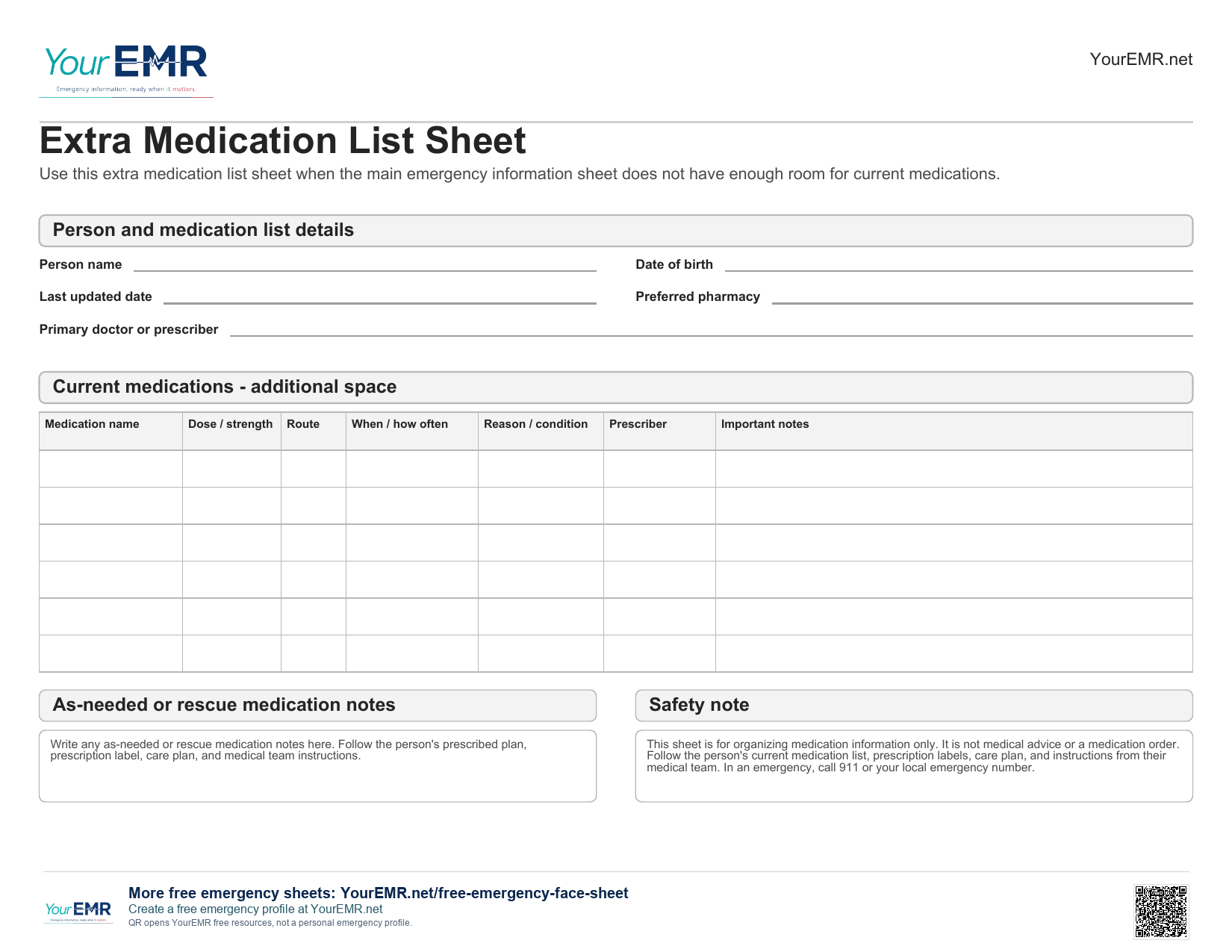
Helpful details may include seizure type, what the person's usual seizure looks like, typical length, known triggers if any, aura or warning signs if any, what the person is usually like after a seizure, seizure action plan location, rescue medication location if prescribed, VNS or implanted device information if applicable, neurologist contact, primary doctor, medication-list location, allergies, emergency contacts, and caregiver notes.
For children with multiple diagnoses, devices, or care instructions, see the medically complex child emergency information sheet. If diabetes, CGM, or insulin details also need to be easy to find, see the diabetes, CGM, and insulin emergency information sheet.
Where to keep it
Keep a copy somewhere easy to find, such as in a caregiver binder, school packet, daycare packet, sports bag, travel bag, emergency kit, medication folder, or with a trusted family member. A copy may also be useful for babysitters, coaches, school nurses, respite workers, adult day programs, or care handoffs.
When to update it
Review the sheet whenever seizure type, seizure pattern, seizure frequency, rescue medication plan, medication list, allergies, triggers, neurologist contact, school or care plan, emergency contacts, or caregiver instructions change.
Seizure words families may hear
Families and caregivers may hear words like epilepsy, seizure disorder, seizure action plan, rescue medication, tonic-clonic seizure, focal seizure, absence seizure, myoclonic seizure, atonic seizure, aura, trigger, postictal, baseline, prolonged seizure, seizure cluster, status epilepticus, VNS, vagus nerve stimulator, EEG, neurologist, anti-seizure medication, seizure diary, and emergency plan. The printable can point trusted helpers toward the terms, contacts, plan locations, and current records that apply to the person's actual care plan.
How YourEMR helps beyond paper
A printable sheet is a useful backup, especially for seizure information that needs to be found quickly. YourEMR can also help keep this information organized digitally, update it when details change, print a fresh copy, and choose what can be shared through an emergency QR link.
Want an updateable version? Create Account or try the demo.
Learn more about seizures, epilepsy, and seizure action plans
These outside resources are for general education only. Always follow the person's seizure action plan, medication instructions, and emergency instructions from their medical team.
Plain-language seizure first-aid education from the CDC.
Information about epilepsy, school support, seizure first aid, and reducing stigma.
Information about seizure action plans and organizing seizure information for different settings.
Seizure first-aid resources, posters, and educational tools.
General education about rescue therapies and why instructions should be part of a seizure action plan.
National Institute of Neurological Disorders and Stroke information about epilepsy and seizures.
Detailed NIH/NINDS educational publication about epilepsy, seizures, diagnosis, and treatment.
Emergency disclaimer
These free sheets are informational organization tools only. They are not medical records, diagnosis tools, treatment plans, medical advice, or legal advice, and they do not replace 911, EMS, clinicians, medical records, medication labels, device manuals, care plans, patient portals, or professional guidance.