Who this dementia handoff sheet helps
This dementia-focused printable can help family caregivers, adult children caring for an aging parent, spouses or partners, long-distance caregivers, home health aides, respite caregivers, shared-care households, assisted living contacts, and trusted family members keep the same handoff details in one place.
It is most useful when the person may not be able to reliably explain their address, medications, allergies, medical history, contacts, baseline memory, or usual communication style during a stressful moment.
Why this may matter in an emergency
A person living with dementia may be confused, anxious, repetitive, nonverbal, unable to answer reliably, or unable to explain who should be contacted. A caregiver may not be present when urgent help is needed, a substitute caregiver may be filling in, or family members may be coordinating from a distance.
A concise written sheet may help another person find the right contact faster, understand the caregiver-provided baseline, and look for safe-return or routine notes without relying only on memory.
Dementia handoff details to record
Keep entries short, factual, and easy to scan. Focus on emergency information and caregiver context that helps someone contact the right person and understand what is typical for the person.
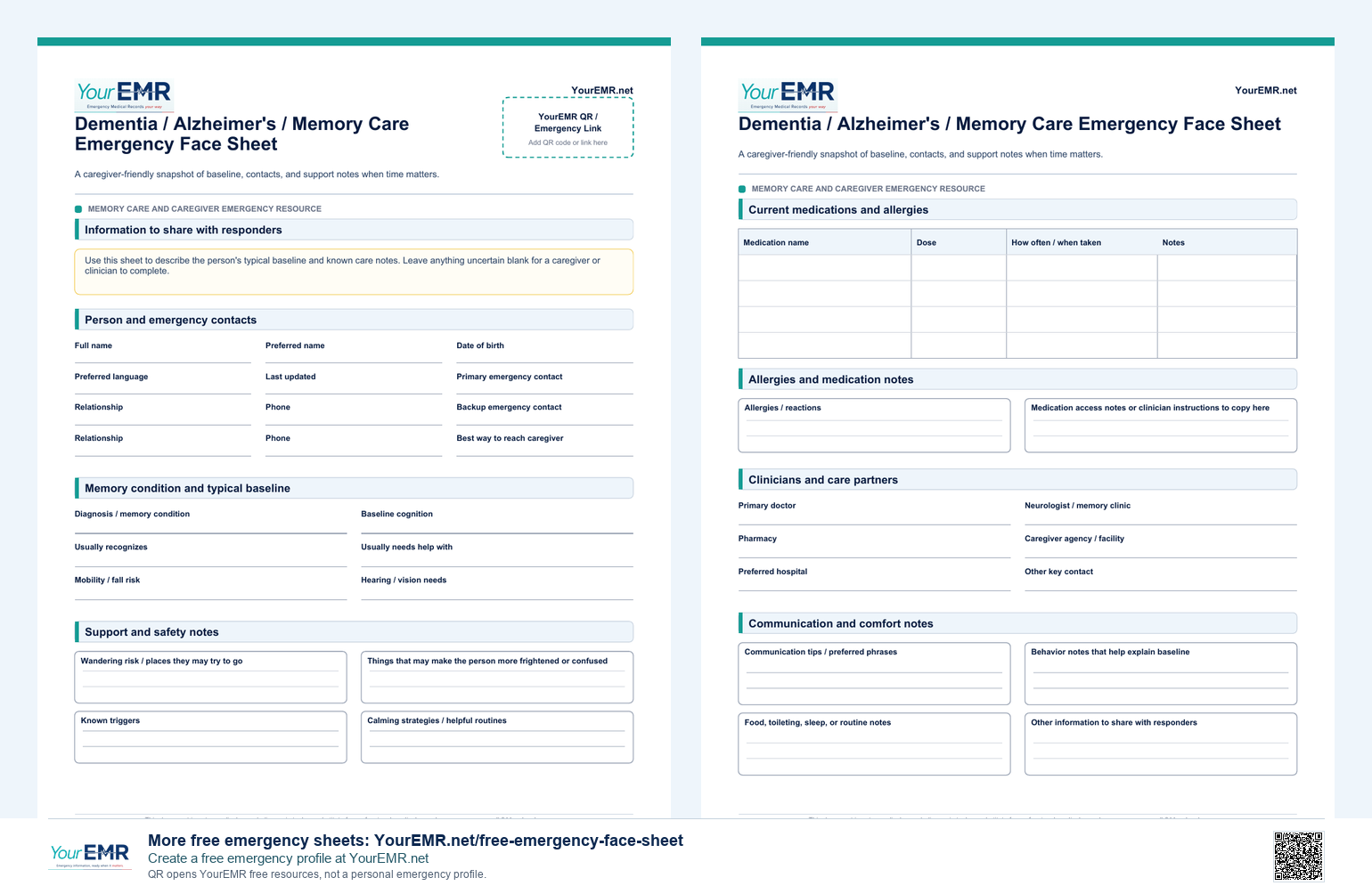
- Full name, preferred name, date of birth, home address, and identifying details
- Emergency contacts, primary caregiver, backup caregiver, and decision-maker contact if applicable
- Primary doctor, relevant specialists, pharmacy, and preferred hospital if appropriate to share
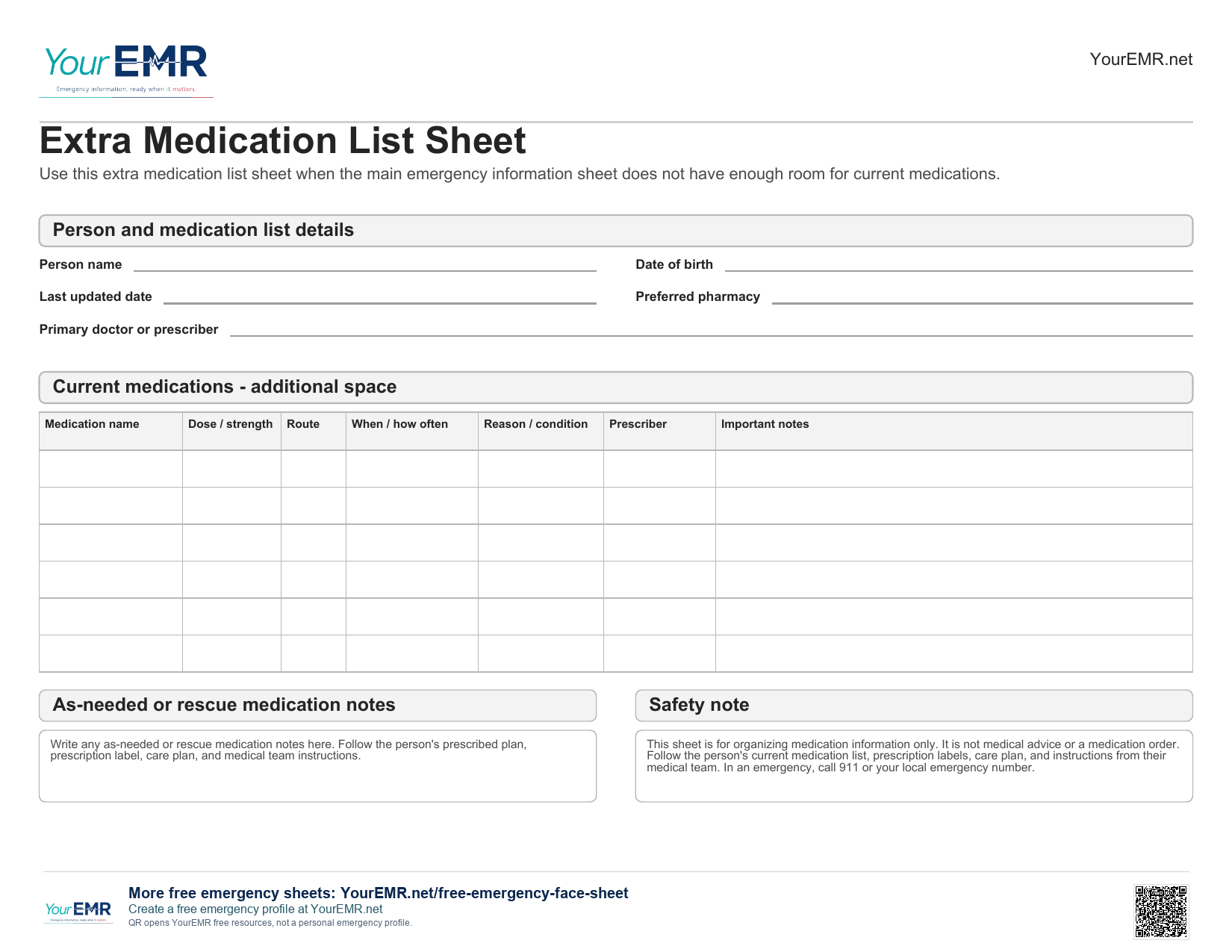
- Current medication-list location, allergies, and where the updated medication details are kept
- High-level diagnoses, medical conditions, recent hospital discharge notes, and care plan location
- Baseline memory, orientation, communication, behavior, routines, and what is normal for this person
- Hearing, vision, mobility, speech, language, glasses, hearing aids, walker, cane, wheelchair, or other support needs
- Known triggers, comfort preferences, familiar name or phrase, and caregiver-provided context that may help others understand what usually supports the person
- Wandering or getting-lost risk, common places they may try to reach, and who should be contacted if there is concern
Dementia-specific handoff notes
These notes should add context, not instructions. They may help a substitute caregiver, EMS, urgent care, ER team, home health aide, or family member understand the person in front of them.
- How the person usually communicates, including preferred language, short phrases, gestures, AAC tools, or nonverbal cues
- Whether the person may be confused, anxious, repetitive, unable to answer reliably, or more comfortable with a familiar caregiver
- Whether glasses, hearing aids, dentures, mobility aids, or caregiver support are usually needed
- Preferred name, familiar caregiver contact, and notes about routines that help explain what is normal
- Important "do not assume" context, such as baseline confusion or usual repetitive questions, without trying to explain a new medical change
Where to keep it / when to update it
Keep copies where trusted helpers are likely to find them: on the refrigerator or in a visible emergency folder, in a caregiver binder, in a wallet or purse, in a go-bag, with a trusted family member, or with respite and home health caregiver notes.
Review it when medications, allergies, doctors, pharmacy, address, emergency contacts, caregiver contacts, decision-maker contacts, living arrangement, mobility, communication, wandering risk, safe-return details, routines, or care plan location changes.
Do not assume every responder or helper will check a specific location. Tell trusted caregivers and family where the current sheet is kept, and consider keeping a fuller version in a safer place if a public copy would reveal too much.
Privacy and safety notes
Share only what is useful for emergency organization and caregiver handoff. Avoid putting full Social Security numbers, financial account numbers, passwords, direct door codes, or unnecessary sensitive details on a sheet that may be visible.
This page is for organization and emergency preparedness only. It is not medical advice and does not replace 911, emergency services, clinicians, medical records, medication labels, care plans, patient portals, MedicAlert-style programs, or professional caregiving judgment. Follow professional guidance and keep the information accurate.
Helpful terms caregivers may hear
- Emergency face sheet: A quick summary of important emergency information.
- Caregiver handoff: Notes that help another caregiver understand routines, contacts, and important needs.
- Baseline behavior: What is usual for the person, such as memory, orientation, communication, sleep, appetite, movement, or anxiety patterns.
- Emergency contact: The first person to call if help is needed or information is missing.
- Medication list: A current list of medicines, doses or strengths, timing, pharmacy, and where updates are kept.
- Allergy list: A list of allergies and known reactions when that information is available.
- Wandering risk: Caregiver-provided context that the person may leave, get lost, or try to reach a familiar place.
- Communication needs: How the person best understands and shares information, including speech, hearing, vision, language, gestures, or support tools.
- Decision-maker contact: A legally authorized or family contact to reach when decisions or documents need to be located, without turning the sheet into legal advice.
Printable sheet versus digital emergency profile
A printable dementia emergency information sheet works best as a current backup that trusted helpers know how to find.
A digital YourEMR profile may help when information changes often. Caregivers can update contacts, medications, allergies, doctors, baseline notes, and shared emergency details, then print a fresh copy or choose what can be opened through an emergency QR link. The printable and digital versions can work together.
Related YourEMR resources
Start with the free face sheet hub, or compare the older adult living alone sheet.
Helpful dementia caregiver and preparedness resources
These outside resources are for general education and preparedness only. Always follow the person's clinicians, care plan, medication labels, emergency services, and trusted care team instructions.
Guidance on organizing health conditions, medicines, provider contacts, emergency contacts, and care needs in one place.
Dementia-specific preparedness guidance for emergency plans, supply kits, medical history, medication lists, doctor information, and family contacts.
Background on wandering and getting-lost risk, including planning context caregivers may want to document and share with trusted helpers.
Caregiver education about communication changes, sensory needs, preferred communication methods, and listening with patience.
NIH/NLM overview of dementia symptoms, daily-life effects, communication changes, and why professional medical guidance still matters.
Emergency disclaimer
These free sheets are informational organization tools only. They are not medical records, diagnosis tools, treatment plans, medical advice, or legal advice, and they do not replace 911, EMS, clinicians, medical records, medication labels, device manuals, care plans, patient portals, or professional guidance.