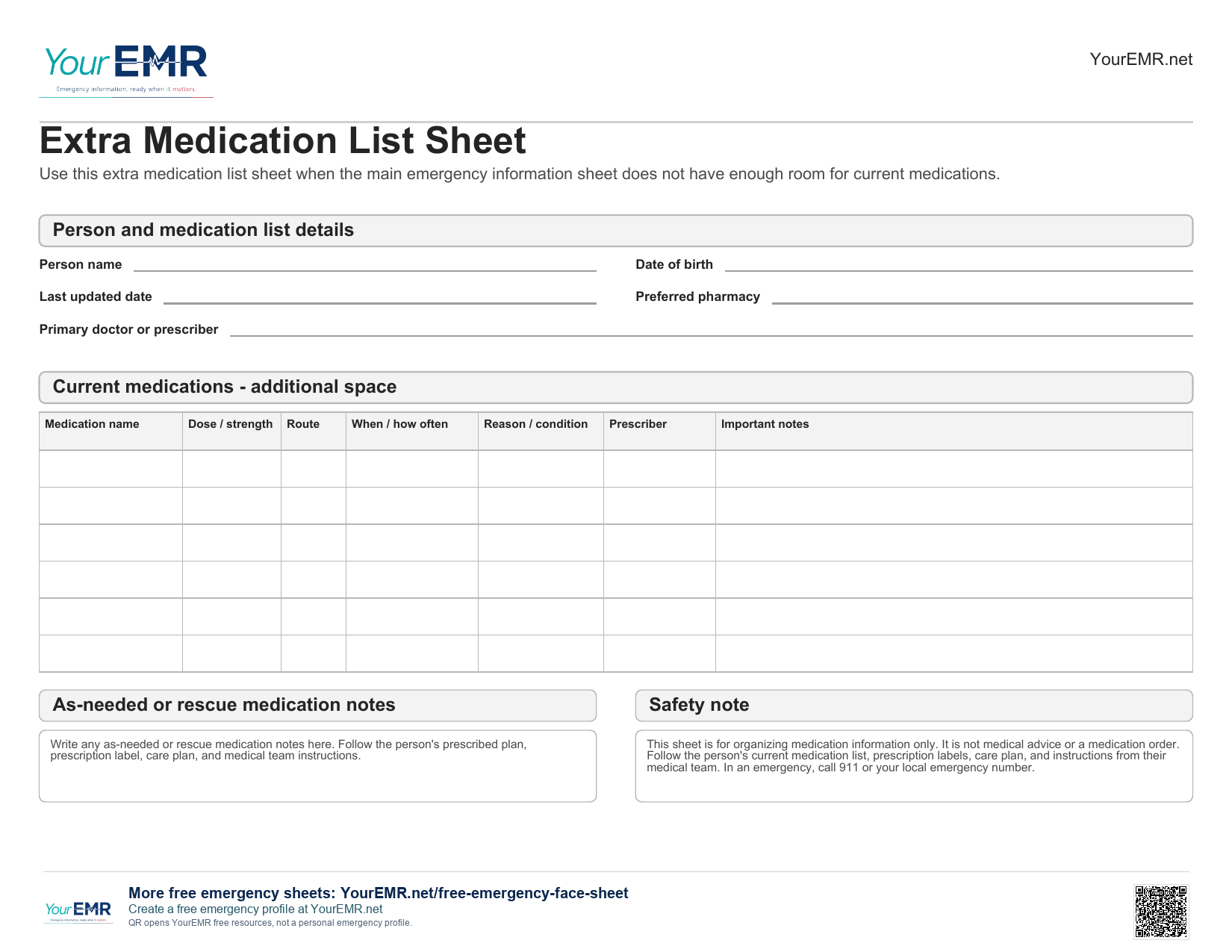
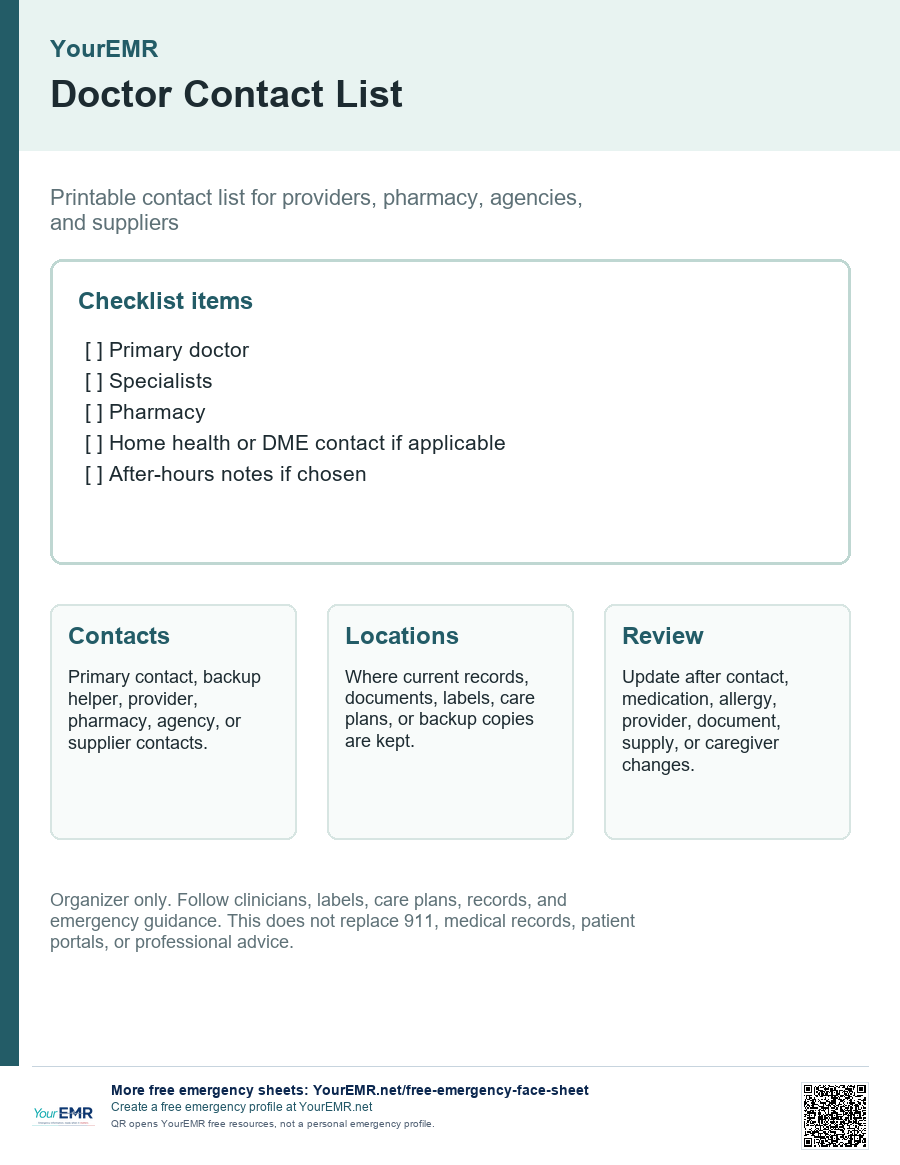
Use this doctor and care-team contact list to keep primary care, specialists, pharmacy, home health, equipment suppliers, caregiver contacts, after-hours contact locations if available, portal locations, and record sources in one readable place.
This may be called a doctor contact list, provider contact sheet, care team contact list, medical contact list, or emergency provider directory.
No signup is required to download the printable PDF.
The main emergency information sheet download stays separate.
Doctor Contact List printable preview
Who uses a doctor contact list?
This printable is for people with multiple providers, caregivers who coordinate appointments, families helping from a distance, and households that want provider, pharmacy, agency, and supplier contacts in one emergency folder.
Why this may matter in an emergency
The right phone number may be on an appointment card, pharmacy label, portal message, DME invoice, home health folder, or a caregiver's phone. In a stressful moment, those details are easy to miss.
A contact list can help a caregiver, urgent care team, ER team, or family member identify who is connected to the person and where records or support information may live.
Provider contact handoff notes
Handoff notes can explain where contacts came from and who updates them. After-hours details should point to the listed source only; avoid clinical triage advice, treatment decisions, procedure decisions, or claims that a contact sheet replaces the care team.
Which provider is primary for routine care
Which specialist or agency contact is current
Where patient portal, appointment, or supplier information is kept
Who should update the list after a provider, pharmacy, agency, or supplier change
Where to keep it / when to update it
Keep copies with the emergency binder, appointment folder, refrigerator folder, bedside folder, caregiver packet, travel bag, or go-bag.
Review the list after a new provider, specialist, pharmacy, agency, supplier, phone number, portal, caregiver, discharge, move, or insurance change.
Avoid putting portal passwords, account numbers, or private access details on a visible copy.
Privacy and safety notes
This printable is for emergency information organization and preparedness only. It is not medical advice or legal advice and does not replace 911, EMS, clinicians, patient portals, medical records, care plans, medication labels, agency instructions, supplier instructions, or professional guidance.
Printable list versus digital emergency profile
A digital YourEMR profile may help when phone numbers, provider names, pharmacies, agencies, suppliers, and caregiver contacts change.
Helpful terms families may hear
Primary doctor: The provider a family often lists first for routine medical coordination.
Specialist: A clinician focused on a particular area of care.
DME supplier: A durable medical equipment supplier, if the person uses equipment or supplies.
After-hours note: A factual note about where the person says after-hours contact information is listed.
Care-team contacts to record
Helpful contact details may come from appointment paperwork, provider cards, patient portals, pharmacy labels, home health paperwork, DME paperwork, supplier records, or caregiver notes.
Primary doctor, specialists, dentist, vision provider, hearing provider, pharmacy, and preferred contact method if chosen
Home health agency, hospice or palliative care contact if applicable, DME supplier, equipment vendor, and supply company
After-hours contact notes if the person chooses to include them
Emergency contacts, caregiver contacts, patient portal location, and last updated date
Related YourEMR resources
Use these related YourEMR pages when they fit the person's situation.
These outside resources are for general education only. Always follow clinicians, current care plans, patient portals, official records, and professional guidance.
NIH MedlinePlus overview of keeping personal health record details such as emergency contacts, medicines, allergies, chronic diseases, and health history.
This resource helps organize emergency information. It does not provide medical advice, diagnosis, treatment, or individualized emergency instructions.
These free sheets are informational organization tools only. They are not medical records, diagnosis tools, treatment plans, medical advice, or legal advice, and they do not replace 911, EMS, clinicians, medical records, medication labels, device manuals, care plans, patient portals, or professional guidance.