Who it helps
People with a colostomy, ileostomy, urostomy, temporary ostomy, permanent ostomy, or pouching system, plus family caregivers, school caregivers, respite caregivers, home health aides, travel companions, and trusted helpers.

Free printable emergency information sheet
A free printable emergency information sheet for organizing ostomy type, supply contacts, pouching system context, clinician contacts, allergies, medications, caregiver contacts, and emergency contacts.
This may be called an ostomy face sheet, colostomy emergency information sheet, ileostomy handoff sheet, urostomy supply summary, or caregiver emergency notes page.
No signup is required to download the printable PDF.
Optional add-on
Add a separate medication list sheet if the main emergency information sheet does not have enough room.
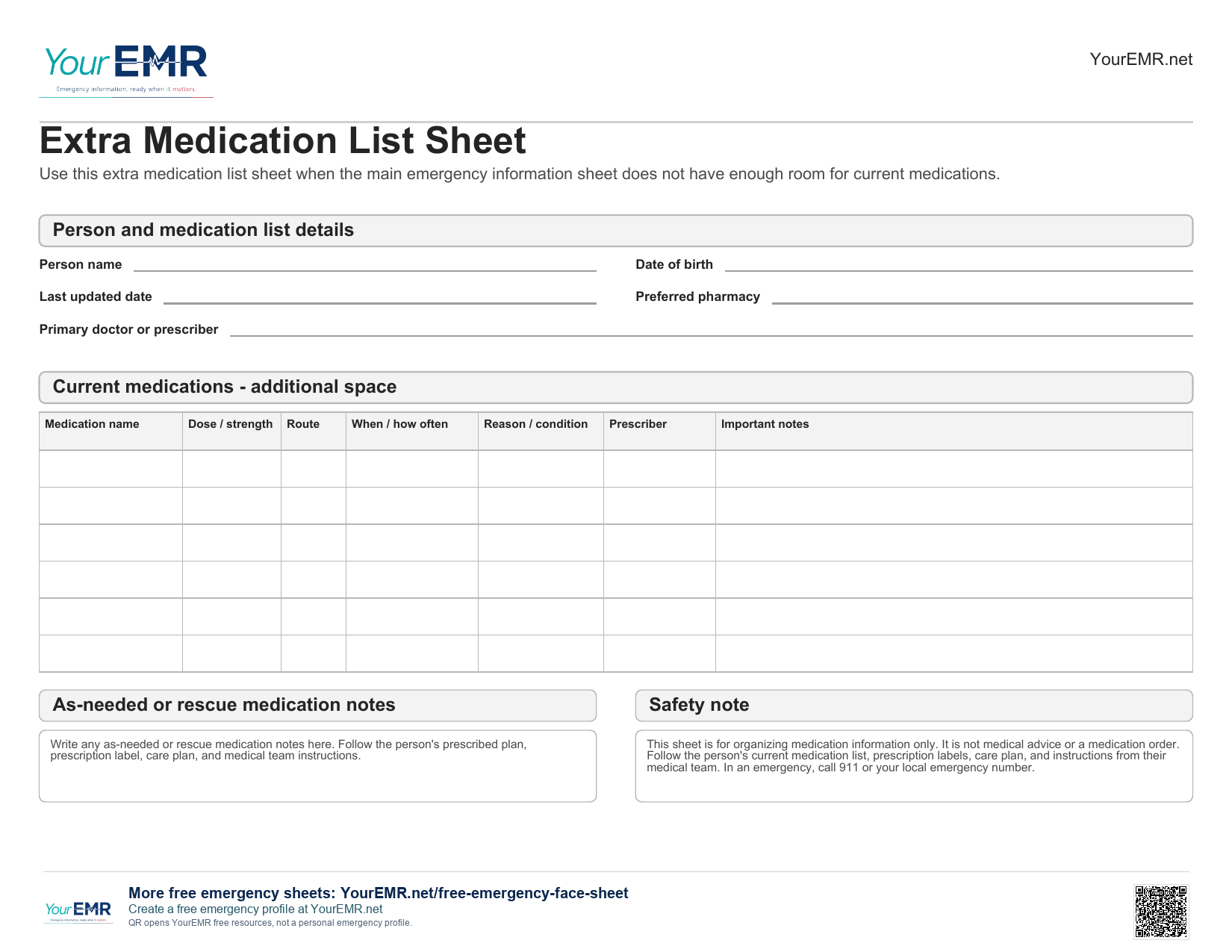
The main emergency information sheet download stays separate.
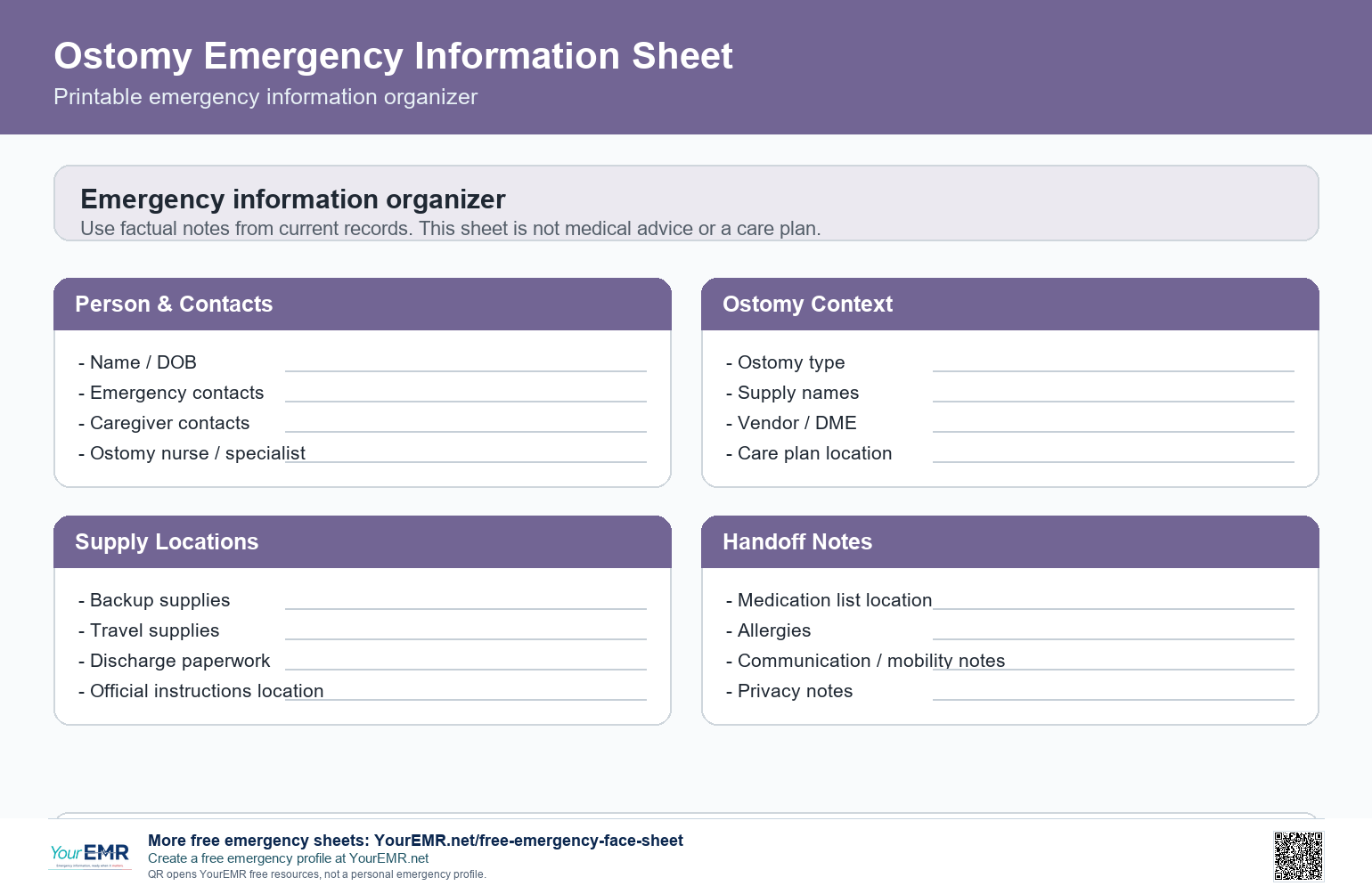
People with a colostomy, ileostomy, urostomy, temporary ostomy, permanent ostomy, or pouching system, plus family caregivers, school caregivers, respite caregivers, home health aides, travel companions, and trusted helpers.
A caregiver, family member, school caregiver, home health aide, urgent care team, ER team, or travel companion may need to find ostomy supply contacts and clinician contacts quickly.
A concise sheet may help someone locate supplies, vendor information, ostomy nurse contacts, medication lists, allergy lists, and fuller care-plan documents.
These notes can point helpers toward contacts, supplies, and current documents. Avoid directions about changing supplies, troubleshooting leaks, skin care, diet changes, output changes, or complications.
Keep copies near the supply area, in a caregiver binder, in a travel bag, in a go-bag, with school or respite notes, with home health notes, or with a trusted family member.
Tell trusted caregivers and family where the current sheet, extra supplies, supply paperwork, and official care plan are kept.
Review the sheet when ostomy type, pouching system, supply vendor, clinician contacts, supply location, medications, allergies, diagnoses, caregiver contacts, or emergency contacts change.
It may also be worth reviewing after a hospital discharge, supply change, clinic visit, travel plan, school or respite change, or new caregiver handoff.
Ostomy details can be personal. Share only what is useful for emergency organization and caregiver handoff.
This page is for organization and emergency preparedness only. It is not medical advice and does not replace 911, EMS, clinicians, ostomy nurse instructions, supply instructions, medication labels, medical records, discharge instructions, care plans, patient portals, or clinical triage guidance. Do not use it for stoma care, pouch changes, diet decisions, skin care, output management, or treatment decisions.
A digital YourEMR profile may help when supply names, vendor contacts, clinician contacts, medication lists, allergies, or caregiver contacts change. It can be updated, printed again, or shared through an emergency QR link.
Helpful details may come from the person's care plan, supply packaging, vendor paperwork, clinic paperwork, medication list, or caregiver records.
Use these related YourEMR pages when they fit the person's situation.
These outside resources are for general education only. Always follow the person's clinicians, ostomy nurse, supply instructions, medication labels, and care plan.
NIH/NLM overview of colostomy, stoma context, pouching context, and why clinician guidance matters.
NIH/NLM overview of ileostomy, stoma context, and temporary or long-term ostomy context.
Patient organization resources on ostomy support, products, travel, emergency supplies, and contacting clinicians or ostomy nurses.
Continue with guidance and printables already grouped for this topic.
Content accountability
This resource helps organize emergency information. It does not provide medical advice, diagnosis, treatment, or individualized emergency instructions.
No individual medical review is claimed.
Editorial standards and correctionsSend individual feedback or report a correction
Ready for an updateable profile?
YourEMR helps keep emergency information organized and ready when it matters.
These free sheets are informational organization tools only. They are not medical records, diagnosis tools, treatment plans, medical advice, or legal advice, and they do not replace 911, EMS, clinicians, medical records, medication labels, device manuals, care plans, patient portals, or professional guidance.