Who this printable is for
This printable is for anyone who wants a pocket-sized backup that can travel with them, especially when allergies, medications, contacts, doctor information, or full-record locations may be hard to remember under stress.
Free printable emergency information sheet
A free printable wallet emergency medical card for organizing emergency contacts, allergies, medications, high-level conditions, doctor or pharmacy contacts, and a note about where fuller emergency information is kept.
This may be called a wallet medical card, emergency medical wallet card, ICE card, emergency contact card, or medical information card.
No signup is required to download the printable PDF.
Optional add-on
Add a separate medication list sheet if the main emergency information sheet does not have enough room.
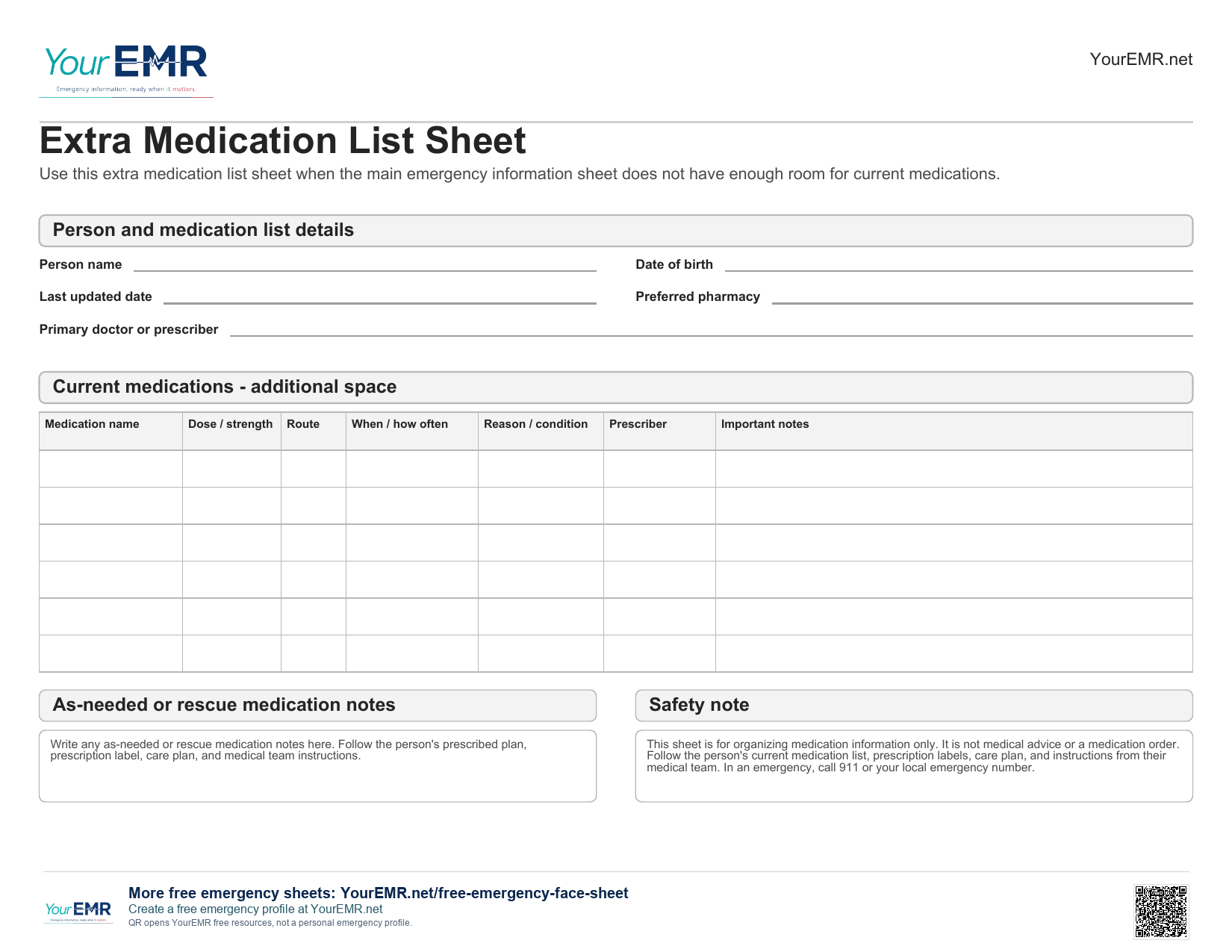
The main emergency information sheet download stays separate.
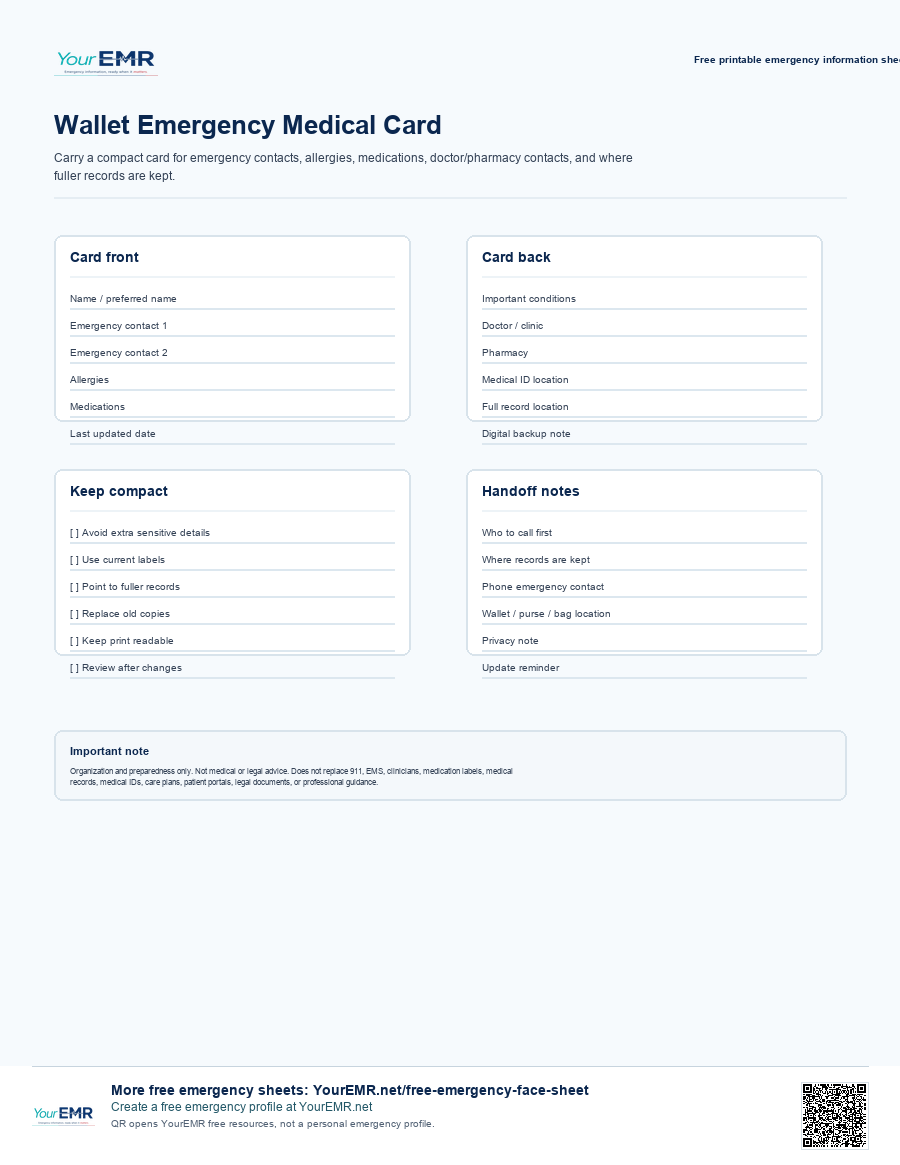
This printable is for anyone who wants a pocket-sized backup that can travel with them, especially when allergies, medications, contacts, doctor information, or full-record locations may be hard to remember under stress.
A person may not be able to answer questions clearly during a stressful situation, and a phone may be locked, dead, or unavailable.
A wallet card can point to contacts and fuller records, but it should not claim to replace a medical ID, medical record, care plan, patient portal, or professional guidance.
Handoff notes can keep the card scannable. Do not write treatment instructions, medication decisions, or claims that responders will always use the card.
Keep the card in a wallet, purse, phone case, backpack, travel pouch, work bag, or caregiver folder where the person or trusted helpers expect it.
Do not assume every responder or helper will check a specific location. Tell trusted people where the current sheet and fuller records are kept.
Review the card when emergency contacts, medications, allergies, doctors, pharmacy, medical ID, fuller record location, or phone numbers change.
Replace worn or outdated cards and avoid carrying multiple conflicting versions.
A wallet card can be misplaced or seen by others. Keep it compact and avoid unnecessary sensitive information.
Avoid passwords, full Social Security numbers, financial account numbers, door codes, or unnecessary sensitive details on a visible copy.
This page is for organization and emergency preparedness only. It is not medical advice or legal advice and does not replace 911, EMS, clinicians, medical records, medication labels, medical IDs, care plans, patient portals, legal documents, or professional guidance.
A digital YourEMR profile can hold fuller details that change over time, such as contacts, medications, allergies, doctors, document locations, caregiver roles, and privacy choices. Update the profile and print a fresh copy when something changes.
Helpful details may come from current contact lists, medication labels, allergy lists, clinician paperwork, patient portals, and the person's own records.
For a wallet card, include only the most useful facts. Use a fuller sheet or YourEMR profile for details that do not fit or should not be exposed.
Use these related YourEMR pages when they fit the person's situation.
These outside resources are for general education and preparedness only. Always follow emergency services, clinicians, medication labels, care plans, medical IDs, patient portals, and professional guidance.
NIH/NLM information about keeping personal health records with emergency contacts, medicines, allergies, chronic conditions, and related details.
Preparedness guidance for organizing prescription medicines, dosage, frequency, medical supply needs, allergy information, and pharmacy contacts.
Preparedness guidance for collecting and protecting insurance cards, identification, care plans, emergency action plans, and important documents.
FEMA/Ready.gov plan form for household contacts, emergency contacts, school or workplace contacts, medical information, and meeting-place details.
Continue with guidance and printables already grouped for this topic.
Content accountability
This resource helps organize emergency information. It does not provide medical advice, diagnosis, treatment, or individualized emergency instructions.
No individual medical review is claimed.
Editorial standards and correctionsSend individual feedback or report a correction
Ready for an updateable profile?
YourEMR helps keep emergency information organized and ready when it matters.
Compare phone Medical ID and YourEMR, or learn about optional physical QR products.
These free sheets are informational organization tools only. They are not medical records, diagnosis tools, treatment plans, medical advice, or legal advice, and they do not replace 911, EMS, clinicians, medical records, medication labels, device manuals, care plans, patient portals, or professional guidance.