Who this caregiver binder sheet helps
This sheet is for family caregivers, adult children, spouses, care partners, shared-care households, home health helpers, respite helpers, and trusted family members who need a quick front page for a binder or care folder.
It is especially useful when a substitute caregiver needs to know which contact to try first, what daily-routine notes matter, and where the current care plan, medication list, documents, and backup contacts are kept.
Why this may matter in an emergency
Caregiver information often lives across paper folders, medication labels, home health notes, patient portals, family texts, equipment paperwork, and someone's memory.
A short binder summary can help a family member, new helper, respite caregiver, urgent care team, ER team, or trusted neighbor find the first contact, current document, or daily-routine note without searching through the whole binder.
Backup caregiver handoff notes
Handoff notes can explain what a substitute caregiver should check first and who can confirm it. Avoid medical directions, legal interpretations, medication administration directions, transfer techniques, feeding instructions, or device instructions.
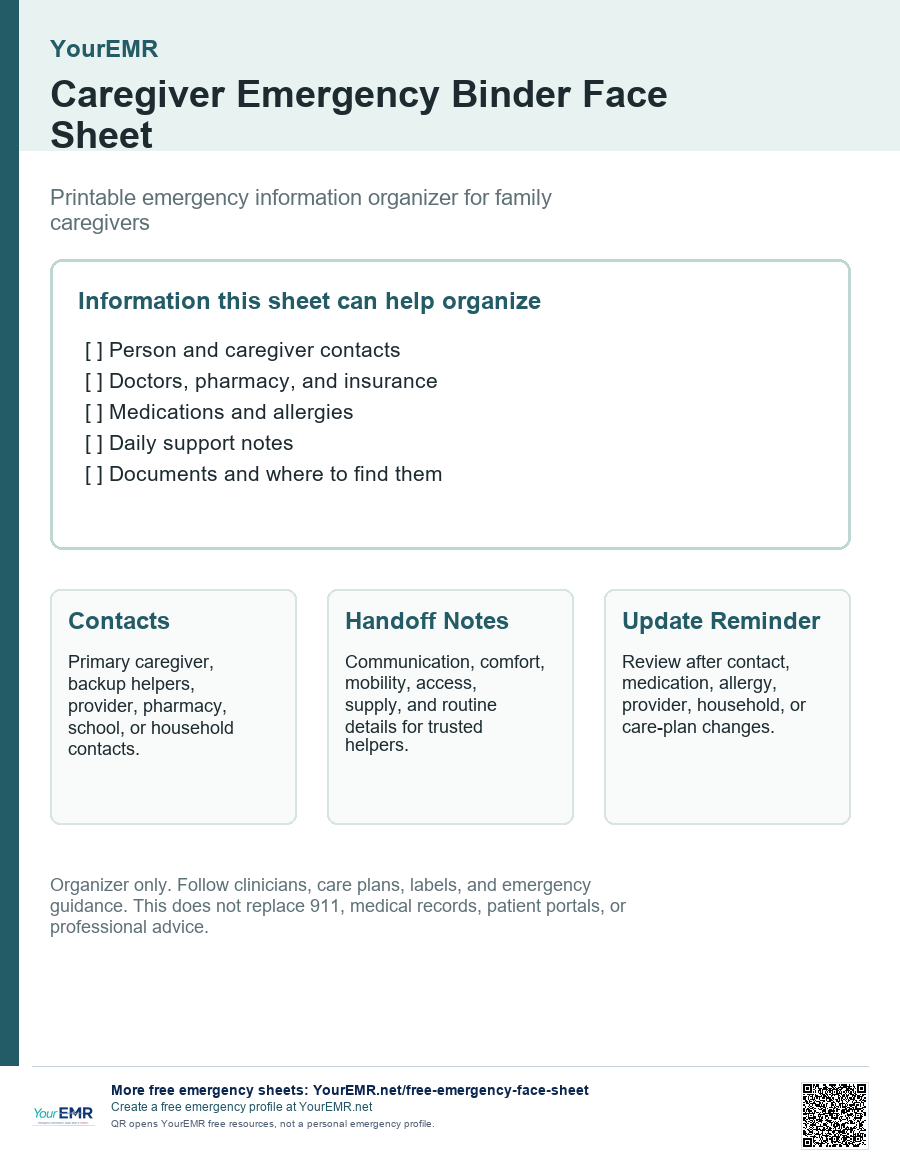
- Which binder, folder, or digital profile has the current information
- Who updates the medication list, allergy list, and doctor contacts
- Which caregiver or family member knows the person's usual daily routine
- Where equipment notes, supplier contacts, home health contacts, pet notes, or home notes are kept if they are safe to share
- Where the current care plan, discharge paperwork, legal documents, or insurance information can be found
- What information should stay private unless it is needed for emergency organization
Where to keep it / when to update it
Keep copies in the caregiver binder, emergency folder, refrigerator folder, bedside folder, home health folder, medication area, travel bag, or with a trusted family member.
Review the sheet when contacts, doctors, pharmacy, medications, allergies, insurance basics, caregiver roles, routines, document locations, or living arrangements change.
Tell trusted caregivers and family where the current sheet and fuller records are kept. Avoid placing sensitive home access details somewhere too visible.
Privacy and safety notes
A caregiver binder can contain sensitive information. Avoid passwords, door codes, full account numbers, financial details, or legal interpretations on a visible copy.
This page is for organization and emergency preparedness only. It is not medical advice or legal advice and does not replace 911, EMS, clinicians, medical records, medication labels, care plans, child-care policies, school documentation, custody or legal documents, discharge instructions, patient portals, or professional guidance.
Printable sheet versus digital emergency profile
A digital YourEMR profile may help when contacts, medications, allergies, caregiver notes, pharmacy, document locations, or care team information change. It can be updated, printed again, or shared through an emergency QR link.
Helpful terms families may hear
- Caregiver binder: A folder or notebook where family caregivers keep practical emergency information and current care documents.
- Care plan: A clinician- or caregiver-supported document that explains care needs and contacts; the sheet points to it rather than replacing it.
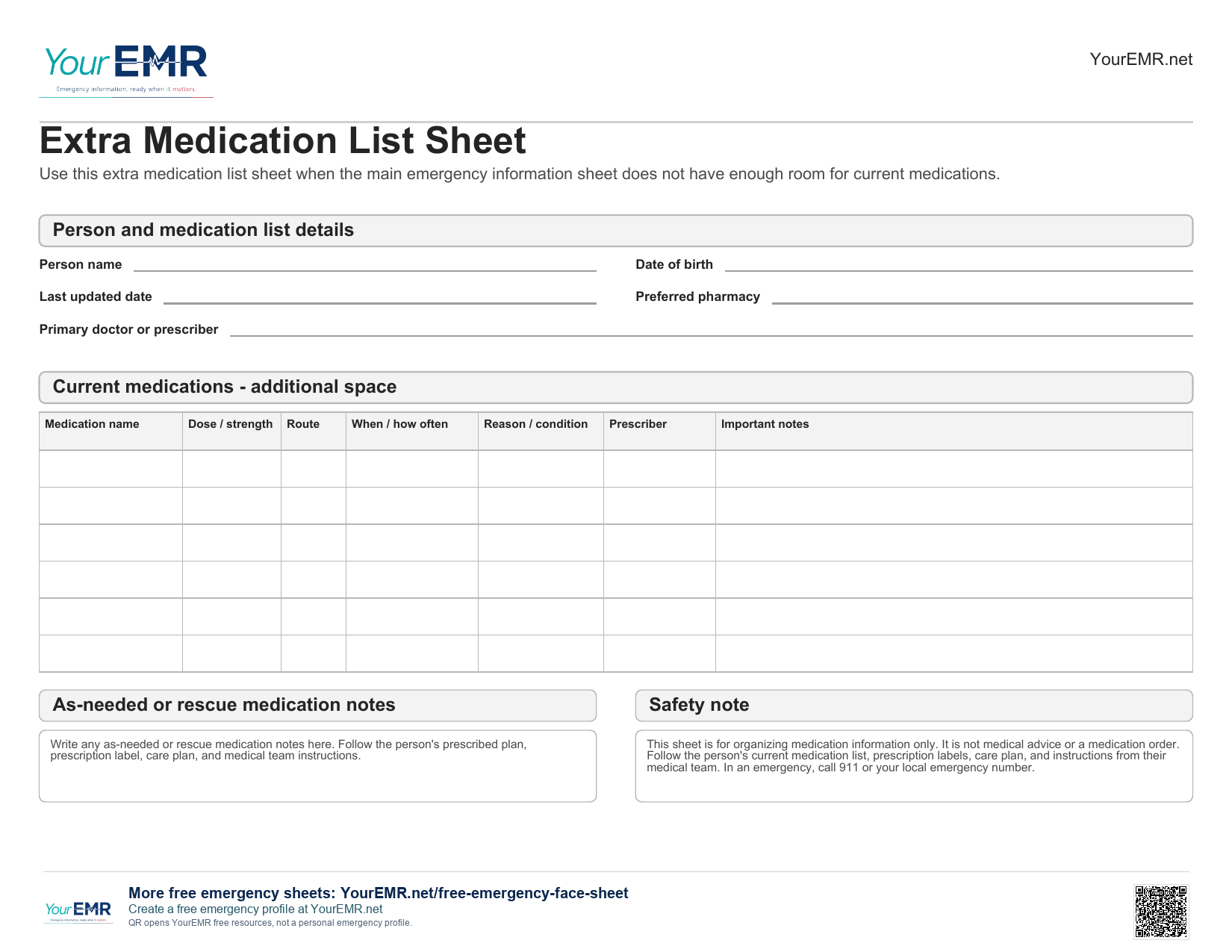
- Medication list location: Where the current medication list or medication labels can be found.
- Document location: Where official records, care plans, insurance cards, or legal documents are kept.
- Backup caregiver: A trusted person who may help if the primary caregiver is unavailable.
- Caregiver handoff: Short notes that help another helper find contacts, routines, and current documents.
First-page binder details to gather
Helpful details may come from current caregiver records, medication labels, care plans, medical paperwork, home notes, and family contact lists. The page can act as the first stop before someone opens the full binder.
- Person's name, date of birth, address if appropriate, preferred name, language or communication notes, and basic identifying details
- Emergency contacts, primary caregiver, backup caregiver, decision-maker contact if applicable, trusted neighbor, and family contacts
- Primary doctor, specialists, pharmacy, insurance basics, medication list location, allergies, and high-level conditions
- Caregiver notes about communication, mobility, routines, pets, supplies, transportation, or home access if safe to include
- Where official documents are kept, such as care plans, discharge instructions, advance directives, medical records, insurance cards, and patient portal information
Related YourEMR resources
Use these related YourEMR pages when they fit the person's situation.
Helpful caregiver binder and preparedness resources
These outside resources are for general education only. Always follow clinicians, current care plans, medication labels, official documents, child-care policies, and legal guidance where applicable.
CDC guidance on organizing health conditions, medicines, care needs, provider contacts, insurance, and emergency contacts.
National Institute on Aging worksheets for coordinating caregiving responsibilities, medication lists, and important documents.
Preparedness guidance for collecting and protecting insurance cards, identification, care plans, and emergency documents.
Emergency disclaimer
These free sheets are informational organization tools only. They are not medical records, diagnosis tools, treatment plans, medical advice, or legal advice, and they do not replace 911, EMS, clinicians, medical records, medication labels, device manuals, care plans, patient portals, or professional guidance.