Who this COPD and oxygen sheet helps
This sheet is for people with COPD, chronic breathing conditions, home oxygen, portable oxygen, concentrators, nebulizer equipment, or related respiratory needs.
It can also help family caregivers, travel companions, home health aides, and trusted contacts who need one place to find the oxygen supplier, equipment context, baseline notes, and care-team contacts.
Why this may matter in an emergency
Baseline breathing, oxygen equipment, supplier contacts, and medication-list locations may be spread across the home, travel bag, pharmacy records, equipment labels, and caregiver notes.
A concise sheet can help a caregiver, responder, urgent care team, ER team, or travel companion find the right contacts and source documents faster without giving oxygen dosing, medication, or respiratory-treatment instructions.
Oxygen-equipment handoff notes
Handoff notes should add context, not treatment. Helpful notes may point to where oxygen or equipment paperwork lives, who can confirm details if information is missing, and where the current care plan is kept.
- Where the oxygen equipment list, supplier paperwork, or travel documentation is kept
- Whether the person uses a concentrator, portable unit, tanks, nebulizer, CPAP, BiPAP, or other respiratory equipment according to their own records
- Whether the person usually speaks in short phrases, uses mobility aids, needs rest breaks, or has caregiver support during travel
- Who knows the person's current oxygen prescription, medication list location, care plan location, and equipment backup contacts
Where to keep it / when to update it
Keep copies near the equipment area, in a caregiver binder, in a travel bag, in a medical go-bag, with trusted family, or in a place the household has agreed to check.
Review the sheet when oxygen equipment, supplier contacts, doctors, medications, allergies, baseline breathing notes, mobility needs, emergency contacts, caregiver contacts, travel plans, or power-outage plans change.
Do not assume every responder or helper will know where to look. Tell trusted caregivers and family where the current sheet and equipment instructions are kept.
Privacy and safety notes
Share only what is useful for emergency organization. Avoid adding unnecessary sensitive details to a sheet that may be visible in the home or travel bag.
This page is for organization and emergency preparedness only. It is not medical advice and does not replace 911, EMS, clinicians, oxygen prescriptions, medical records, medication labels, equipment instructions, care plans, or patient portals. Do not use it to adjust oxygen, change medicines, or make treatment decisions.
Printable sheet versus digital emergency profile
A digital YourEMR profile may help when oxygen supplier contacts, medication lists, equipment notes, or caregiver contacts change. Caregivers can update the profile, print a fresh copy, and choose what can be opened through an emergency QR link.
Helpful terms families may hear
- COPD: A chronic obstructive pulmonary disease diagnosis or condition summary, written at a high level.
- Oxygen concentrator: A device that uses electricity to produce oxygen for home use.
- Portable oxygen: Oxygen equipment intended to travel with the person.
- DME supplier: The durable medical equipment company or oxygen supplier contact.
- Baseline breathing: What is usual for the person, described by the patient or caregiver.
- Caregiver handoff: Short notes that help another helper find contacts, equipment details, and current information.
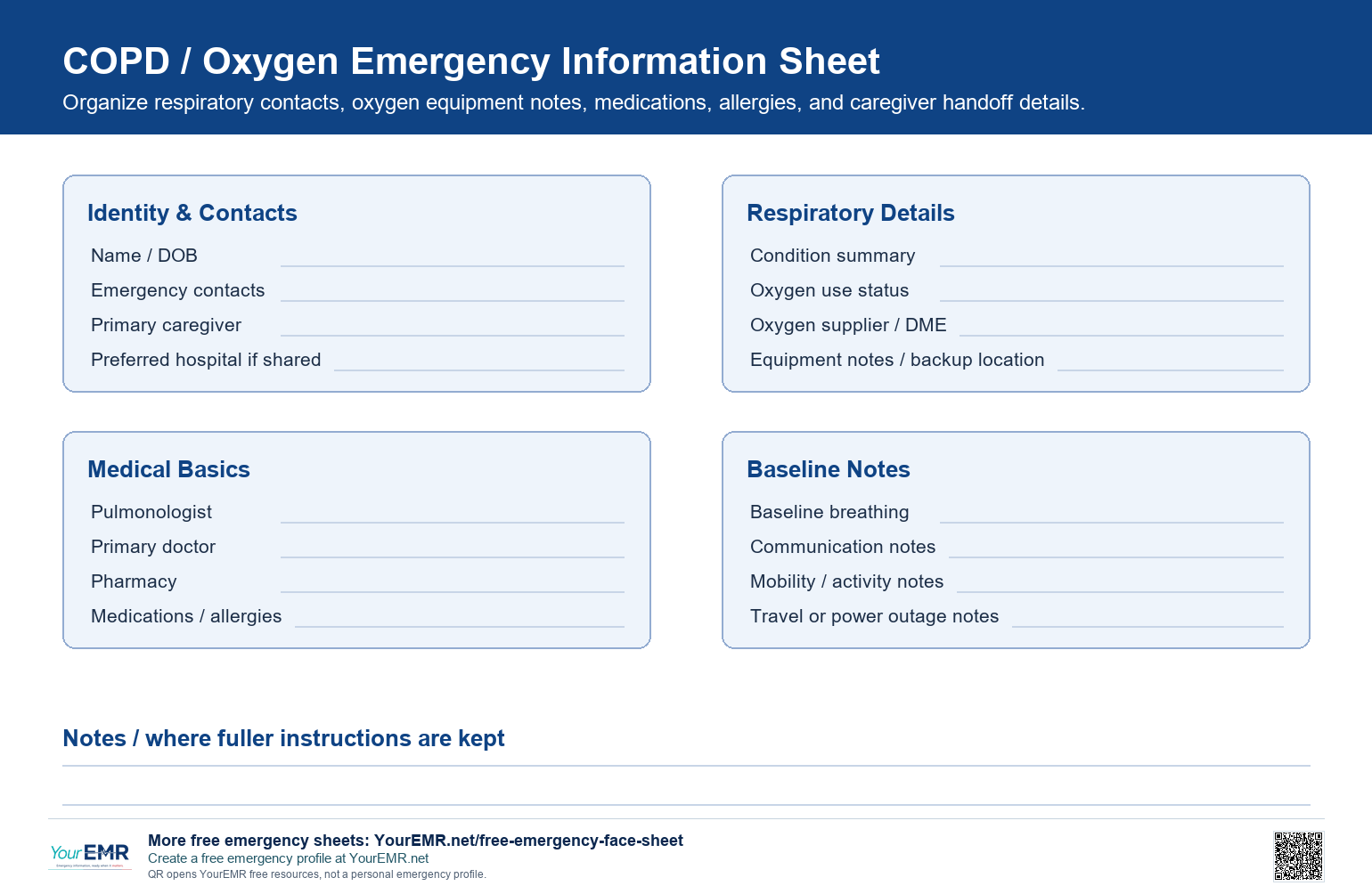
COPD and oxygen details to record
Helpful details may come from the person's own medication labels, care plan, equipment labels, supplier paperwork, or caregiver records.
- Diagnosis or condition summary at a high level, such as COPD or chronic breathing condition
- Oxygen use status, oxygen equipment type, oxygen supplier, DME contact, and backup supply location if the person chooses to include them
- Baseline breathing, communication, activity tolerance, mobility, and caregiver context that may help others understand what is typical
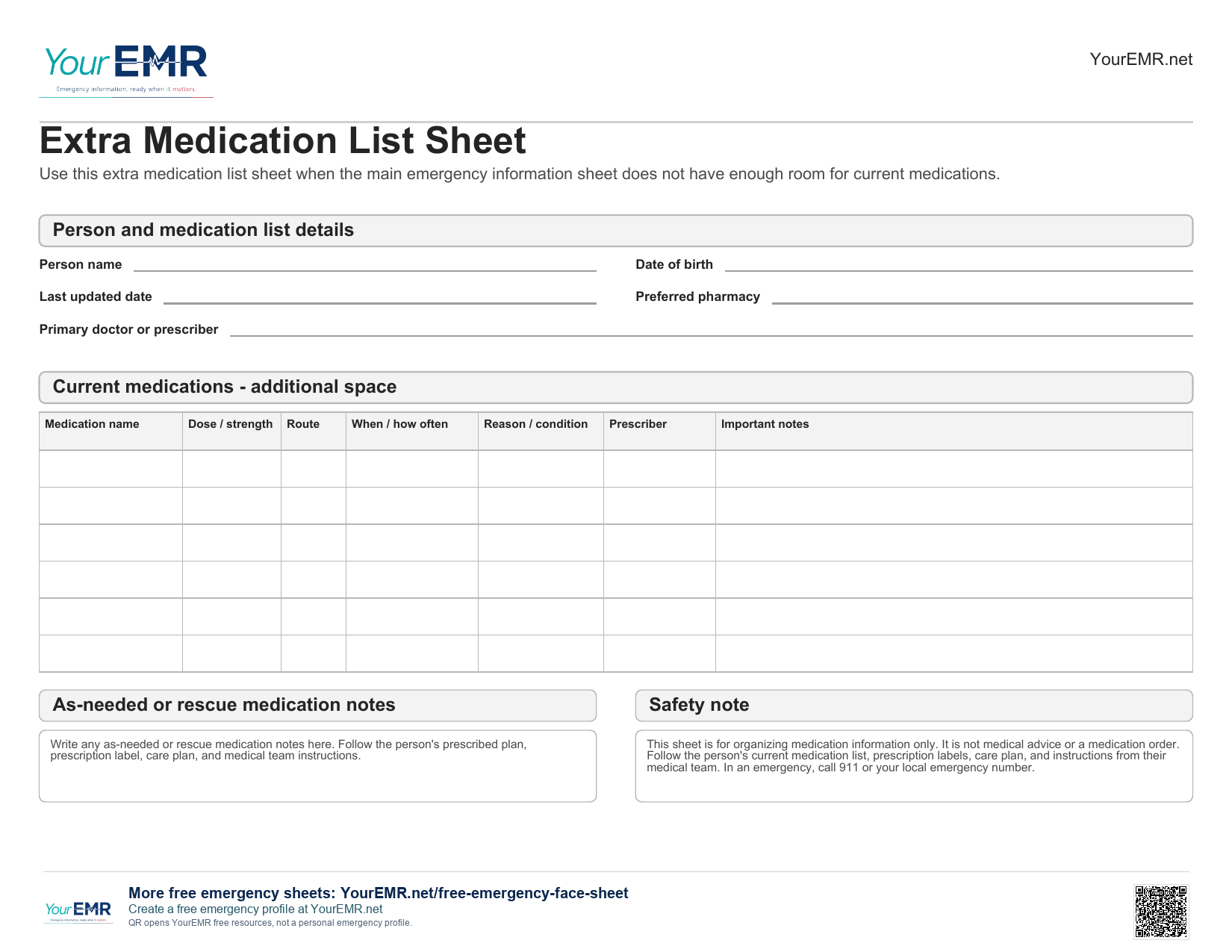
- Pulmonologist, primary doctor, pharmacy, current medications, allergies, emergency contacts, and caregiver contacts
- Power outage, travel, or medical go-bag notes, such as where backup batteries, chargers, or supplier numbers are kept
Related YourEMR resources
Use these related YourEMR pages when they fit the person's situation.
Helpful COPD, oxygen, and preparedness resources
These outside resources are for general education and preparedness only. Always follow the person's clinicians, oxygen prescription, equipment instructions, medication labels, and care plan.
NIH overview of COPD, symptoms, living with COPD, oxygen therapy context, and treatment topics to discuss with clinicians.
Patient education about home oxygen equipment, supplier contacts, power outage planning, travel, and safety reminders.
Preparedness guidance for organizing prescriptions, dosage, medical supplies, allergy information, and pharmacy contacts before an emergency.
Emergency disclaimer
These free sheets are informational organization tools only. They are not medical records, diagnosis tools, treatment plans, medical advice, or legal advice, and they do not replace 911, EMS, clinicians, medical records, medication labels, device manuals, care plans, patient portals, or professional guidance.