Who it helps
Older adults, people with mobility limitations, people using walkers, canes, wheelchairs, braces, prosthetics, or transfer support, plus family caregivers, adult children, home health aides, assisted living contacts, and trusted helpers.
Why this can matter in an emergency
A person may not be able to explain their usual walking, transfer, hearing, vision, communication, or mobility support needs during a stressful moment.
A concise sheet may help family members, neighbors, caregivers, EMS, urgent care, or ER teams contact the right person and understand caregiver-provided baseline context.
Fall-risk and mobility handoff notes
These notes can help someone understand the person's usual mobility and who should be contacted. Avoid transfer, restraint, or treatment instructions.
- What mobility aid the person normally uses and where it is kept
- Whether the person usually needs a caregiver, home health aide, or family member present for mobility support
- Whether hearing aids, glasses, dentures, communication tools, or language support are usually needed
- What is normal for the person after a fall or mobility change, and who knows the current care plan
- Where fuller therapy, discharge, home health, or care-plan notes are kept
Where to keep it
Keep copies where trusted helpers are likely to find them: refrigerator folder, caregiver binder, wallet or purse, go-bag, wheelchair bag, walker pouch, bedside folder, or with a trusted family member.
Do not assume every helper will check the same place. Tell trusted caregivers and family where the current sheet is kept.
When to update it
Review the sheet when mobility aids, walking baseline, transfer needs, hearing or vision needs, communication needs, medications, allergies, doctors, pharmacy, emergency contacts, caregiver contacts, home access notes, or living arrangement changes.
It may also be worth reviewing after a fall, hospital discharge, rehab stay, new assistive device, new home health service, or new caregiver handoff.
Privacy and safety notes
Avoid putting door codes, financial details, full Social Security numbers, or unnecessary sensitive information on a visible copy. A trusted key holder or caregiver contact may be safer than writing access codes directly.
This page is for organization and emergency preparedness only. It is not medical advice and does not replace 911, EMS, clinicians, physical therapy plans, home health instructions, medical records, medication labels, care plans, or patient portals. Do not use it for fall treatment, restraint decisions, or transfer technique guidance.
Printable sheet versus digital emergency profile
A digital YourEMR profile may help when mobility aids, caregiver contacts, medications, allergies, home access notes, or baseline information change. It can be updated and printed again or shared through an emergency QR link.
Helpful terms families may hear
- Mobility aid: A walker, cane, wheelchair, scooter, brace, prosthetic, or other tool used for movement.
- Baseline mobility: How the person usually walks, stands, transfers, or moves with support.
- Transfer: Moving from one place to another, such as bed to chair; the sheet should not teach technique.
- Fall history: Caregiver-provided context about past falls if the person chooses to share it.
- Home access notes: Trusted contact, entry, pet, stair, elevator, or key-holder notes if safe to include.
- Caregiver handoff: Short notes that help a trusted helper understand contacts, baseline, and where fuller instructions live.
Fall Risk / Mobility details to record
Keep the sheet factual. Focus on baseline information, contact details, and where fuller care instructions can be found.
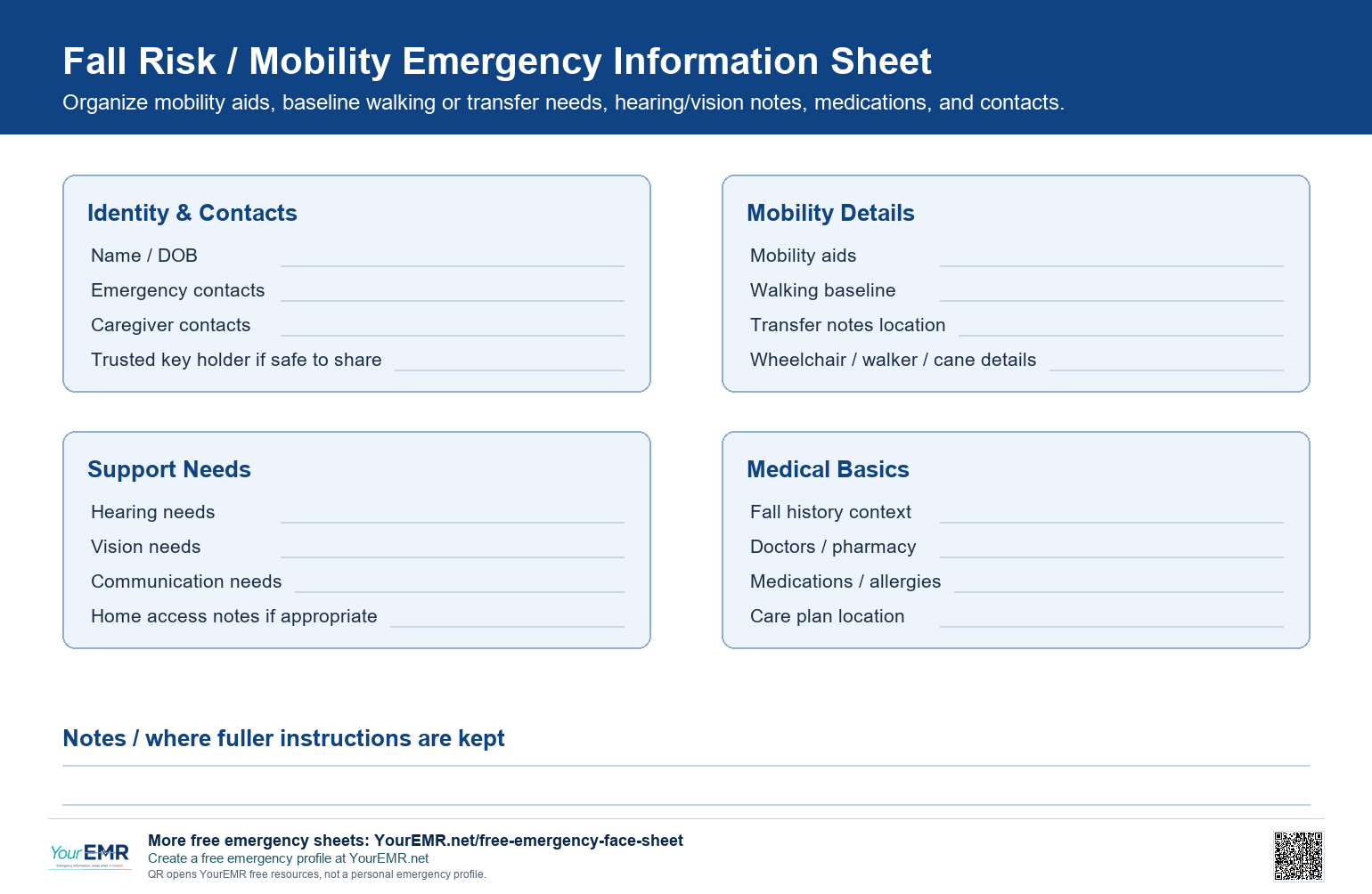
- Mobility aids such as walker, cane, wheelchair, scooter, braces, prosthetics, gait belt location, or lift equipment if the person chooses to include it
- Baseline walking, standing, transfer, stair, bathroom, and bed-chair context without giving transfer instructions
- Hearing, vision, communication, language, cognitive, pain, fatigue, or accessibility needs that may affect a handoff
- Fall history context if the person chooses to include it, including recent falls, common locations, or clinician follow-up contact
- Emergency contacts, caregiver contacts, doctors, pharmacy, medications, allergies, home access notes, and trusted key holder if safe to share
Related YourEMR resources
Use these related YourEMR pages when they fit the person's situation.
Emergency disclaimer
These free sheets are informational organization tools only. They are not medical records, diagnosis tools, treatment plans, medical advice, or legal advice, and they do not replace 911, EMS, clinicians, medical records, medication labels, device manuals, care plans, patient portals, or professional guidance.