Who it helps
People taking anticoagulants or antiplatelet medicines, older adults, family caregivers, adult children, travel companions, home health aides, and anyone who may need medication information easy to find during an urgent handoff.

Free printable emergency information sheet
Use this blood thinner medication sheet to record the medication name as written, prescriber, pharmacy, reason or condition if the person chooses to include it, medication-list location, bleeding or fall-risk context, clinician contacts, and emergency contacts.
This may be called a blood thinner face sheet, anticoagulant emergency sheet, medication handoff sheet, or caregiver medication summary.
No signup is required to download the printable PDF.
Optional add-on
Add a separate medication list sheet if the main emergency information sheet does not have enough room.
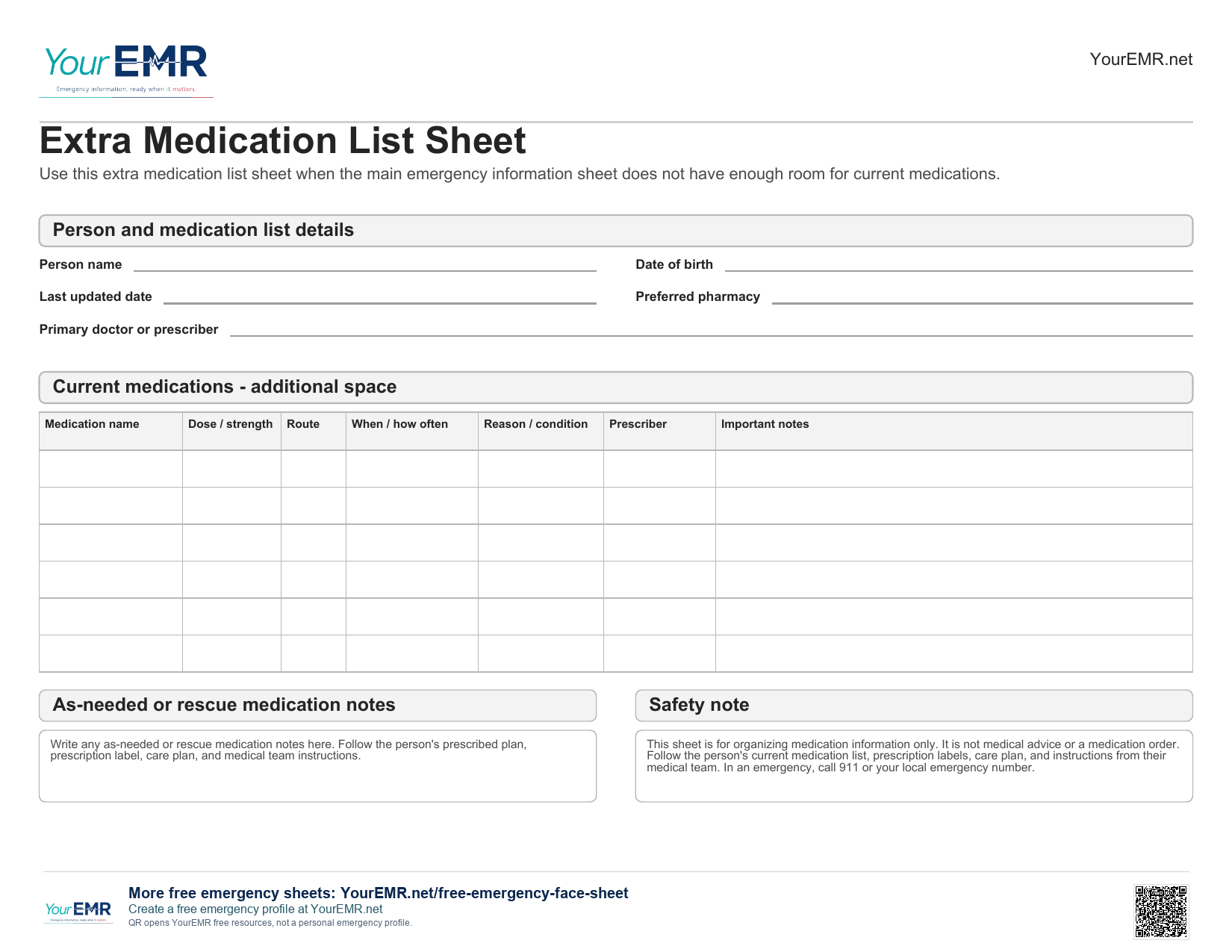
The main emergency information sheet download stays separate.
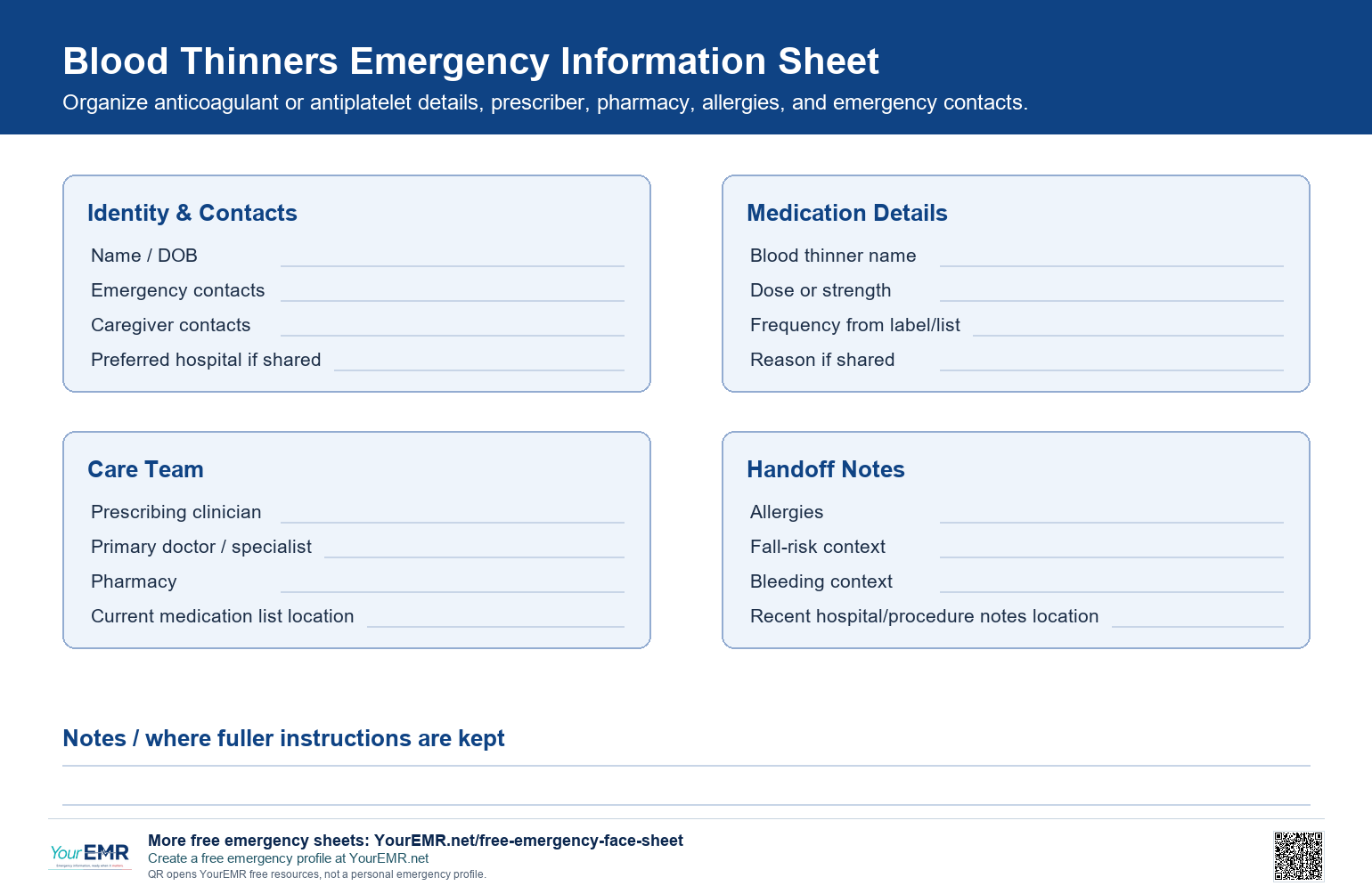
People taking anticoagulants or antiplatelet medicines, older adults, family caregivers, adult children, travel companions, home health aides, and anyone who may need medication information easy to find during an urgent handoff.
Medication details can be hard to remember during a fall, urgent visit, travel issue, or caregiver handoff. A concise sheet may help another person find the current blood thinner name, dose or strength, prescriber, pharmacy, and emergency contact faster.
The sheet should point to the current medication list and clinician, not interpret risk or give dosing guidance.
These notes can help someone locate the right information and call the right person. Avoid treatment instructions or risk scoring.
Keep a copy near medications, in a wallet or purse, in a caregiver binder, in a travel bag, with a trusted family member, or wherever the household already keeps emergency information.
Do not rely on a single location. Tell trusted caregivers where the current sheet and medication list are kept.
Review the sheet whenever the medication name, dose or strength, frequency, prescriber, pharmacy, allergies, other medications, fall-risk context, emergency contacts, or caregiver contacts change.
It may also be worth reviewing after a hospital discharge, procedure, medication reconciliation, new prescription, or new caregiver handoff.
Medication details are sensitive. Share the sheet with trusted caregivers and keep a fuller version in a safer place if a public copy would show too much.
This page is for organization and emergency preparedness only. It is not medical advice and does not replace 911, EMS, clinicians, medical records, medication labels, anticoagulation clinic instructions, care plans, or patient portals. Do not use it to stop, start, skip, double, or change medication.
A digital YourEMR profile may help when medication names, dose or strength, pharmacies, prescribers, or emergency contacts change. Caregivers can update details, print a fresh copy, and choose what can be opened through an emergency QR link.
Copy medication details from the person's medication label, medication list, pharmacy record, or clinician-provided list. Keep the sheet factual, current, and centered on who to contact.
Use these related YourEMR pages when they fit the person's situation.
These outside resources are for general education only. Always follow the person's prescriber, pharmacy label, medication guide, care plan, and clinician instructions.
NIH/NLM overview of anticoagulants and antiplatelet medicines, safety considerations, and medication-list context.
Patient safety guide about using blood thinner pills safely and keeping medication information organized.
Preparedness guidance for organizing prescriptions, dose information, pharmacy contacts, and allergy information before an emergency.
Continue with guidance and printables already grouped for this topic.
Content accountability
This resource helps organize emergency information. It does not provide medical advice, diagnosis, treatment, or individualized emergency instructions.
No individual medical review is claimed.
Editorial standards and correctionsSend individual feedback or report a correction
Ready for an updateable profile?
YourEMR helps keep emergency information organized and ready when it matters.
These free sheets are informational organization tools only. They are not medical records, diagnosis tools, treatment plans, medical advice, or legal advice, and they do not replace 911, EMS, clinicians, medical records, medication labels, device manuals, care plans, patient portals, or professional guidance.