Who it helps
People who use a feeding tube, children with complex feeding needs, older adults, family caregivers, school caregivers, respite caregivers, home health aides, travel companions, and trusted helpers who need feeding-tube information easy to find.
Why this can matter in an emergency
A family member, school caregiver, respite helper, home health aide, urgent care team, ER team, or travel companion may need to find supply contacts, clinician contacts, allergy information, medication details, and baseline notes quickly.
A concise written sheet may help someone find the right contact and the right source document without relying only on memory during a stressful handoff.
Feeding tube handoff notes
These notes can point helpers toward the current plan and contacts. Avoid directions about tube placement, troubleshooting, clogs, dislodgement, aspiration, replacement, feeding schedule changes, or complications.
- Who knows the current feeding plan and where the written plan is kept
- Which supply or nutrition vendor to contact for paperwork or replacement supply questions
- Whether the person has communication, sensory, mobility, age-related, or caregiver support needs
- Where formula, feeding supplies, chargers, bags, extension sets, or related labels are stored if the family chooses to share that location
- Which caregiver, school contact, home health contact, or clinician can confirm current information
Where to keep it
Keep copies where trusted helpers are likely to find them: in a caregiver binder, school packet, go-bag, travel bag, home health folder, near the supply area, or with a trusted family member.
Do not assume every helper will check the same place. Tell trusted caregivers and family where the current sheet and full feeding plan are kept.
When to update it
Review the sheet when tube type, formula or nutrition name, supply vendor, clinician contacts, feeding plan location, medications, allergies, diagnoses, caregiver contacts, emergency contacts, communication needs, or mobility needs change.
It may also be worth reviewing after a hospital discharge, after a clinic visit, before travel, before a school year or respite stay, or when a new caregiver starts.
Privacy and safety notes
Share only what is useful for emergency information organization. Avoid adding unnecessary sensitive details to a copy that may be visible at home, school, or during travel.
This page is for organization and emergency preparedness only. It is not medical advice and does not replace 911, EMS, clinicians, feeding plans, tube-care instructions, nutrition orders, supply instructions, medical records, medication labels, care plans, discharge instructions, or patient portals. Do not use it for tube troubleshooting, replacement, feeding schedule changes, or treatment decisions.
Printable sheet versus digital emergency profile
A digital YourEMR profile may help when formula names, supply contacts, caregiver contacts, medication lists, allergies, or clinician contacts change. The profile can be updated, printed again, or shared through an emergency QR link.
Helpful terms families may hear
- Feeding tube: A tube used for nutrition or medication delivery according to the person's clinician-provided plan.
- G-tube: A gastrostomy tube, with details written only as factual context from the care plan.
- Enteral nutrition: Nutrition given through the digestive tract; the sheet can note the formula name if the family chooses.
- DME supplier: A durable medical equipment or supply company contact.
- Care plan location: Where fuller feeding, tube-care, or clinician instructions are kept.
- Caregiver handoff: Short notes that help another trusted person find contacts, supplies, and current documents.
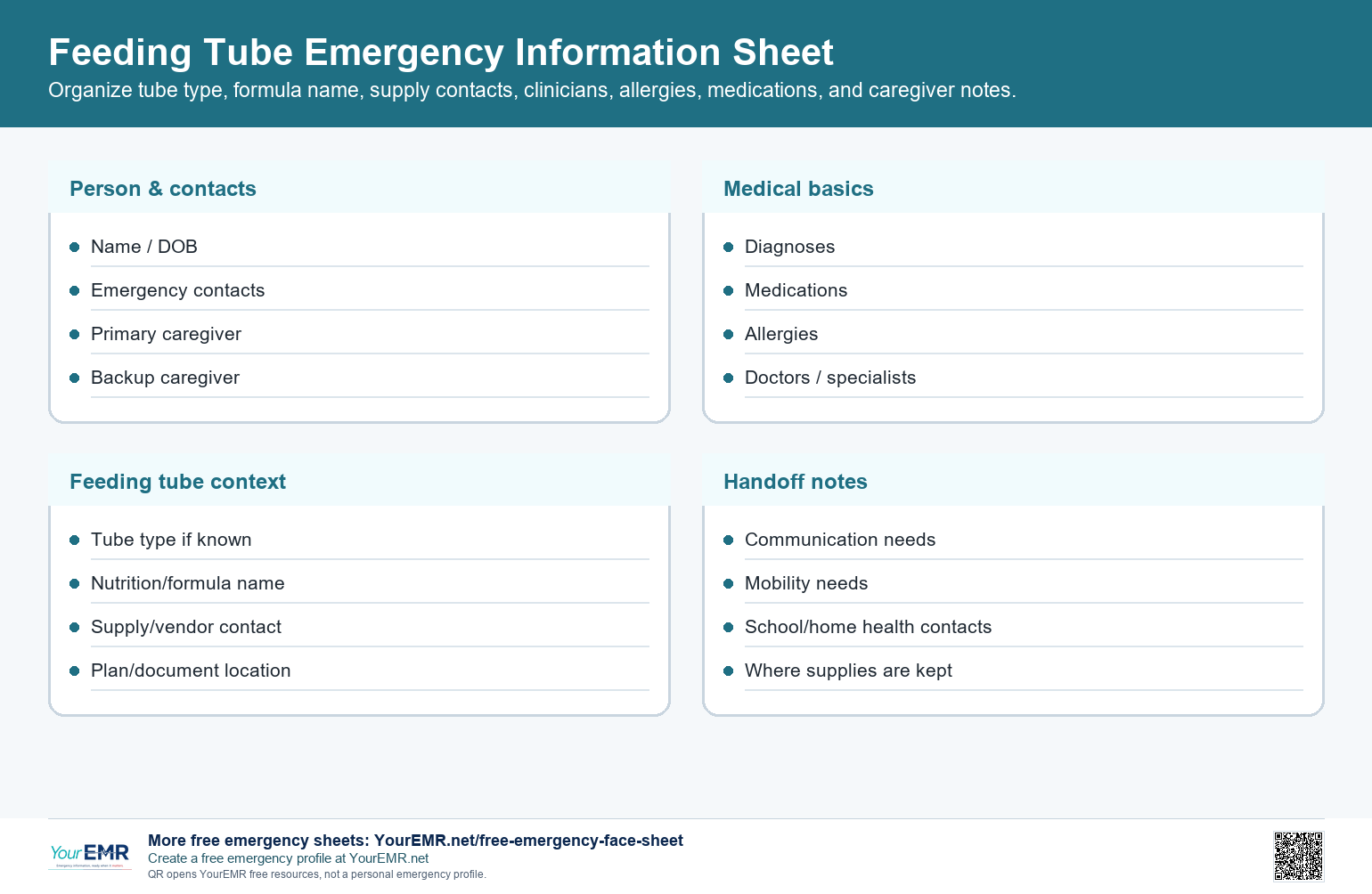
Feeding Tube details to record
Helpful details may come from the person's care plan, supply paperwork, nutrition label, medication list, or caregiver records.
- Feeding tube type if known, such as G-tube, GJ-tube, J-tube, or other wording from the care plan
- Nutrition or formula name as caregiver-provided context, plus where the full feeding plan is kept
- Supply vendor, DME company, pharmacy, ordering clinician, GI specialist, nutrition contact, or home health contact
- Allergies, medications, diagnoses, baseline communication needs, mobility needs, caregiver contacts, and emergency contacts
- Where tube-care instructions, feeding orders, supply instructions, and backup documentation are kept
Related YourEMR resources
Use these related YourEMR pages when they fit the person's situation.
Emergency disclaimer
These free sheets are informational organization tools only. They are not medical records, diagnosis tools, treatment plans, medical advice, or legal advice, and they do not replace 911, EMS, clinicians, medical records, medication labels, device manuals, care plans, patient portals, or professional guidance.