Who this sheet helps
This sheet may help adults, caregivers, older adults, people with several prescriptions, people who see multiple clinicians, and families preparing for appointments, hospital transitions, or caregiver handoffs.

Free printable emergency information sheet
A free printable medication review emergency sheet for organizing current medications, prescribing clinicians, pharmacy, allergies, OTC medicines, supplements, last reviewed date, and questions to ask a clinician or pharmacist.
This may be called a medication review sheet, medicine review printable, medication checkup list, pharmacy review handout, or emergency medication organization sheet.
No signup is required to download the printable PDF.
Optional add-on
Add a separate medication list sheet if the main emergency information sheet does not have enough room.
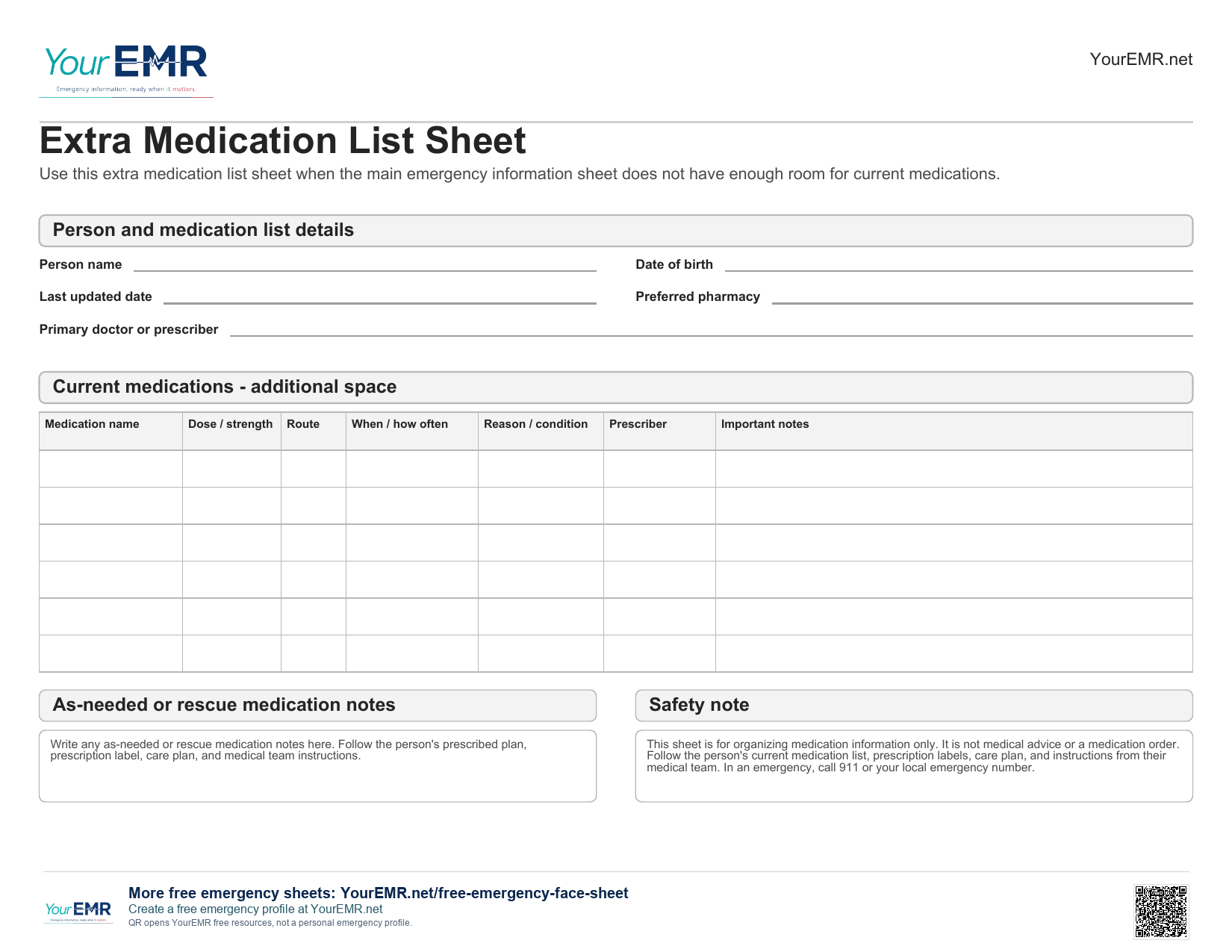
The main emergency information sheet download stays separate.
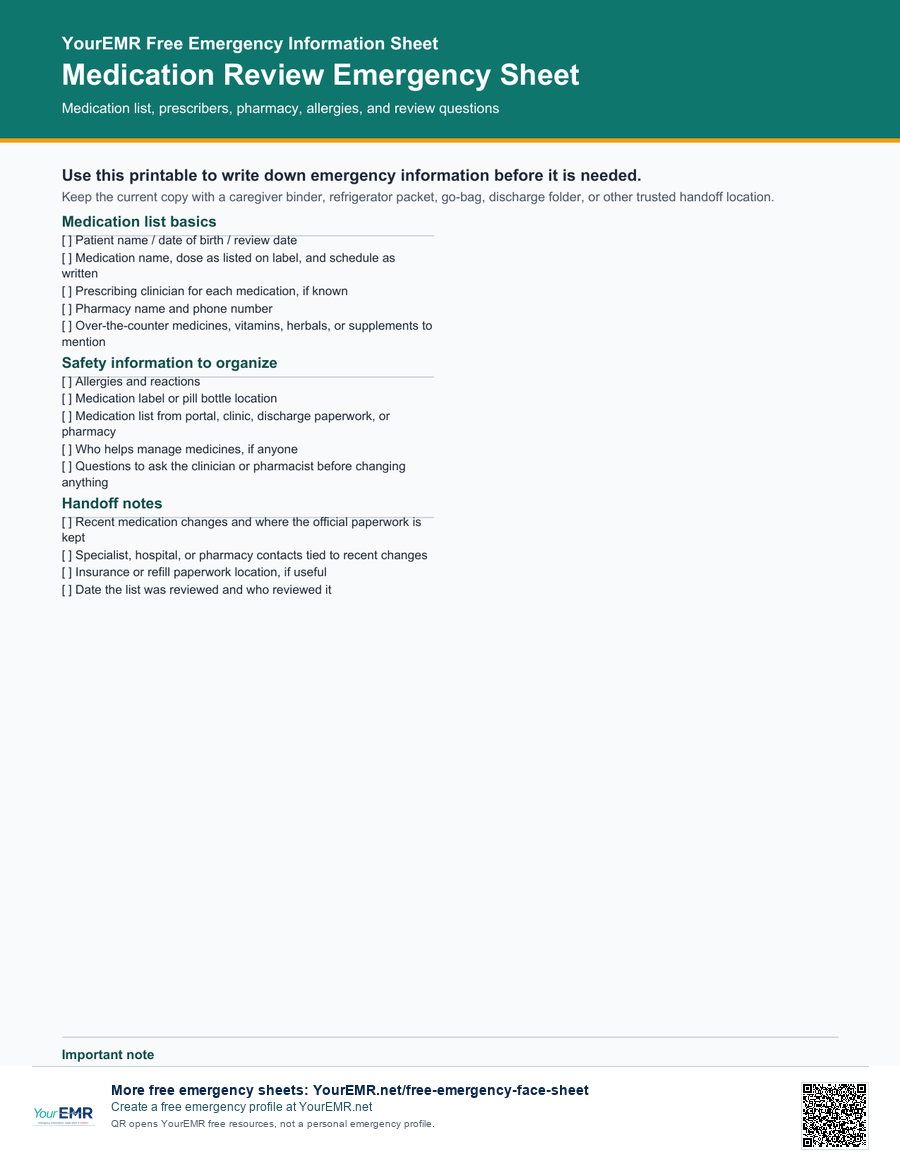
This sheet may help adults, caregivers, older adults, people with several prescriptions, people who see multiple clinicians, and families preparing for appointments, hospital transitions, or caregiver handoffs.
A caregiver, family member, urgent care team, ER team, EMS team, clinician, or pharmacist may need to know where the current medication list came from and when it was last reviewed.
A medication review sheet can help organize that information, but it should not be used to make medication decisions.
A primary care office, specialist, pharmacist, nurse, or discharge team may recommend that patients keep a medication list and questions ready. Keep notes about organization prompts only.
Keep copies with medications, in an emergency binder, refrigerator folder, wallet, purse, appointment folder, discharge folder, caregiver packet, or go-bag.
Avoid placing unnecessary sensitive information on a visible copy. Keep the list readable and current.
Review the sheet when a medication starts, stops, changes, expires, or is reviewed; when allergies, pharmacy, prescribers, supplements, OTC medicines, caregiver contacts, or medication list sources change; and after hospital discharge if paperwork lists medication changes.
This page is for emergency information organization and patient preparedness only. It is not medical advice, medication advice, legal advice, dosing guidance, or interaction guidance and does not replace 911, EMS, clinicians, pharmacists, medication labels, pharmacy records, medical records, care plans, patient portals, or professional guidance.
A digital YourEMR profile may help when medications, allergies, pharmacies, prescribers, supplements, and review dates change. The profile can be updated and reprinted.
Copy medication details from current labels, pharmacy records, clinician-provided lists, or caregiver records. Keep entries factual and current.
Use these related YourEMR pages when they fit the person's situation.
These outside resources are for general education and preparedness only. Always follow clinicians, pharmacists, medication labels, pharmacy records, discharge instructions, care plans, and professional guidance.
AHRQ patient guide about keeping medicine information, doctors, pharmacists, questions, and wallet-card records organized.
CDC preparedness guidance for organizing prescriptions, medical supply needs, allergy information, and pharmacy contacts before an emergency.
NIH MedlinePlus overview of keeping a personal health record with emergency contacts, medicines, allergies, chronic conditions, and major health history.
Continue with guidance and printables already grouped for this topic.
Content accountability
This resource helps organize emergency information. It does not provide medical advice, diagnosis, treatment, or individualized emergency instructions.
No individual medical review is claimed.
Editorial standards and correctionsSend individual feedback or report a correction
Ready for an updateable profile?
YourEMR helps keep emergency information organized and ready when it matters.
These free sheets are informational organization tools only. They are not medical records, diagnosis tools, treatment plans, medical advice, or legal advice, and they do not replace 911, EMS, clinicians, medical records, medication labels, device manuals, care plans, patient portals, or professional guidance.