Who this sheet helps
This checklist is for caregivers, families, older adults, parents, people using home medical equipment, and households that want equipment and supplier information easier to find during an outage or emergency.
Free printable emergency information sheet
A free printable power outage medical equipment checklist for organizing equipment names, supplier contacts, power and charging notes, backup contacts, doctors, medication and allergy basics, manuals, device cards, and emergency plan locations.
This may be called a medical equipment power outage checklist, home equipment emergency checklist, DME contact sheet, or backup power planning sheet.
No signup is required to download the printable PDF.
Optional add-on
Add a separate medication list sheet if the main emergency information sheet does not have enough room.
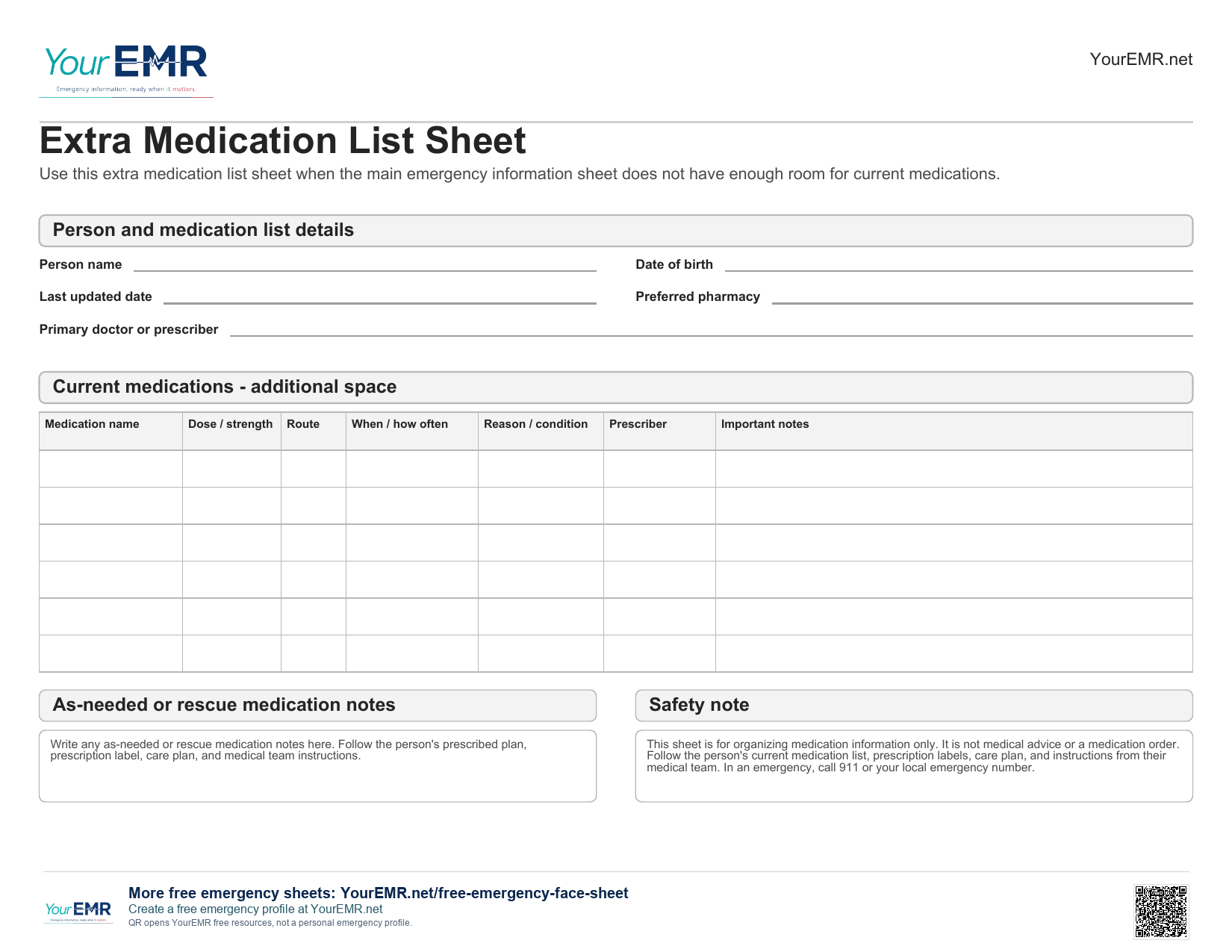
The main emergency information sheet download stays separate.
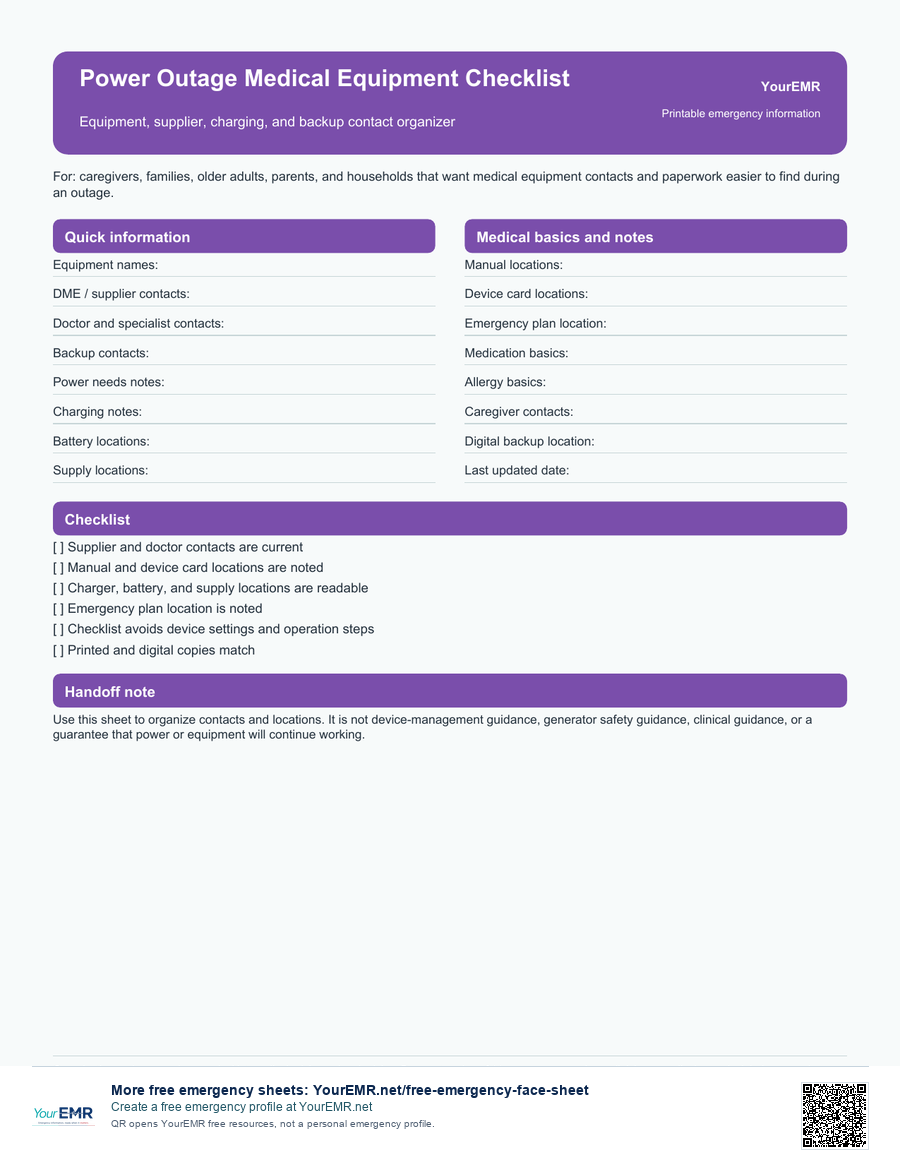
This checklist is for caregivers, families, older adults, parents, people using home medical equipment, and households that want equipment and supplier information easier to find during an outage or emergency.
Power outages can make households search for supplier numbers, charger locations, equipment paperwork, battery details, and contact information under stress.
A written checklist can help caregivers and family members find the right records and contacts without relying only on memory.
Use handoff notes for contacts, locations, and document references. Avoid device operation steps, oxygen settings, ventilator settings, CPAP or BiPAP settings, medication directions, generator instructions, or emergency-response instructions.
Keep copies near equipment paperwork, in an emergency binder, refrigerator folder, bedside folder, caregiver packet, go-bag, or with a trusted helper.
Avoid placing passwords, financial information, or home access codes on a visible copy. It may be safer to list a trusted contact who knows where private information is stored.
Review the checklist when equipment, suppliers, doctors, pharmacy, medications, allergies, backup contacts, chargers, battery locations, supply locations, manuals, device cards, or emergency plan locations change.
This page is for emergency information organization and preparedness only. It is not medical advice, legal advice, device-management guidance, generator safety guidance, or emergency-response guidance and does not replace 911, emergency services, clinicians, device manuals, supplier guidance, utility guidance, medical records, medication labels, care plans, patient portals, or professional guidance.
A digital YourEMR profile may help when supplier contacts, doctors, equipment notes, supply locations, or backup contacts change. A printed copy can be updated when the digital profile changes.
The checklist can help gather where current information is stored and who to contact. Do not write device settings, clinical instructions, or operation steps unless those are copied and kept in official manuals or care-plan documents.
Use these related YourEMR pages when they fit the person's situation.
These outside resources are for general preparedness education only. Always follow 911, emergency services, clinicians, equipment manuals, supplier guidance, medication labels, care plans, utility guidance, and professional guidance.
CDC preparedness context for emergency care plans, emergency kits, and families whose children use equipment or supplies.
Emergency kit guidance that includes medical items, medications, personal documents, pertinent medical information, chargers, and emergency contacts.
CDC preparedness guidance for organizing prescriptions, medical supply needs, allergy information, and pharmacy contacts before an emergency.
Continue with guidance and printables already grouped for this topic.
Content accountability
This resource helps organize emergency information. It does not provide medical advice, diagnosis, treatment, or individualized emergency instructions.
No individual medical review is claimed.
Editorial standards and correctionsSend individual feedback or report a correction
Ready for an updateable profile?
YourEMR helps keep emergency information organized and ready when it matters.
These free sheets are informational organization tools only. They are not medical records, diagnosis tools, treatment plans, medical advice, or legal advice, and they do not replace 911, EMS, clinicians, medical records, medication labels, device manuals, care plans, patient portals, or professional guidance.