Who this printable is for
This printable is for households that want key emergency information in a consistent location, especially when caregivers, family members, neighbors, or home health aides may need to find contacts and document locations quickly.
Why this may matter in an emergency
Emergency information is often split between medication bottles, phones, folders, portals, family memory, and multiple caregivers.
A refrigerator sheet can help trusted helpers find contact and document information faster, but it should not promise that EMS or any responder will check the refrigerator.
Refrigerator handoff notes
Handoff notes can point to where current records live. Do not write treatment instructions, symptom instructions, medication directions, or claims about what a responder will always do.
- Where the current medication list, allergy list, medical ID, emergency binder, or patient portal information is kept
- Who can confirm current medications, allergies, care plan details, or home support needs
- Where medical devices, equipment notes, go-bag, or caregiver binder are stored
- Which visible details should stay short because the sheet may be seen by visitors or helpers
Where to keep it
Keep the refrigerator copy in a sleeve, folder, envelope, or marked area that trusted family and caregivers know about.
Do not assume every responder or helper will check a specific location. Tell trusted people where the current sheet and fuller records are kept.
When to update it
Review the sheet when contacts, doctors, pharmacy, medications, allergies, care plan locations, document locations, caregiver roles, address, or phone numbers change.
A regular review can also help keep the refrigerator copy aligned with the fuller YourEMR profile or emergency binder.
Privacy and safety notes
A refrigerator copy can be visible. Share only what helps with emergency organization and move sensitive details to a safer folder or digital profile.
Avoid passwords, full Social Security numbers, financial account numbers, door codes, or unnecessary sensitive details on a visible copy.
This page is for organization and emergency preparedness only. It is not medical advice or legal advice and does not replace 911, EMS, clinicians, medical records, medication labels, medical IDs, care plans, patient portals, legal documents, or professional guidance.
Printable sheet versus digital YourEMR profile
A digital YourEMR profile can hold fuller details that change over time, such as contacts, medications, allergies, doctors, document locations, caregiver roles, and privacy choices. Update the profile and print a fresh copy when something changes.
Helpful terms
- Fridge sheet: A visible or easy-to-find household emergency information summary kept near the refrigerator.
- Document location: A note that points to where fuller records, forms, or folders are kept.
- Medical ID: A separate bracelet, card, phone feature, or program that may carry emergency information.
- Digital backup: An updateable profile or record that can hold fuller details than a printed sheet.
- Caregiver contact: A trusted person who may know current routines, documents, or medical basics.
Refrigerator Info details to record
Helpful details may come from current contact lists, medication labels, allergy lists, clinician paperwork, patient portals, and the person's own records.
For a refrigerator copy, keep the visible version concise and point to fuller records kept in a safer folder or digital profile.
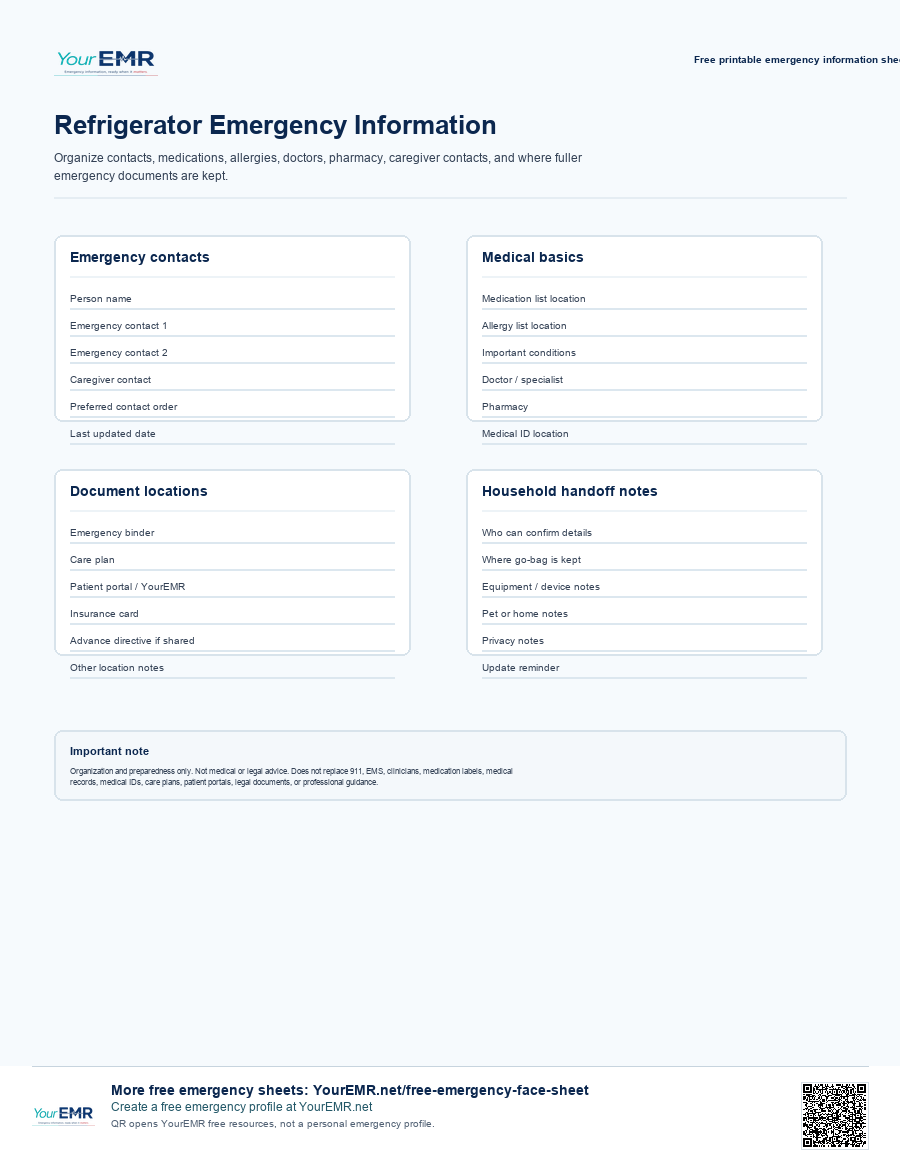
- Name, emergency contacts, caregiver contacts, doctor or specialist contacts, pharmacy, and preferred contact order
- Current medication list location, allergy list location, medical ID location, care plan location, and patient portal or digital profile note
- High-level conditions, devices, equipment, mobility, hearing, vision, communication, or caregiver notes the person chooses to include
- Where a fuller emergency binder, discharge paperwork, advance directive, insurance card, or other important document can be found
Related YourEMR resources
Use these related YourEMR pages when they fit the person's situation.
Helpful household emergency information resources
These outside resources are for general education and preparedness only. Always follow 911, EMS, clinicians, medication labels, care plans, legal documents, and professional guidance.
Preparedness guidance for collecting and protecting insurance cards, identification, care plans, emergency action plans, and important documents.
Preparedness guidance for organizing prescription medicines, dosage, frequency, medical supply needs, allergy information, and pharmacy contacts.
NIH/NLM information about keeping personal health records with emergency contacts, medicines, allergies, chronic conditions, and related details.
Emergency kit guidance that includes medications, medical items, copies of personal documents, pertinent medical information, and emergency contacts.
Emergency disclaimer
These free sheets are informational organization tools only. They are not medical records, diagnosis tools, treatment plans, medical advice, or legal advice, and they do not replace 911, EMS, clinicians, medical records, medication labels, device manuals, care plans, patient portals, or professional guidance.