Who this seizure rescue medication sheet helps
This handoff sheet may help people with epilepsy or a seizure history, parents, family caregivers, school nurses, respite caregivers, camp or program contacts, travel companions, and trusted helpers locate the current seizure action plan and prescribed rescue medication information quickly.
Why this may matter in an emergency
Seizure-plan information may be split across medication labels, school forms, caregiver binders, pharmacy records, clinician portals, backpacks, and family memory.
A concise sheet can help a trusted helper find the official plan and right contacts faster, but it does not replace 911, emergency services, clinician guidance, medication labels, or a seizure action plan.
Seizure rescue medication handoff notes
Handoff notes can point to official plans, labels, contacts, and medication locations. Avoid instructions on when or how to give rescue medication, seizure first aid steps, dosing, or emergency-response directions.
- Where the rescue medication is normally kept and where the label or pharmacy paperwork is located
- Where the signed seizure action plan, school form, camp form, respite packet, or clinician instructions are kept
- Who can confirm current medication, plan, and emergency contact information
- Which caregiver, school nurse, respite contact, or family member should be called first for missing details
Where to keep it
Keep copies with the medication folder, caregiver binder, school packet, backpack, camp or program packet, respite folder, travel folder, refrigerator folder, or trusted caregiver.
Avoid putting unnecessary sensitive details, passwords, financial information, or direct home access codes on a visible copy.
When to update it
Review the sheet when rescue medication name or location, prescribing clinician, pharmacy, seizure action plan location, emergency contacts, caregiver contacts, school contacts, respite contacts, allergy information, or document locations change.
Privacy and safety notes
Share only what is useful for emergency organization and caregiver handoff. Keep fuller records and detailed plans in a safer place when a visible copy would reveal too much.
This page is for organization and emergency preparedness only. It is not medical advice or legal advice and does not replace 911, EMS, clinicians, medical records, medication labels, seizure action plans, school plans, emergency action plans, patient portals, or professional guidance.
Printable sheet versus digital YourEMR profile
A digital YourEMR profile may help when medications, pharmacy contacts, clinicians, school contacts, caregiver contacts, allergies, and plan locations change. The profile can be updated and reprinted.
Helpful terms caregivers may hear
- Rescue medication: A medication named in the person's plan or label; this sheet organizes name and location, not when or how to use it.
- Seizure action plan: An official plan created with the health care team that should guide seizure response.
- Prescribing clinician: The clinician listed as responsible for the prescription or plan.
- Handoff contact: A trusted person such as a caregiver, school nurse, respite helper, or family member who can locate records.
- Medication label location: Where the current label or pharmacy paperwork can be found.
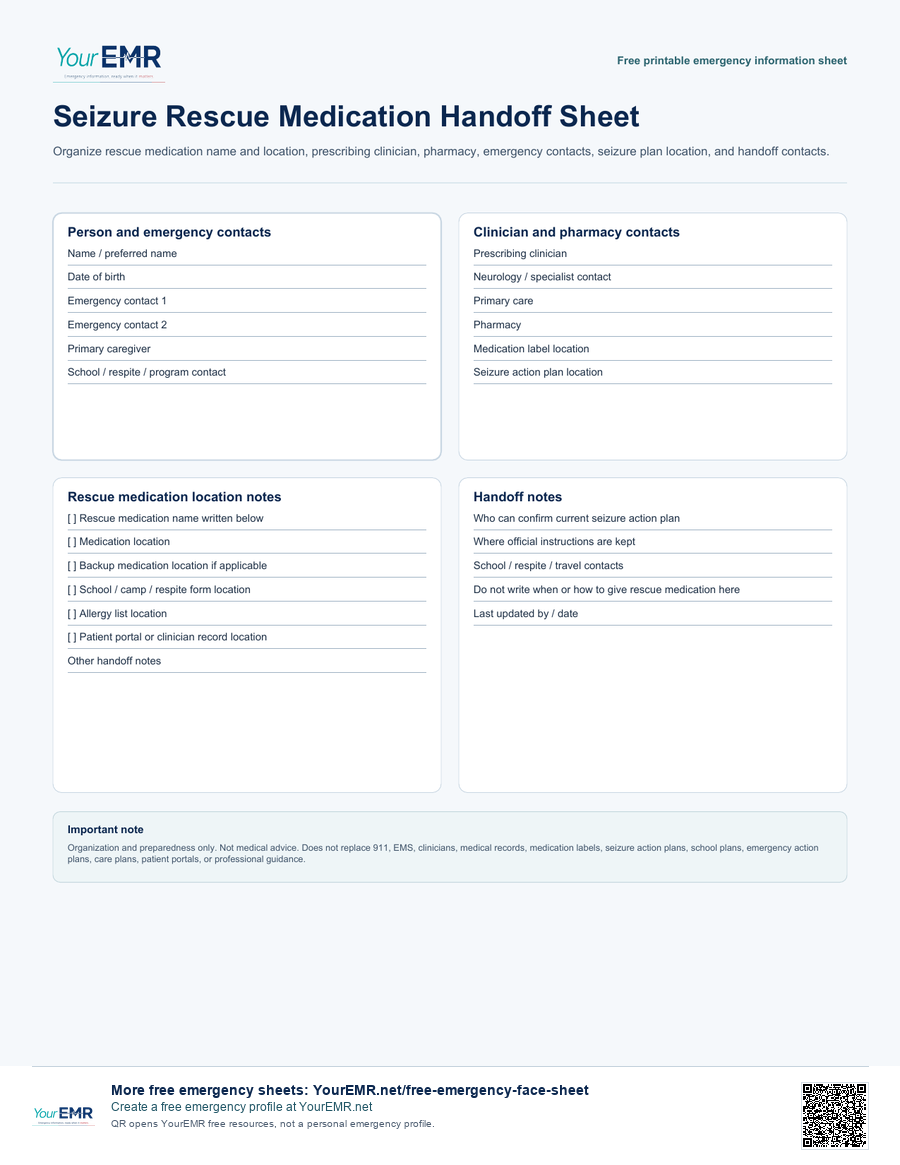
Seizure rescue details to record
Use factual details from medication labels, the seizure action plan, pharmacy records, clinician records, school forms, and caregiver notes. Keep the printable focused on locating the official plan and the right contacts.
- Rescue medication name and location as caregiver-provided information, prescribing clinician, pharmacy, and medication label location
- Emergency contacts, caregiver contacts, school or respite contacts, camp or program contacts, and travel companion contacts
- Where the current seizure action plan, medication label, patient portal record, school form, and clinician instructions are kept
- Allergy basics and who can confirm current plan details when information is missing
Related YourEMR resources
Use these related YourEMR pages when they fit the person's situation.
Helpful seizure plan and rescue medication resources
These outside resources are for general education and preparedness only. Always follow 911, EMS, clinicians, medication labels, seizure action plans, school plans, emergency action plans, care plans, and professional guidance.
Guidance and forms for creating, sharing, copying, and reviewing seizure action plans with a health care team.
General education about rescue medications and the importance of training from the prescribing health care team.
CDC overview of epilepsy and seizures for general education context.
Preparedness guidance for collecting and protecting care plans, emergency action plans, identification, and important documents.
Emergency disclaimer
These free sheets are informational organization tools only. They are not medical records, diagnosis tools, treatment plans, medical advice, or legal advice, and they do not replace 911, EMS, clinicians, medical records, medication labels, device manuals, care plans, patient portals, or professional guidance.