Free Printable Ambulance and EMS Information Sheet
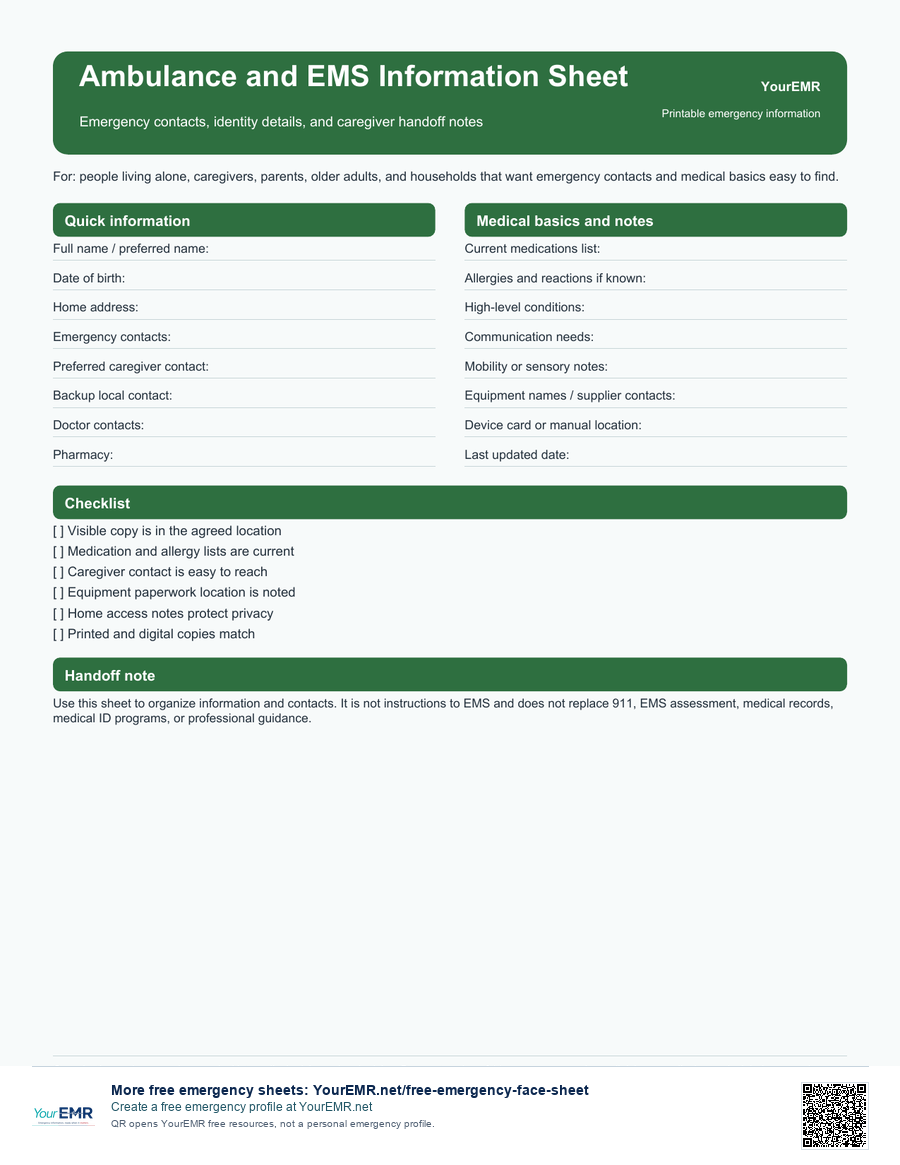
A free printable ambulance and EMS information sheet for organizing name, date of birth, address, emergency contacts, medications, allergies, conditions, communication needs, mobility notes, equipment notes, and doctor contacts.
This may be called an EMS information sheet, ambulance face sheet, responder information sheet, or emergency contact sheet.
No signup is required to download the printable PDF.
The main emergency information sheet download stays separate.
Ambulance and EMS Information Sheet preview
Who this sheet helps
This sheet may be useful for people living alone, older adults, people with communication differences, people with mobility needs, people using home medical equipment, parents, caregivers, and families coordinating care across households.
Why this may matter during an EMS handoff
A person may be unable to answer questions, a caregiver may not be present, or a family member may not know every medication or doctor. A readable sheet can help point people toward current contacts and records.
There is no promise that every responder will use a printed sheet. The goal is to organize emergency information, not to control care.
Ambulance and EMS handoff notes
Handoff notes should describe contacts, communication support, equipment names, and where updated documents are kept. Avoid treatment requests, device operation directions, medication instructions, or emergency-response steps.
Preferred caregiver or family contact and backup contact
Where current medication, allergy, care plan, or device-card information is kept
Communication, hearing, vision, mobility, or sensory context that helps others understand how the person usually shares information
Home notes that are safe to share, such as a trusted key holder rather than a visible door code
Where to keep it
Keep a copy where trusted people know to look, such as a refrigerator folder, emergency binder, bedside folder, wallet, purse, go-bag, or caregiver folder.
Avoid putting full passwords, financial information, Social Security numbers, or direct door codes on a visible copy.
When to update it
Review the sheet when contacts, address, doctors, pharmacy, medications, allergies, conditions, mobility, communication needs, equipment, caregiver roles, or document locations change.
Privacy and safety notes
This page is for emergency information organization and preparedness only. It is not medical advice, legal advice, EMS instructions, or emergency-response guidance and does not replace 911, EMS assessment, emergency services, clinicians, medical records, medical ID programs, medication labels, device manuals, care plans, patient portals, or professional guidance.
Printable sheet versus digital YourEMR profile
A digital YourEMR profile may help when contacts, medicines, allergies, suppliers, and caregiver notes change often. The printable sheet can serve as a quick backup while the digital profile stays easier to update.
Helpful terms families may hear
EMS: Emergency medical services, such as emergency responders and ambulance teams.
Medical ID: A wearable, phone-based, card-based, or program-based way to point to important health information.
Preferred caregiver contact: The person a family wants contacted first when information or coordination is needed.
Equipment note: A short factual note naming equipment, suppliers, or where device cards and manuals are kept.
Ambulance / EMS Sheet details to record
Use short factual notes that help identify the person, contact the right caregiver, and locate current medical basics. Do not use the sheet to tell EMS what care to provide.
Full name, date of birth, home address, preferred name, and language or communication notes
These outside resources are for general preparedness education only. Always follow 911, emergency services, clinicians, medical records, medication labels, care plans, device instructions, and professional guidance.
This resource helps organize emergency information. It does not provide medical advice, diagnosis, treatment, or individualized emergency instructions.
These free sheets are informational organization tools only. They are not medical records, diagnosis tools, treatment plans, medical advice, or legal advice, and they do not replace 911, EMS, clinicians, medical records, medication labels, device manuals, care plans, patient portals, or professional guidance.