Who this sheet helps
This sheet may help people who see a cardiologist, electrophysiologist, heart failure clinic, anticoagulation clinic, primary care clinician, or device clinic and want key information in one readable place.
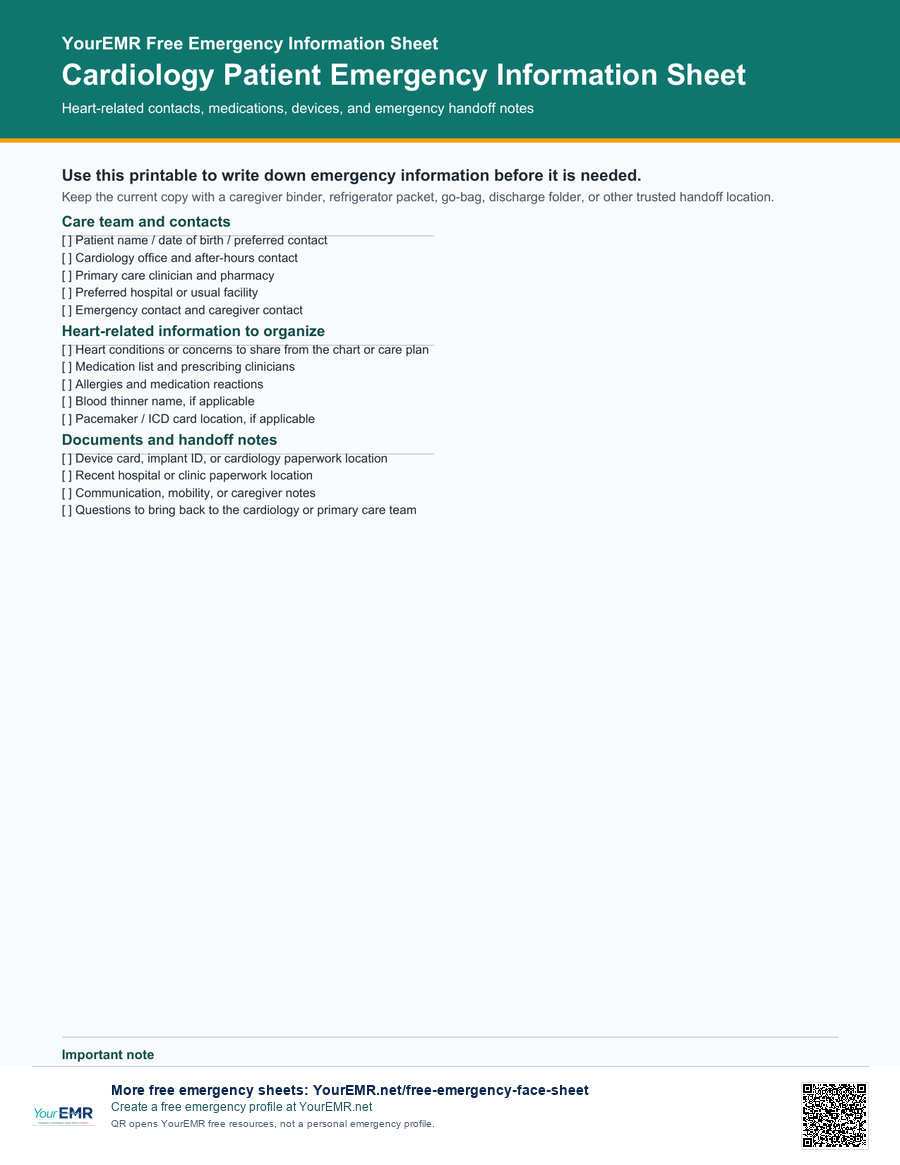
Free printable emergency information sheet
A free printable cardiology patient emergency information sheet for organizing cardiac diagnoses, cardiologist and electrophysiologist contacts, medications, allergies, pharmacy, device notes, blood thinner notes, and emergency contacts.
This may be called a cardiology emergency information sheet, heart patient face sheet, cardiac patient handoff sheet, or cardiology patient preparedness printable.
No signup is required to download the printable PDF.
Optional add-on
Add a separate medication list sheet if the main emergency information sheet does not have enough room.
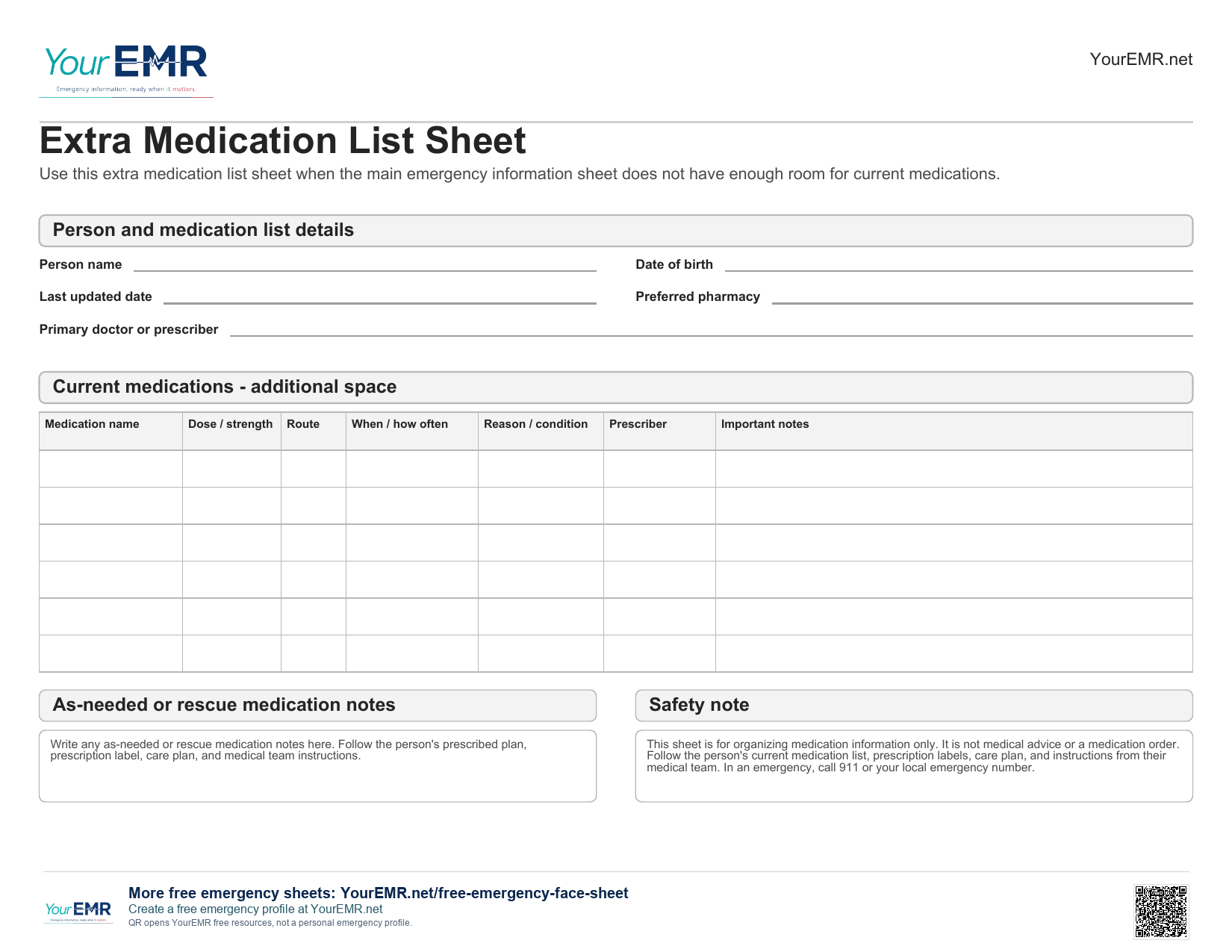
The main emergency information sheet download stays separate.
This sheet may help people who see a cardiologist, electrophysiologist, heart failure clinic, anticoagulation clinic, primary care clinician, or device clinic and want key information in one readable place.
A family member, caregiver, EMS team, urgent care team, or ER team may need to know who follows the patient, where medication information is kept, and whether device or blood thinner information exists.
A concise sheet can help locate information faster, but it does not guarantee how information will be used and does not replace clinician evaluation.
A cardiology office or care team may recommend that patients keep emergency information organized. The sheet should point to official records and current contacts, not provide clinical instructions.
Keep copies where trusted helpers know to look: wallet, purse, refrigerator folder, emergency binder, caregiver folder, go-bag, appointment folder, or with a trusted family member.
Avoid storing unnecessary sensitive details on a visible copy. A shorter public copy and fuller private copy may be safer.
Review the sheet when cardiac diagnoses, medications, allergies, blood thinner information, cardiology contacts, electrophysiology contacts, device cards, pharmacy, emergency contacts, caregiver roles, or patient portal locations change.
This page is for emergency information organization and patient preparedness only. It is not medical advice or legal advice and does not replace 911, EMS, cardiologists, device clinics, clinicians, medical records, medication labels, device cards, care plans, patient portals, or professional guidance.
A digital YourEMR profile may help when medications, doctors, device notes, blood thinner notes, pharmacy, and caregiver contacts change. The profile can be updated and reprinted.
Use short factual entries copied from current records, medication labels, device cards, or caregiver notes. Do not use the sheet to explain symptoms or request treatment.
Use these related YourEMR pages when they fit the person's situation.
These outside resources are for general education and preparedness only. Always follow 911, clinicians, cardiology records, device cards, medication labels, care plans, patient portals, and professional guidance.
NIH MedlinePlus overview of heart disease, cardiology context, medicines, devices, and heart-related health topics.
NIH MedlinePlus overview of keeping a personal health record with emergency contacts, medicines, allergies, chronic conditions, and major health history.
CDC caregiving guidance about organizing health conditions, medicines, provider contacts, insurance, and emergency contacts.
Continue with guidance and printables already grouped for this topic.
Content accountability
This resource helps organize emergency information. It does not provide medical advice, diagnosis, treatment, or individualized emergency instructions.
No individual medical review is claimed.
Editorial standards and correctionsSend individual feedback or report a correction
Ready for an updateable profile?
YourEMR helps keep emergency information organized and ready when it matters.
These free sheets are informational organization tools only. They are not medical records, diagnosis tools, treatment plans, medical advice, or legal advice, and they do not replace 911, EMS, clinicians, medical records, medication labels, device manuals, care plans, patient portals, or professional guidance.