Who it helps
Stroke survivors, people living with aphasia, people with speech or language changes, older adults, family caregivers, communication partners, home health aides, therapists, travel companions, and trusted helpers.
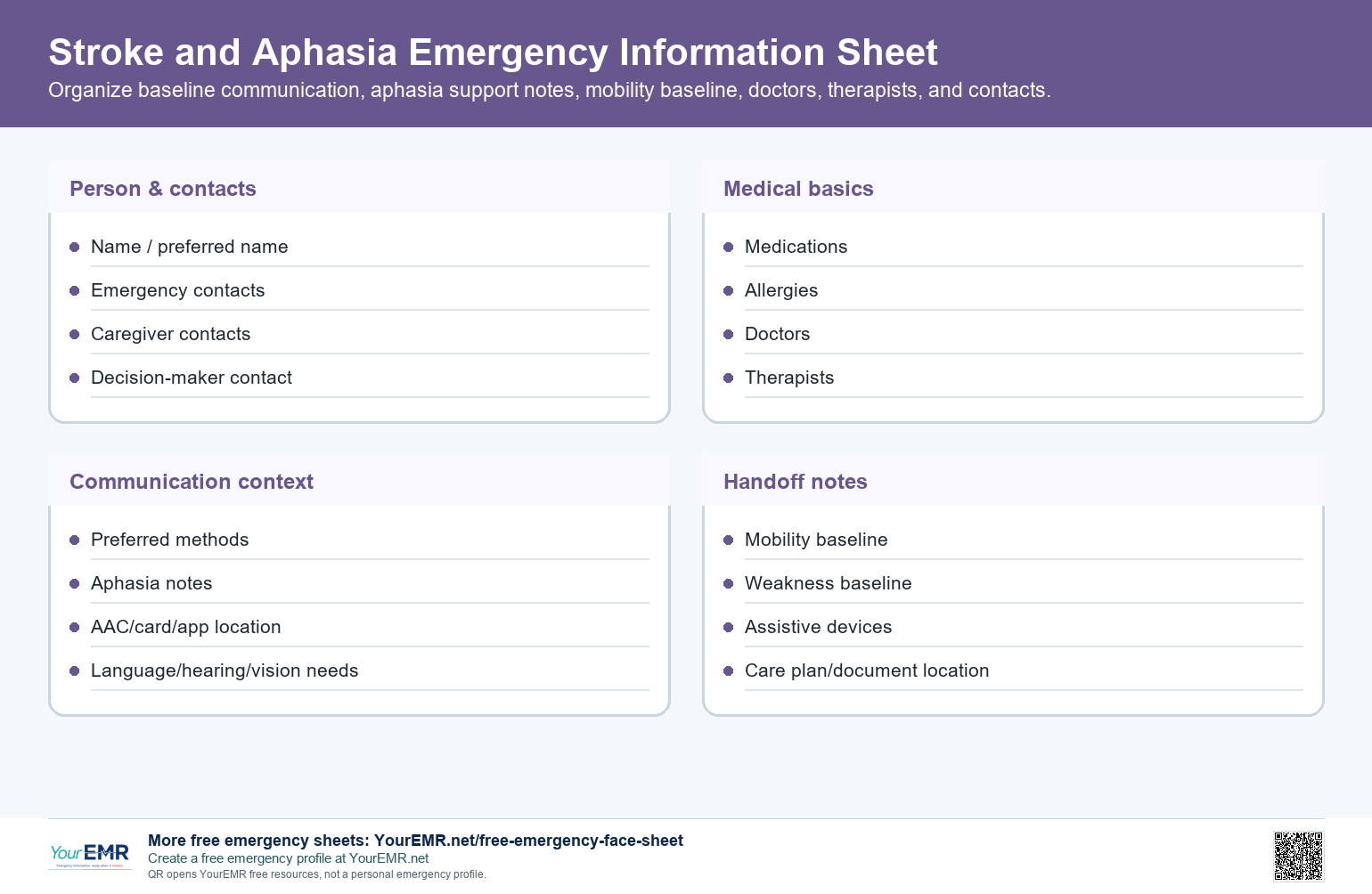
Free printable emergency information sheet
A free printable emergency information sheet for organizing baseline communication needs, aphasia support notes, mobility or weakness baseline, medications, allergies, therapists, doctors, caregivers, and emergency contacts.
This may be called a stroke emergency information sheet, aphasia communication handoff sheet, post-stroke face sheet, or caregiver communication notes page.
No signup is required to download the printable PDF.
Optional add-on
Add a separate medication list sheet if the main emergency information sheet does not have enough room.
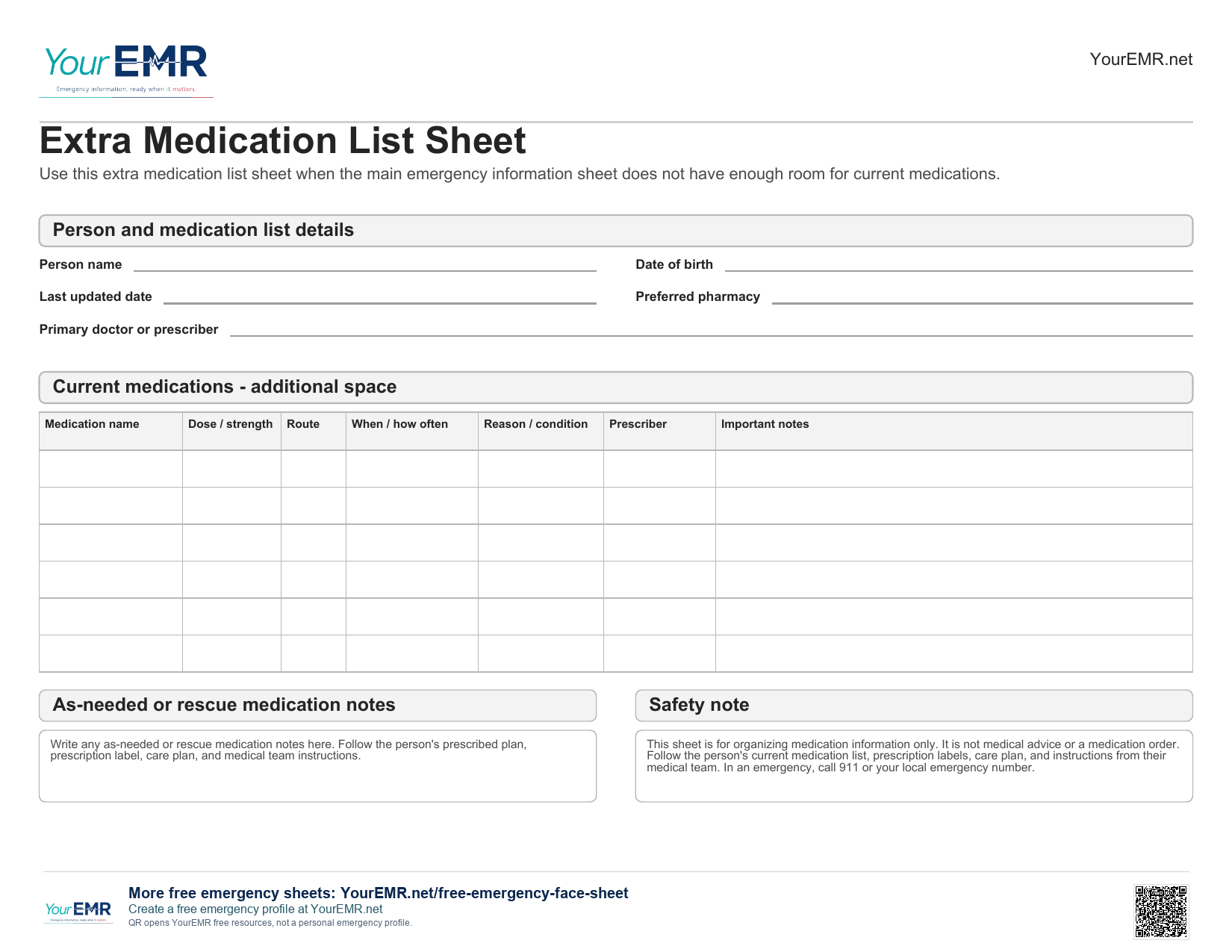
The main emergency information sheet download stays separate.
Stroke survivors, people living with aphasia, people with speech or language changes, older adults, family caregivers, communication partners, home health aides, therapists, travel companions, and trusted helpers.
A person with aphasia, speech changes, language-processing changes, weakness, hearing or vision needs, or mobility changes may not be able to explain their baseline easily in a stressful moment.
A concise sheet may help caregivers, urgent care, ER teams, EMS, therapists, or family members understand caregiver-provided baseline context and find the right contacts.
These notes can describe what is usual for the person and how they prefer to communicate. Do not use it to judge new symptoms or replace professional guidance.
Keep copies with communication cards, in a caregiver binder, wallet or purse, therapy bag, refrigerator folder, go-bag, travel folder, or with a trusted family member.
Tell trusted caregivers and family where the current sheet and fuller communication or therapy notes are kept.
Review the sheet when communication needs, preferred methods, mobility baseline, assistive devices, medications, allergies, doctors, therapists, pharmacy, caregiver contacts, emergency contacts, or care-plan documents change.
It may also be worth reviewing after a hospital discharge, rehab stay, therapy update, new communication tool, travel plan, or new caregiver handoff.
Share only what is useful for emergency organization and communication support. Avoid unnecessary sensitive details on a visible copy.
This page is for organization and emergency preparedness only. It is not medical advice and does not replace 911, EMS, clinicians, stroke emergency guidance, speech therapy plans, rehabilitation plans, medical records, medication labels, care plans, discharge instructions, or patient portals. Do not use it to evaluate new symptoms, delay emergency care, or provide rehabilitation instructions.
A digital YourEMR profile may help when communication notes, medication lists, allergy lists, doctors, therapists, mobility notes, or caregiver contacts change. It can be updated, printed again, or shared through an emergency QR link.
Keep the sheet factual and focused on current baseline, contact details, and where fuller care or therapy notes are kept.
Use these related YourEMR pages when they fit the person's situation.
These outside resources are for general education only. Always follow the person's clinicians, therapists, care plan, medication labels, discharge instructions, and emergency guidance.
Overview of communication changes after stroke and aphasia resources for survivors and families.
NIH/NLM overview of aphasia, language effects, and communication support context.
Preparedness guidance for organizing prescriptions, medical supply needs, allergy information, and pharmacy contacts before an emergency.
Continue with guidance and printables already grouped for this topic.
Content accountability
This resource helps organize emergency information. It does not provide medical advice, diagnosis, treatment, or individualized emergency instructions.
No individual medical review is claimed.
Editorial standards and correctionsSend individual feedback or report a correction
Ready for an updateable profile?
YourEMR helps keep emergency information organized and ready when it matters.
These free sheets are informational organization tools only. They are not medical records, diagnosis tools, treatment plans, medical advice, or legal advice, and they do not replace 911, EMS, clinicians, medical records, medication labels, device manuals, care plans, patient portals, or professional guidance.