Who this printable is for
This printable is for adults who choose to keep a concise, personal emergency information sheet at work or with a trusted coworker, without turning it into workplace policy or legal advice.
Free printable emergency information sheet
A free printable workplace emergency information sheet for organizing emergency contacts, optional medication and allergy basics, important conditions at a high level, communication or accessibility notes, preferred support contacts, and where emergency information is kept.
This may be called a workplace emergency contact sheet, employee emergency information printable, coworker handoff sheet, or personal workplace preparedness sheet.
No signup is required to download the printable PDF.
Optional add-on
Add a separate medication list sheet if the main emergency information sheet does not have enough room.
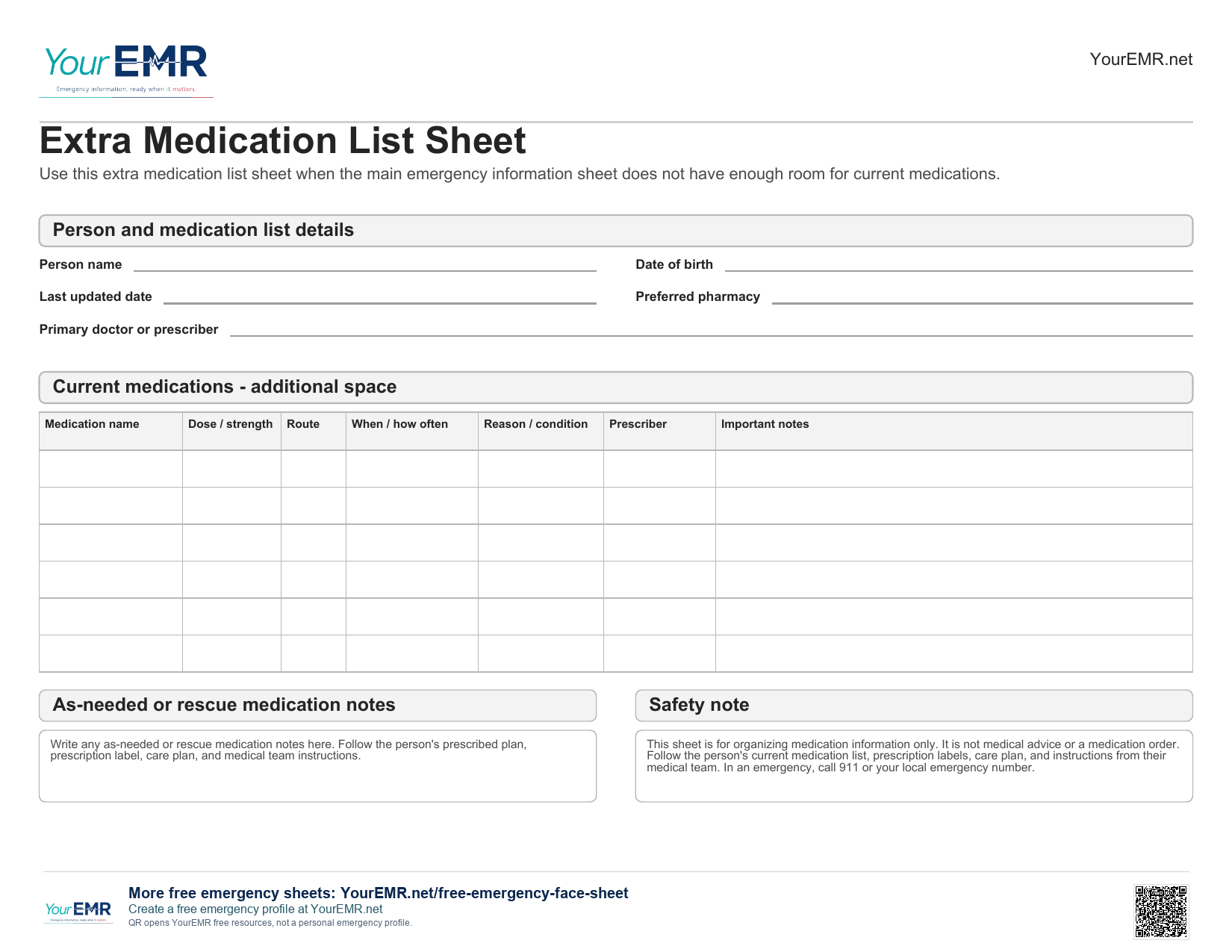
The main emergency information sheet download stays separate.
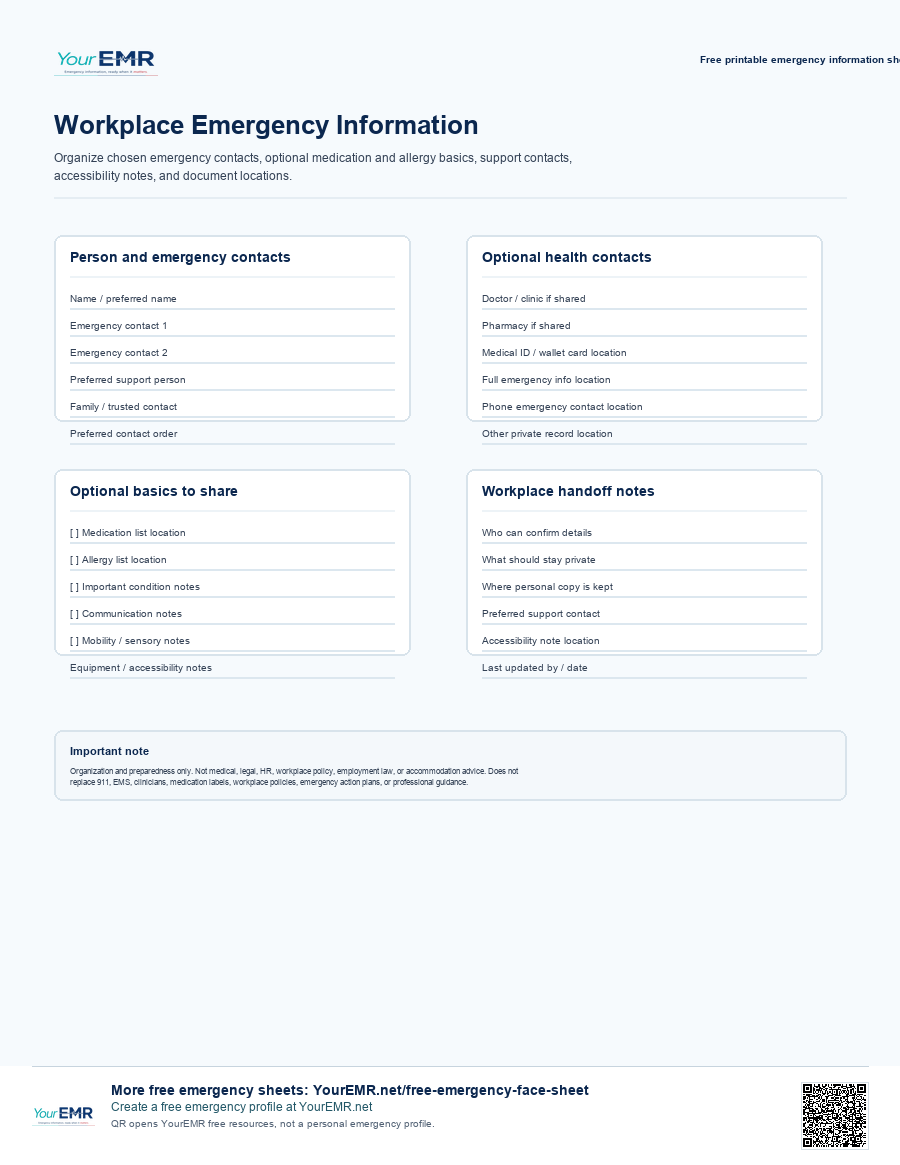
This printable is for adults who choose to keep a concise, personal emergency information sheet at work or with a trusted coworker, without turning it into workplace policy or legal advice.
In a workplace setting, the person who needs information may not be with the person who knows it from memory.
A concise sheet can help someone find contacts, allergies, medication lists, document locations, and support notes faster. It does not create instructions, permissions, or guarantees.
Handoff notes can point to contacts and personal preferences. Do not write medical treatment instructions, employment law advice, HR instructions, accommodation directions, or claims that coworkers or employers must act a certain way.
Keep the printable where trusted people know to look, and use a safer private location for details that should not sit in public view.
Avoid putting passwords, financial account numbers, full Social Security numbers, door codes, or unnecessary sensitive details on a visible copy.
Review the sheet when contacts, phone numbers, doctors, pharmacy, medications, allergies, forms, action plans, support needs, campus or workplace details, pickup details, or document locations change.
A quick review before a school year, daycare transition, camp session, college move-in, new job, travel, or major health change can keep the sheet useful.
Share only what is useful for emergency organization and with people who should have the information. Keep fuller records somewhere safer when a printed copy would reveal too much.
This page is for organization and emergency preparedness only. It is not medical advice, legal advice, workplace policy advice, employment law advice, HR advice, or accommodation advice and does not replace 911, EMS, clinicians, medical records, medication labels, workplace policies, emergency action plans, care plans, patient portals, or professional guidance.
The printable sheet works well as a quick paper backup in a folder, backpack, binder, dorm file, desk drawer, go-bag, or handoff packet.
A digital YourEMR profile can hold fuller details that change over time, such as contacts, medications, allergies, doctors, document locations, and support notes. Update the profile and print a fresh copy when something changes.
Use short factual entries copied from current forms, labels, contact lists, and the person's own records. Keep the sheet easy to scan.
For work, include only what the person chooses to share: emergency contacts, preferred support person, medication or allergy basics, important conditions at a high level, accessibility notes, and where fuller emergency information is kept.
Use these related YourEMR pages when they fit the person's situation.
These outside resources are for general education and preparedness only. Always follow emergency services, employer policies, clinicians, medication labels, workplace emergency plans, and professional guidance.
OSHA workplace emergency action plan overview for broad preparedness context, reporting emergencies, evacuation, shelter-in-place, and trained workplace roles.
Workplace preparedness overview covering employee and worksite readiness, training, and continuous emergency preparedness improvement.
NIH/NLM information about keeping personal health records with emergency contacts, medicines, allergies, chronic conditions, and related details.
Preparedness guidance for organizing insurance cards, medical records, identification, care plans, emergency action plans, and other important documents.
Preparedness guidance for organizing prescription medicines, dosage, frequency, medical supply needs, allergies, and pharmacy planning.
Continue with guidance and printables already grouped for this topic.
Content accountability
This resource helps organize emergency information. It does not provide medical advice, diagnosis, treatment, or individualized emergency instructions.
No individual medical review is claimed.
Editorial standards and correctionsSend individual feedback or report a correction
Ready for an updateable profile?
YourEMR helps keep emergency information organized and ready when it matters.
These free sheets are informational organization tools only. They are not medical records, diagnosis tools, treatment plans, medical advice, or legal advice, and they do not replace 911, EMS, clinicians, medical records, medication labels, device manuals, care plans, patient portals, or professional guidance.