Who it helps
Co-parents, guardians, separated households, shared-care families, grandparents, stepparents, babysitters, school or daycare contacts, and trusted adults who need current child emergency information organized without conflict-oriented language.
Why this can matter in an emergency
A child may be with either household, a grandparent, babysitter, school, daycare, coach, or trusted adult when information is needed quickly.
A shared emergency information sheet may help adults find the same current contacts, pediatrician, allergy notes, medication information location, and document locations without relying on memory or old texts.
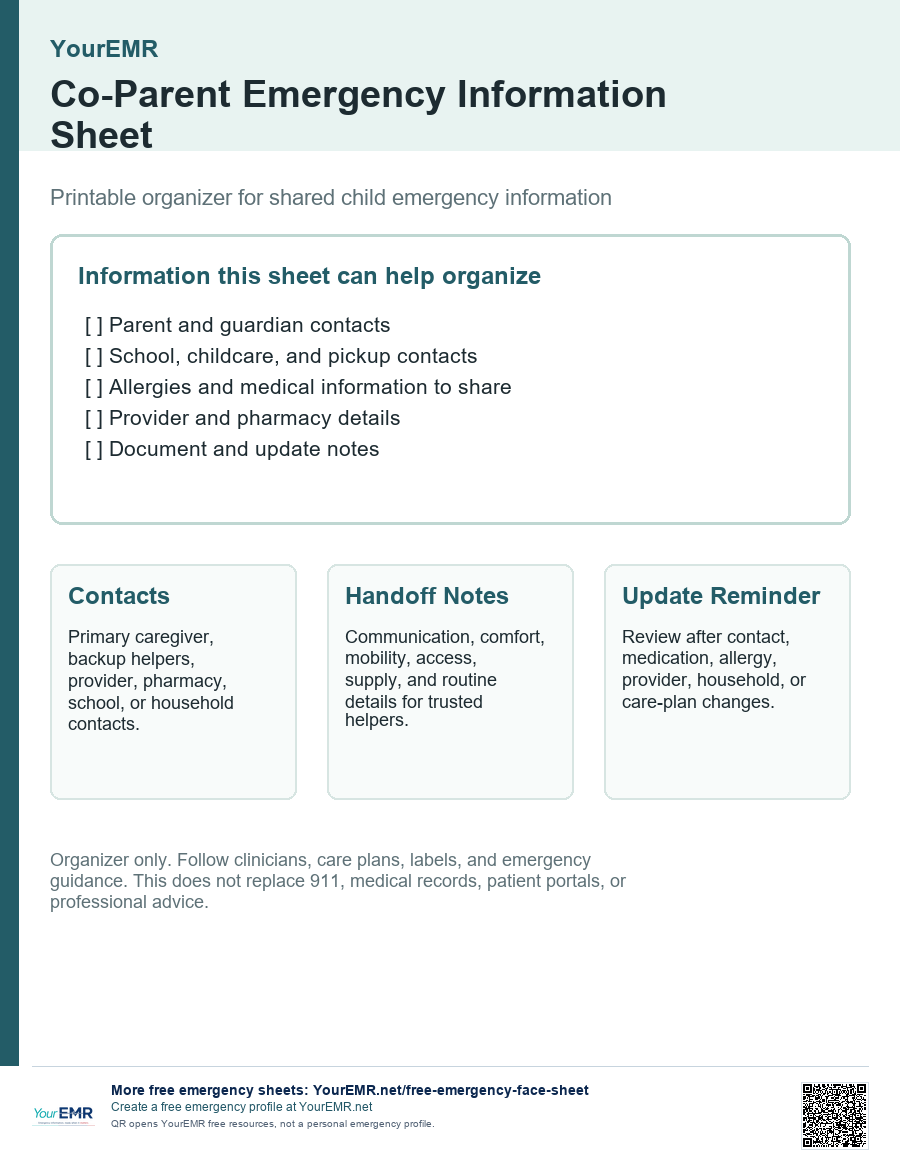
Co-parent handoff notes
Keep notes about neutral information-sharing. Avoid conflict-oriented language, legal advice, custody interpretations, court-order claims, medical decisions, medication administration directions, or school policy claims.
- Which contacts should be listed for each household and which backup contacts can be reached
- Where the current medication list, allergy list, action plans, school forms, and pediatrician information are kept
- Which school, daycare, pediatrician, pharmacy, or specialist contact should be easy to find
- What shared routine, comfort, communication, sensory, or transportation notes may help another caregiver
- How each household can confirm that the latest copy is current
Where to keep it
Keep copies in both households, with trusted caregivers, in a school or daycare packet if appropriate, in a babysitter folder, travel bag, emergency binder, or family folder.
Avoid placing custody details, legal interpretations, passwords, door codes, financial details, or unnecessary private information on a visible copy.
When to update it
Review the sheet when parent or guardian contacts, backup contacts, pediatrician, specialists, school or daycare contacts, pharmacy, insurance basics, medications, allergies, document locations, or shared caregiver notes change.
It may also be worth reviewing at the start of a school year, after a move, after a care plan change, before travel, or when a new caregiver starts.
Privacy and safety notes
A co-parent information sheet should stay factual, neutral, and limited to emergency organization. Avoid conflict details, legal interpretations, custody instructions, passwords, door codes, financial details, or unnecessary private information.
This page is for organization and emergency preparedness only. It is not medical advice, legal advice, custody advice, child-care legal guidance, or school policy guidance and does not replace 911, EMS, clinicians, pediatrician guidance, medication labels, care plans, child-care policies, school documentation, custody or legal documents, discharge instructions, patient portals, or professional guidance.
Printable sheet versus digital emergency profile
A digital YourEMR profile may help when two households need one updateable place for emergency contacts, allergies, medications, doctors, school contacts, pharmacy, and document locations.
Helpful terms families may hear
- Shared emergency information: Factual contact and health-context information that can be kept current across households.
- Parent-provided context: Information supplied by a parent or guardian for organization and handoff, not legal or medical advice.
- School or daycare contact: The contact information families choose to list for the child's school or child care setting.
- Action plan location: Where official allergy, asthma, seizure, diabetes, or other plans are kept if the child has one.
- Document location: Where official records, school forms, medical paperwork, or insurance documents are kept.
- Caregiver handoff: Short notes that help another trusted adult find contacts and current documents.
Co-Parent Info details to record
Use factual, neutral entries from current parent-provided records, pediatrician information, school or daycare contacts, medication labels, and shared caregiver notes.
- Child name, date of birth, parent or guardian contacts, backup contacts, home or household contact notes if appropriate, and safe pickup/contact information as parent-provided context
- Pediatrician, specialists, school or daycare contact, pharmacy, insurance basics, medication list location, allergy list, and action plan locations if applicable
- Shared caregiver notes about communication, routines, comfort items, accessibility needs, language needs, or transportation notes
- Where documents are kept, such as insurance card copy, medical action plans, school forms, discharge paperwork, or patient portal information
- How households should update the sheet when contact, school, medical, or caregiver information changes
Related YourEMR resources
Use these related YourEMR pages when they fit the person's situation.
Emergency disclaimer
These free sheets are informational organization tools only. They are not medical records, diagnosis tools, treatment plans, medical advice, or legal advice, and they do not replace 911, EMS, clinicians, medical records, medication labels, device manuals, care plans, patient portals, or professional guidance.