Who this sheet helps
This sheet may help spouses, partners, adult children, backup caregivers, respite helpers, close relatives, and trusted contacts who need a practical way to find household emergency information if the primary caregiver is unavailable.
Why this may matter in an emergency
A spouse or partner caregiver may be the person who remembers where everything is, but they may be unavailable, stressed, hospitalized, traveling, or unable to answer questions.
A concise sheet can help a backup caregiver, family member, EMS team, urgent care team, or ER team locate information faster without relying only on memory.
Spouse caregiver handoff notes
Handoff notes can explain where information is kept and who can confirm it. Avoid medical instructions, medication administration steps, care-plan interpretation, or legal authority statements.
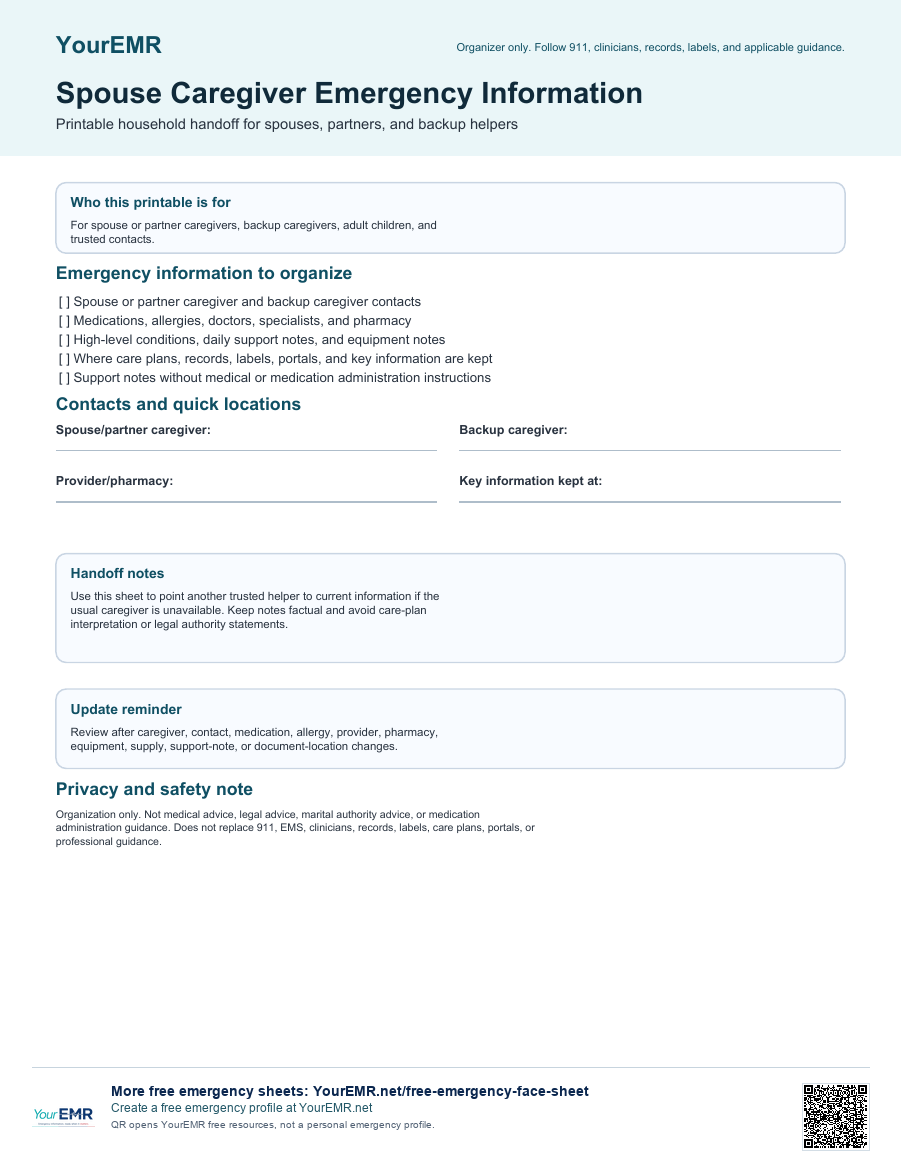
- Who is the primary spouse or partner caregiver and who backs them up
- Where the current medication list, allergy list, care plan, labels, and patient portal information are kept
- Which equipment, supplies, mobility aids, communication supports, or daily support notes may help another caregiver orient quickly
- Which family member, clinician office, pharmacy, or caregiver can help confirm the most current information
Where to keep it
Keep copies where trusted helpers know to look: refrigerator folder, caregiver binder, medication folder, bedside folder, go-bag, appointment folder, or with a trusted family member.
Avoid placing passwords, financial information, door codes, or unnecessary sensitive details on a visible copy.
When to update it
Review the sheet when caregiver roles, backup contacts, doctors, pharmacy, medications, allergies, conditions, daily support notes, equipment, supplies, patient portal details, or document locations change.
Privacy and safety notes
Share only what is useful for emergency organization and caregiver handoff. Keep fuller records in a safer place when a visible copy would reveal too much.
This page is for organization and emergency preparedness only. It is not medical advice, legal advice, marital authority advice, medication administration guidance, or care-plan interpretation and does not replace 911, EMS, clinicians, medical records, medication labels, care plans, patient portals, legal documents, or professional guidance.
Printable sheet versus digital YourEMR profile
A digital YourEMR profile may help when contacts, medications, allergies, doctors, equipment notes, daily support notes, and document locations change. The profile can be updated and reprinted.
Helpful terms families may hear
- Primary caregiver: The person who usually coordinates practical care information and updates.
- Backup caregiver: A trusted helper who may step in when the primary caregiver is unavailable.
- Daily support notes: Brief factual notes about routines, communication, mobility, supplies, or comfort items.
- Key information location: Where official records, labels, care plans, portals, or caregiver notes can be found.
- Caregiver handoff: Short notes that help another helper find contacts and current documents.
Spouse Caregiver Info details to record
Keep entries factual and easy to scan. Copy information from current labels, records, caregiver notes, and clinician-provided lists without turning the sheet into instructions.
- Spouse or partner caregiver contact, backup caregivers, emergency contacts, trusted neighbors, and family contacts
- Primary doctor, specialists, pharmacy, current medications, allergies, high-level conditions, and where official records are kept
- Daily support notes, communication notes, mobility notes, equipment notes, supply locations, and who can confirm the current routine
- Where care plans, medical records, medication labels, insurance cards, patient portals, and other key information can be found
Related YourEMR resources
Use these related YourEMR pages when they fit the person's situation.
Helpful spouse caregiver and family preparedness resources
These outside resources are for general education and preparedness only. Always follow 911, clinicians, medication labels, care plans, patient portals, legal documents, and professional guidance.
CDC guidance on organizing health conditions, medicines, care needs, provider contacts, insurance, and emergency contacts.
Administration for Community Living overview of supports for family and informal caregivers.
NIH MedlinePlus overview of keeping emergency contacts, medicines, allergies, chronic conditions, and major health history in a personal health record.
Emergency disclaimer
These free sheets are informational organization tools only. They are not medical records, diagnosis tools, treatment plans, medical advice, or legal advice, and they do not replace 911, EMS, clinicians, medical records, medication labels, device manuals, care plans, patient portals, or professional guidance.