Who this sheet helps
This sheet may help adult children supporting an aging parent, spouses or partners, nearby family, long-distance caregivers, respite helpers, home health contacts, and older adults who want key information written down in one readable place.
Why this may matter in an emergency
A caregiver or family member may not be present when help is needed, and information may be split across phones, portals, folders, labels, and family memory.
A concise sheet can help someone find contacts and records faster, but it does not guarantee how responders or clinicians will use the information.
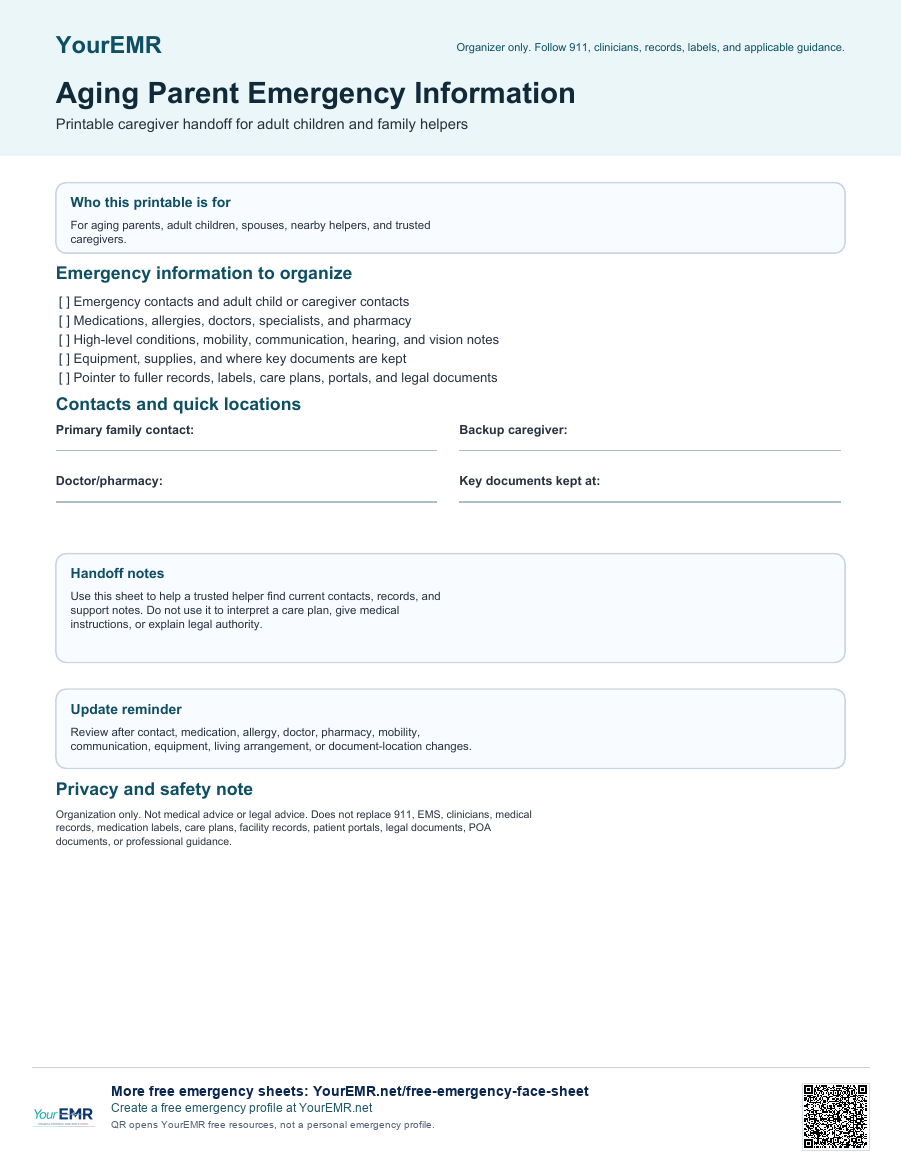
Aging parent handoff notes
Handoff notes can point to people, records, and practical support needs. Avoid care-plan interpretation, medical instructions, legal interpretations, or medication administration directions.
- Which adult child, spouse, caregiver, or local helper can confirm current information
- Where the latest medication list, allergy list, care plan, patient portal, and clinician records are kept
- Whether glasses, hearing aids, dentures, walker, cane, wheelchair, oxygen paperwork, or other supports should be located
- Which document locations matter without rewriting or interpreting legal documents
Where to keep it
Keep copies where trusted helpers know to look: refrigerator folder, caregiver binder, emergency folder, wallet or purse, go-bag, bedside folder, appointment folder, or with a trusted family member.
Avoid putting unnecessary sensitive details, passwords, financial information, or direct door codes on a visible copy.
When to update it
Review the sheet when contacts, doctors, pharmacy, medications, allergies, conditions, mobility, communication, equipment, living arrangement, caregiver roles, patient portal access, or document locations change.
Privacy and safety notes
Share only what is useful for emergency organization and caregiver handoff. Keep fuller records in a safer place when a visible copy would reveal too much.
This page is for organization and emergency preparedness only. It is not medical advice or legal advice and does not replace 911, EMS, clinicians, medical records, medication labels, care plans, facility records, patient portals, legal documents, POA documents, or professional guidance.
Printable sheet versus digital YourEMR profile
A digital YourEMR profile may help when contacts, medications, allergies, doctors, mobility notes, document locations, and caregiver roles change. The profile can be updated and reprinted.
Helpful terms families may hear
- Caregiver contact: A trusted person who can help confirm current information or locate records.
- High-level conditions: Short condition names or summaries, not explanations, treatment plans, or medical instructions.
- Key documents: Important records such as care plans, insurance cards, advance directives, POA forms, discharge papers, or clinician documents.
- Mobility and communication notes: Practical context about how the person moves, hears, sees, speaks, understands, or uses support tools.
- Document location: Where official records are kept so someone can find them without the sheet replacing those records.
Aging Parent Info details to record
Use short factual entries copied from current records, medication labels, caregiver notes, and family contact lists. Keep the sheet focused on locating information and contacts.
- Parent name, preferred name, date of birth, emergency contacts, adult child contacts, caregiver contacts, and backup contacts
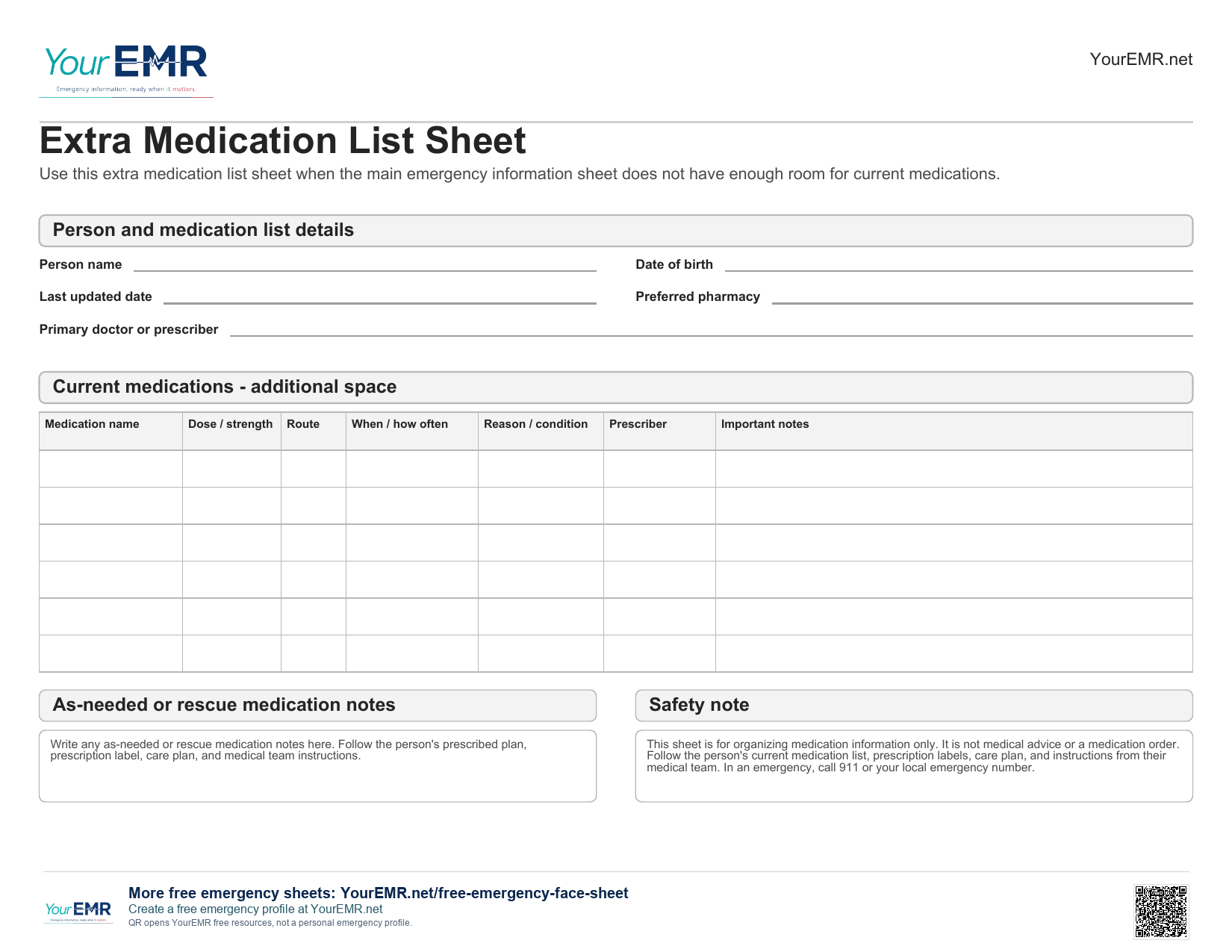
- Primary doctor, specialists, pharmacy, current medications, allergies, high-level conditions, and where the current medication list came from
- Mobility, communication, hearing, vision, language, equipment, device, supply, and transportation notes as practical context
- Where key documents are kept, such as care plans, insurance cards, patient portal details, advance directives, POA documents, discharge papers, or clinician records
- Last updated date and who usually keeps the information current
Related YourEMR resources
Use these related YourEMR pages when they fit the person's situation.
Helpful aging parent and caregiver preparedness resources
These outside resources are for general education and preparedness only. Always follow 911, clinicians, medication labels, care plans, legal documents, patient portals, and professional guidance.
CDC guidance on organizing health conditions, medicines, care needs, provider contacts, insurance, and emergency contacts.
Preparedness guidance for collecting and protecting insurance cards, identification, care plans, and emergency documents.
NIH MedlinePlus overview of keeping emergency contacts, medicines, allergies, chronic conditions, and major health history in a personal health record.
Emergency disclaimer
These free sheets are informational organization tools only. They are not medical records, diagnosis tools, treatment plans, medical advice, or legal advice, and they do not replace 911, EMS, clinicians, medical records, medication labels, device manuals, care plans, patient portals, or professional guidance.